.svg "CTA Arrow")


.png "Investor Ready Capital decorative background element")

What Asset-Management Fees are Acceptable To Family Offices in a $10M+ Real Estate Equity Raise?

What Asset-Management Fees are Acceptable To Family Offices in a $10M+ Real Estate Equity Raise?
TL;DR: Family offices typically accept 1% to 1.5% asset-management fees, with higher rates requiring clear scope, alignment, and total economics.
- The Acceptable Fee Band for Family Office LP Equity: The 1.00% to 1.50% range is the market standard for private real estate equity, but family offices apply that range differently depending on the size of the check and the type of deal structure on the table.
- What Pushes a Fee Above or Below the Standard Band: Fee acceptability is contextual.
- How Family Offices Score Fee Reasonableness During Diligence: Family office investment teams do not evaluate fees in isolation.
Asset-management fees can trigger family office pushback when the rate, fee basis, or total GP economics are unclear. For a $10M to $25M real estate equity raise, the most defensible range is generally 1.00% to 1.25% of invested equity annually; fees above 1.25% require documented scope, meaningful GP co-investment, and a waterfall showing aligned LP returns. Present the fee consistently across the term sheet, operating agreement, fee schedule, and financial model before diligence begins.
Most family office investment committees evaluate asset management fees alongside the promote structure, preferred return, and GP co-invest percentage. A fee presented in isolation, without supporting documentation, signals unprepared institutional thinking. Understanding how family offices evaluate deal-by-deal vs. blind pool structures is the first step, because the fee standard shifts depending on which structure you bring to the table.
This article covers the acceptable fee band, what pushes a fee above or below that range, how family offices score fee reasonableness during diligence, and what documentation sponsors need in the data room before the first conversation begins.
The Acceptable Fee Band for Family Office LP Equity
The 1.00% to 1.50% range is the market standard for private real estate equity, but family offices apply that range differently depending on the size of the check and the type of deal structure on the table.
How fee expectations shift by deal size
For deals where a family office is writing a check between $10M and $25M, the standard is 1.00% to 1.25% of invested equity per year. At this check size, family offices are often evaluating multiple sponsors simultaneously, and fee structure is one of the first filters applied before deeper diligence begins.
For deals above $25M, where the family office is functioning closer to an anchor LP, fees compress further. Sponsors should expect pressure toward 0.75% to 1.00% at this scale, with the expectation that the management fee is partially offset by a meaningful GP co-invest of at least 5% to 10% of total equity.
How fee basis affects the number
Whether the fee is calculated on invested equity or committed equity changes the economics materially. Committed equity fees begin accruing at close, regardless of how much capital has been deployed. Invested equity fees accrue only on capital at work in the asset.
Family offices prefer invested equity as the basis for deal-by-deal structures. Committed equity basis is more common in fund structures where the GP needs fee income during the investment period. A committed equity fee on a deal-by-deal raise draws scrutiny from family office investment committees.
Key point: The basis and the justification behind the fee determine defensibility. A 1.25% fee on invested equity with a clear scope of services memo is easier to defend than a 1.00% fee on committed equity with no documentation.
Private real estate fund management fees reached a 20-year low of approximately 1.31% mean for 2024 vintages, according to 2024 private real estate fund benchmarking data, reflecting sustained LP pressure on fee structures across institutional capital. Family offices, which operate with leaner governance overhead than pension funds or endowments, tend to apply that same pressure at the deal level.
What Pushes a Fee Above or Below the Standard Band
Fee acceptability is contextual. Family offices evaluate the fee relative to what the sponsor is doing for that fee and whether the economics as a whole are aligned.
Factors that support a fee at the higher end (1.25% to 1.50%)
- Active asset management scope. If the sponsor is managing construction, leasing, property management oversight, and investor reporting directly, a higher fee reflects real service delivery. The sponsor should document each function in a scope of services memo.
- Smaller deal size. On a $10M to $15M deal, a 1.50% fee may represent a reasonable absolute dollar amount for the management burden. Family offices understand that smaller deals carry proportionally higher per-dollar overhead.
- Specialized asset class. Ground-up construction, life sciences, and data center deals carry more active management complexity than stabilized core assets. A higher fee is easier to justify when the asset type demands it.
- Short hold period with defined exit. If the business plan is 24 to 36 months with a clear exit trigger, the total fee drag over the hold period may be acceptable even at 1.50%.
Factors that push a fee to the lower end (0.75% to 1.00%)
- Large check size from a single LP. A family office writing a $30M or $50M check expects fee compression as a condition of participation. This is standard practice and should be anticipated in the initial term sheet.
- Third-party property management. If day-to-day operations are outsourced, the sponsor's management fee covers oversight and reporting only. A full 1.25% fee on top of third-party management fees will draw pushback.
- Stabilized or core-plus asset. Lower execution risk means lower justifiable management fee. Family offices benchmark fees against the actual work required to protect and grow the asset.
- Repeat LP relationship. A family office that has invested with a sponsor before expects incremental fee efficiency, not the same terms as a first engagement.
For a full breakdown of how waterfall structure and GP/LP economics interact with fee design, the GP/LP split calculation guide covers the mechanics in detail.
How Family Offices Score Fee Reasonableness During Diligence
Family office investment teams do not evaluate fees in isolation. They build a total economics picture that includes the management fee, promote structure, preferred return hurdle, GP co-invest, and any additional fees such as acquisition, disposition, or construction management fees layered on top.
The total fee load test
The first question a family office diligence team asks is what the sponsor earns in total across all fee lines before the LP sees a dollar of promote.
When the total fee load across all lines exceeds 3% to 4% of equity value annually, family office investment committees will either push back on individual line items or require a higher preferred return to compensate. Sponsors who present each fee line separately, without a consolidated view, signal that their economics are untested.
Alignment signals family offices look for
Beyond the numbers, family offices evaluate whether the fee structure creates the right incentives. Three alignment signals matter most:
- GP co-invest of at least 3% to 5% of total equity. A sponsor who is not investing meaningful capital alongside the LP has limited downside exposure. Family offices treat low co-invest as a fee justification problem, not just a governance issue.
- Preferred return set at 7% to 9% before promote participation. A preferred return below 7% combined with a management fee above 1.25% will draw questions about whether the LP is adequately compensated for risk before the GP earns carry.
- Fee offset or credit mechanism. Some sponsors credit a portion of the acquisition or construction management fee against the promote. This structure signals alignment and reduces the perception that fees are designed to be extracted regardless of performance.
Sponsors preparing for family office conversations should review how their fee structure reads alongside the full waterfall before outreach. The management fees and carried interest presentation guide covers the exact format institutional LPs expect in a term sheet.
{{main-cta}}
What the Data Room Must Include Before Diligence Begins
The most common reason a family office raises fee objections mid-diligence is a data room that skipped fee justification before the first meeting.
The fee justification package
Sponsors should treat fee documentation as a standalone section of the data room, not a footnote in the operating agreement. The package should include four items:
1. Scope of services memo. A one-to-two-page document that lists every service the management fee covers. This should include asset oversight, investor reporting cadence, lender compliance, leasing coordination, and any construction or development management functions. If a function is outsourced, identify the third-party provider explicitly.
2. Fee comparison table. A simple table showing the sponsor's fee structure against the market range for comparable deal types and asset classes. Use publicly available benchmarks such as institutional real estate fee survey data to anchor the comparison. Family offices run their own benchmarks; sponsors who present one first reduce the risk of being compared unfavorably.
3. Total economics summary. A single-page view that aggregates all fee lines, the promote structure, preferred return, and GP co-invest into one consolidated picture. This is the document the investment committee will circulate internally. When sponsors omit this document, the family office builds it themselves, often with assumptions that understate the sponsor's value.
4. Waterfall model with fee inputs. The sponsor's financial model should show how the management fee flows through the waterfall and what the LP net return looks like after all fees and the promote are applied. Presenting a gross return without a net return calculation signals the sponsor skipped the LP's math.
Documents that reduce fee friction before the first meeting
Beyond the fee package, two additional data room items reduce fee-related friction:
- Audited or reviewed financials from prior deals. Family offices use prior deal financials to verify that management fees were charged as disclosed and that the sponsor's track record numbers reflect net-of-fee returns.
- LP reporting samples. Showing a prior quarterly report demonstrates that the management fee produces a real reporting deliverable. Family offices evaluate reporting quality as a proxy for management quality.
Sponsors who present a complete data room before outreach compress the diligence timeline and reduce the number of fee-related negotiation cycles. For the full list of documents institutional LPs require across all diligence tracks, the 47-document due diligence checklist is the reference standard for $10M+ raises.
What to Prepare Before the Family Office Conversation
Fee conversations with family offices go sideways when sponsors treat them as negotiation moments. Family offices read a fee discussion as a proxy for how the sponsor thinks about LP economics. Sponsors who arrive prepared signal that they have already done the LP's analysis. Sponsors who arrive defensive signal weak preparation.
Three things to have ready before the first family office conversation:
- A written fee rationale, one page maximum. State the fee, the basis (invested or committed), the scope of services it covers, and how the total fee load compares to market. This document should be in the data room before outreach begins, not produced after a family office asks for it.
- A net return model that the LP can stress-test. The model should show LP net returns at base case, downside, and extended hold scenarios. Each scenario should reflect the management fee as a real cash drag, so the family office can see exactly what they net after all fees and the promote.
- A clear position on fee offset or credit. If the sponsor is willing to credit a portion of acquisition or construction management fees against the promote, state that position in the term sheet. If the sponsor holds the fee structure without a credit, be prepared to explain the justification on its own terms.
Family office diligence timelines for $10M+ real estate equity raises typically run 60 to 120 days from first meeting to commitment. Sponsors who arrive with fee documentation ready compress that timeline. Sponsors who spend the first 30 days answering fee questions extend that timeline.
If you want to review your fee structure and data room presentation before beginning family office outreach, IRC Partners works with sponsors raising $5M to $250M in institutional equity to structure the economics and prepare the materials that reduce diligence friction. The first step is a direct conversation about your deal economics before any LP sees them.
Frequently Asked Questions
What asset management fee do family offices consider standard for a $10M to $25M real estate equity deal?
Family offices writing checks between $10M and $25M benchmark asset management fees at 1.00% to 1.25% of invested equity per year. Fees above 1.25% require written justification tied to active management scope, GP co-invest, and a preferred return of at least 7% to 9%. Fees presented without documentation are treated as an initial negotiation position.
Does the fee basis matter more than the fee percentage to a family office?
Yes. Whether the fee is calculated on invested or committed equity changes the economics materially over a 3-to-5-year hold. Family offices evaluating deal-by-deal structures prefer invested equity as the basis, because fees accrue only on deployed capital. A committed equity basis on a deal-by-deal raise will draw questions in the first diligence session.
What total fee load will cause a family office to push back or walk away?
When the aggregate of all fee lines, including asset management, acquisition, construction management, and disposition fees, exceeds 3% to 4% of equity value annually, family office investment committees will either negotiate individual line items or require a higher preferred return to compensate. The total economics picture matters more than any single fee in isolation.
How does GP co-invest percentage affect fee acceptability?
GP co-invest functions as an alignment signal that directly supports fee justification. A sponsor co-investing 5% to 10% of total equity alongside the LP can defend a higher management fee because the GP shares meaningful downside exposure. A sponsor with co-invest below 3% will face fee pressure regardless of how the individual line items are framed.
What documents should be in the data room to address fee questions before diligence begins?
The fee justification package should include a scope of services memo, a fee comparison table benchmarked against market data, a total economics summary aggregating all fee lines and the waterfall, and a net return model showing LP returns after all fees at base case and downside. Sponsors who provide this package before the first meeting reduce fee-related negotiation cycles by presenting the LP's analysis before they ask for it.
How do family offices evaluate asset management fees differently from pension funds or endowments?
Family offices apply fee pressure at the deal level with fewer intermediary layers than pension funds or endowments. They run their own benchmarks, move faster through diligence, and make fee decisions at the investment committee level without a lengthy approval chain. This means fee objections surface earlier and resolve faster, but only if the sponsor has the documentation ready. Sponsors who have not prepared a fee justification package before the first family office meeting lose momentum at the most critical stage of the conversation.
When is a 1.50% asset management fee defensible to a family office LP?
A 1.50% fee is defensible when three conditions are present: the sponsor is providing active, in-house asset management across construction, leasing, and reporting functions with no material outsourcing; the deal is in a specialized or complex asset class such as ground-up construction, life sciences, or data centers; and the total fee load, including all other fee lines, remains within a range that leaves the LP with a projected net return that justifies the risk. A 1.50% fee on a stabilized core asset managed by a third-party property manager will draw immediate pushback.
Continue reading this series:
- How to Present Funding Needs to Family Offices
- Family Offices vs. Private Equity Funds: Which Institutional LP Is Right for Your Development
- Real Estate Asset Management Fees: Institutional LP Standard
By the time most founders are rehearsing the pitch, the outcome of the raise has already been set by the structure underneath it. IRC Partners advises operators raising $5M to $250M of institutional capital and accepts seven strategic partners per quarter. If you are going to market this year, have the structure reviewed before investors do. Schedule a call with our team here.
Need guidance on your capital raise?



What are the Biggest Red Flags in a Series B SaaS Customer Cohort Analysis?
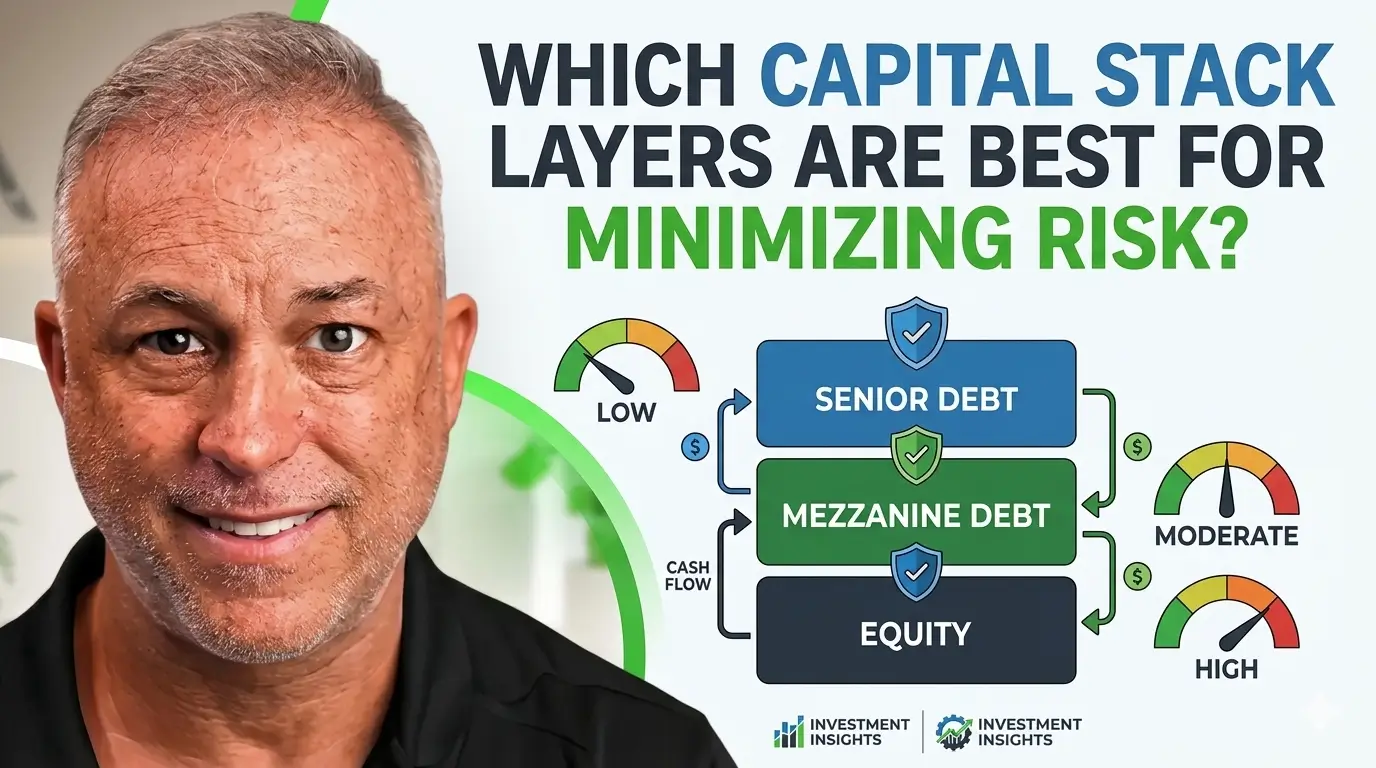
Which Capital Stack Layers Are Best for Minimizing Risk?

What Evidence Should a Company Assemble Before Claiming It Is Ready for an Institutional Capital Raise?
Disclosure
Nothing on this site constitutes an offer to sell, or a solicitation of an offer to purchase, any security under the Securities Act of 1933, as amended, or any applicable state securities laws. Any offering of securities is made only by means of a formal private placement memorandum or other authorized offering documents delivered to qualified investors.
IRC Partners is a capital advisory firm. IRC Partners is not a registered investment adviser under the Investment Advisers Act of 1940 and does not provide investment advice as defined thereunder.
Certain statements in this article may constitute forward-looking statements, including statements regarding market conditions, capital availability, investor demand, and transaction outcomes. Such statements reflect current assumptions and expectations only. Actual results may differ materially due to market conditions, regulatory developments, company-specific factors, and other variables. IRC Partners makes no representation that any outcome, return, or result described herein will be achieved.
References to prior mandates, transaction volume, network credentials, or capital raised are provided for illustrative purposes only and do not constitute a guarantee or prediction of future results. Past performance is not indicative of future outcomes. Individual results will vary. Network credentials and transaction statistics referenced on this site reflect the aggregate experience of IRC Partners' principals and affiliated advisors and are not a representation of assets managed or transactions closed solely by IRC Partners.
Certain data, statistics, and information presented in this article have been obtained from third-party sources. IRC Partners has not independently verified such information and expressly disclaims responsibility for its accuracy, completeness, or timeliness. Readers should independently verify any third-party data before relying on it.
Readers are strongly encouraged to consult qualified legal, financial, and tax professionals before making any investment, capital raising, or business decision.
Schedule A Meeting
You get one shot to raise the right way. If this raise is worth doing, it’s worth doing with precision, leverage, and control.
This isn’t a practice run. Serious capital. Serious strategy. Let’s raise it right.
We onboard a maximum of seven
new strategic partners each quarter, by application only, to maximize your chances of securing the capital you need.
