.svg "CTA Arrow")


.png "Investor Ready Capital decorative background element")
Real Estate Due Diligence Checklist: The 47 Documents $10M+ Sponsors Must Have Ready Before Institutional Lenders Ask


Real Estate Due Diligence Checklist: The 47 Documents $10M+ Sponsors Must Have Ready Before Institutional Lenders Ask
Most sponsors treat due diligence as something that happens after a term sheet arrives. That assumption is expensive.
Debt funds, insurance company lenders, and institutional LPs begin forming a credit view the moment they receive your package. By the time a formal diligence request list lands in your inbox, the underwriter has already made preliminary judgments about your NOI credibility, entity structure, and whether the capital stack makes sense. A disorganized or incomplete package does not just slow the process. It changes the outcome.
Key takeaway: Institutional lenders do not separate "getting comfortable" from underwriting. They do both at the same time, starting with the first files you share.
According to the CREFC Principles-Based Underwriting Framework, lenders assess four things simultaneously: the property's ability to generate cash flow, the market's ability to support that cash flow, the borrower's expertise and track record, and the loan structure's ability to mitigate known risks. All four require documents. None of them wait for a signed term sheet.
What poor document readiness actually costs:
- Reduced loan proceeds: Lenders add reserves or lower LTV when they cannot verify assumptions.
- New closing conditions: Missing or stale files become conditions precedent that delay funding.
- Retrades: Underwriters who find surprises mid-diligence reprice the deal to protect their position.
- Lost leverage: A sponsor scrambling to produce documents negotiates from weakness, not strength.
The 47 documents in this checklist are organized across seven diligence tracks. Each track maps to a specific lender risk concern. Knowing what each track signals is how you protect your economics before the first question arrives.
The 47-Document Real Estate Due Diligence Checklist by Track
The CREFC Underwriting 201 program frames due diligence documentation as inseparable from credit analysis, reserve structuring, and loan risk decisions. The table below reflects how institutional lenders actually organize their review, not how sponsors typically think about document prep.
Total: 47 documents across 7 tracks.
Why this structure matters: Institutional lenders do not review documents randomly. They review them by risk category. A sponsor who organizes files the same way signals that they understand how underwriting actually works. That signal has value before a single question is asked.
Understanding how to choose between the capital sources that will review this package is covered in detail in our guide to real estate financing options for $10M+ sponsors.
Tracks 1 and 2: Property, Title, Financials, and Pro Forma
These two tracks are where most underwriting conversations start and where most disconnects between sponsor narrative and loanable reality get exposed.
Track 1: Property and Title
The seven property and title documents answer one fundamental question: does the lender actually have clean, enforceable collateral?
What lenders look for in this track:
- An ALTA survey that confirms legal boundaries, identifies encroachments, and flags easements that could limit use or impair value
- A title commitment free of mechanic's liens, judgment liens, or subordinate interests that would cloud the lender's first-lien position
- A title insurance policy from an approved underwriter, as required under CREFC Model Representations and Warranties for CMBS-eligible loans
- A recorded plat and deed that confirm ownership chain without gaps
What this signals: Title defects discovered late in diligence are one of the most common causes of closing delays and loan-condition additions. Having a clean title commitment in hand before outreach tells the underwriter the sponsor has already done the work.
Track 2: Financial and Pro Forma
The nine financial documents test whether the income story the sponsor is telling matches what the asset actually produces.
What lenders look for in this track:
- Trailing 12-month operating statements (T-12) that reconcile to the current rent roll
- A stabilized pro forma with clearly sourced assumptions for rent growth, vacancy, and expense ratios
- A DSCR model that stress-tests coverage at the proposed loan amount and rate
- A sources and uses statement that accounts for every dollar of the capital stack, including equity contributions, preferred equity, and mezzanine
What this signals: When T-12 income does not reconcile to the rent roll, or when the pro forma uses assumptions the market study cannot support, underwriters treat it as a credibility problem, not a math problem. The financial track is where lenders decide whether to trust the rest of the package.
For sponsors deciding how to structure the capital stack before lender outreach, our analysis of how sponsors raising $10M+ decide between debt and equity covers the tradeoffs in detail.
Tracks 3 and 4: Legal, Entity, Construction, and Entitlement
These tracks answer two different but equally important questions: who actually controls this deal, and can the business plan be executed?
Track 3: Legal and Entity
Seven documents. Each one tells the lender whether the borrowing structure is clean and whether the deal can close without surprises.
Risk signals lenders look for:
- Entity chart gaps: If the borrower entity chart does not clearly show ownership percentages, managing member authority, and any upstream ownership layers, lenders flag it as a structural risk.
- Missing consents: Member or manager consents authorizing the loan must be in place before closing. Missing or unsigned consents create conditions precedent that delay funding.
- UCC lien search results: Prior UCC filings against the entity or its assets can signal undisclosed obligations or competing security interests.
- Prior litigation: Active or unresolved litigation involving the borrower entity or its principals can trigger lender credit committee holds.
- Operating agreement conflicts: Provisions that restrict debt, require supermajority consent for borrowing, or grant veto rights to minority members create enforceability risk for the lender's loan documents.
What this signals: According to Bloomberg Law's coverage of loan documentation defects, documentation issues at the entity level are a direct cause of closing delays and can impair a loan's secondary-market resaleability. Clean entity documents are not optional for institutional lenders.
Track 4: Construction and Entitlement
Seven documents. Each one tests whether the development business plan is real or aspirational.
Risk signals lenders look for:
- Permit status: Lenders want permits in hand or with a clear, documented path to issuance. Entitlement risk that has not been resolved is priced into the loan or becomes a funding condition. Sponsors using project finance structures to limit personal exposure should review how project financing affects lender diligence requirements for $10M+ deals before finalizing their entity and permit documentation strategy.
- GMP or GC contract: A guaranteed maximum price contract with an established general contractor signals cost certainty. A letter of intent or unsigned contract does not.
- Construction schedule: Lenders review schedule float and sequencing to assess whether the interest reserve is sized correctly and whether the business plan can absorb a 90-day delay without a liquidity crisis.
- Payment and performance bonds: Required by most institutional construction lenders as a condition of the first draw. Missing bonds at outreach signal the sponsor has not yet secured a bondable contractor.
What this signals: The Urban Land Institute's guidance on transitional asset review emphasizes that hidden obligations, deferred work, and physical condition issues can materially alter value and financeability. Sponsors who present complete construction and entitlement files compress the lender's risk assessment timeline significantly.
Tracks 5, 6, and 7: Market, Sponsor Record, and Environmental
These three tracks are where conviction is built or doubt gets priced in. Weak support in any of them shows up as higher reserves, wider spreads, or lower proceeds.
Track 5: Market and Commercial
The six market documents test whether the sponsor's projections survive independent scrutiny. An MAI appraisal from a lender-approved firm is the baseline. But lenders also want an independent market study that validates absorption pace, a lease comparables report that supports projected rents, and executed leases or strong LOIs that prove demand is real rather than modeled.
What this signals: According to the Deloitte 2026 Commercial Real Estate Outlook, 65% of 850 surveyed CRE executives expect improved fundamentals through 2026, but recovery is uneven across markets and asset classes. Lenders know this. Asset-specific proof matters more than macro optimism.
Track 6: Sponsor Track Record
Six documents covering who the sponsor is and what they have actually built. Institutional lenders want a prior project list with deal status and realized returns, not just a marketing bio. They also want two to three years of sponsor entity financials and personal financial statements to confirm liquidity and net worth relative to guaranty obligations.
The IRC Partners network of institutional allocators within IRC's broader network consistently identifies sponsor track record as one of the top three diligence filters before a capital commitment is made. What family offices and institutional allocators specifically look for beyond the project list is covered in our guide to what $17B allocators require before committing capital to a sponsor.
Track 7: Environmental and Compliance
Five documents, but they carry disproportionate risk. A Phase I Environmental Site Assessment conducted under ASTM E1527-21 standards is required by virtually every institutional lender. If recognized environmental conditions are identified, a Phase II assessment may be required before the lender will proceed. Zoning confirmation and certificate of occupancy or entitlement approval close out the regulatory picture.
What this signals: Environmental exposure limits a lender's ability to foreclose and recover. Lenders protect themselves with reserves, indemnities, or by declining to close. Sponsors who present a clean Phase I upfront remove one of the most common reasons for late-stage diligence delays.
How to Organize the Data Room So Underwriting Moves Faster
A complete set of documents is not the same as a well-organized data room. Institutional lenders move faster when they can find what they need without asking. Every question a lender has to send slows the process and signals friction.
Step-by-step data room structure for institutional lender diligence:
- Build folders by track, not by document type. Use the seven-track structure from this checklist as your folder hierarchy. Label each folder exactly: "01 Property and Title," "02 Financial and Pro Forma," and so on. Lenders who use the same track logic can navigate immediately.
- Prioritize by document urgency within each folder. Separate files into three subfolders: "Must Have" (required before term sheet), "Follow-Up" (required before commitment), and "Closing Condition" (required before funding). This lets underwriters know what is available now versus what is coming.
- Use consistent naming conventions. Every file should include the property name, document type, and date. Example: "Oakwood-MF_Phase-I-ESA_2026-03.pdf." Version-controlled files with dates prevent lenders from reviewing outdated materials.
- Maintain one version of every document. Multiple versions of the pro forma or budget in the same folder create confusion and undermine credibility. Archive old versions in a separate subfolder marked "Superseded."
- Include a data room index as the first document. A one-page index listing every file, its folder location, its date, and its status (complete, pending, or in process) tells the lender exactly what they are working with. It also demonstrates sponsor organization before the underwriter opens a single file.
Key insight: The CREFC Underwriting 201 framework treats due diligence file organization as a core part of loan risk analysis. A well-organized data room compresses the underwriter's internal escalation timeline because fewer questions require committee review. Faster internal approval means faster term sheet delivery.
For sponsors building a capital stack that includes preferred equity alongside senior debt, understanding what preferred equity lenders specifically require in a data room is covered in our guide to preferred equity in real estate transactions.
How Underprepared Sponsors Lose Leverage Between Term Sheet and Closing
The term sheet is not the finish line. It is the starting gun for a more detailed review. Sponsors who enter that phase with incomplete files hand the lender leverage they did not have at origination.
The real cost is economic, not just time. Lenders who find problems mid-diligence protect themselves through lower loan-to-value ratios, added reserves, tighter covenants, or new closing conditions. Those changes reduce the sponsor's net proceeds and can alter the equity economics of the entire deal.
Sponsors who have raised HNWI capital often underestimate this dynamic. HNWI investors ask fewer questions and move on relationship. Institutional lenders follow a process. That process is designed to surface risk. A sponsor who is not ready for it does not just slow down. They give up ground they cannot get back.
For a deeper look at how capital stack structure affects leverage in institutional raises, our analysis of five capital stack risk reduction strategies for $10M+ developers covers the key levers before your first lender conversation.
What to Do Before Your First Lender Call
The first lender conversation is a soft underwriting review. Treat it that way.
Five actions to take before outreach:
- Audit your package against all seven tracks. Do not wait for a diligence request list. Map your current files to the 47-document checklist and identify gaps now.
- Resolve title, entity, and environmental issues before distribution. These three tracks generate the most late-stage conditions. Fix them first.
- Reconcile your financial documents. Confirm that T-12, rent roll, pro forma, and sources and uses all tell a consistent story before a lender sees any of them.
- Update stale third-party reports. Phase I reports older than 180 days, appraisals older than 12 months, and market studies that predate a rate cycle shift will be questioned or rejected.
- Prepare a data room index. Build the index before outreach. It forces a complete audit and signals institutional-grade readiness from the first conversation.
IRC Partners works with sponsors preparing for institutional lender and LP diligence across senior debt, mezzanine, preferred equity, and LP equity raises. If your package is not yet at the level this checklist describes, that is the right conversation to have before your first lender call, not after.
{{main-cta}}
Frequently Asked Questions
How early in the process should a sponsor have the 47 documents ready?
Before the first lender conversation, not after the term sheet. Institutional lenders form a credit view from the first package they receive. Sponsors who share a complete, organized data room during initial outreach compress the underwriting timeline by 30 to 60 days and reduce the risk of conditions being added after pricing is set.
What is the difference between what a senior lender requests and what an LP or preferred equity investor requests in diligence?
Senior lenders focus heavily on collateral quality, DSCR coverage, title, and environmental risk because their recovery depends on the asset. LP and preferred equity investors focus more on sponsor track record, waterfall economics, and business plan credibility because their returns depend on execution. Most institutional processes require both tracks. Sponsors should prepare for both simultaneously rather than sequencing them.
How old can third-party reports be before institutional lenders reject them?
Phase I Environmental Site Assessments are typically valid for 180 days from the date of issuance. MAI appraisals are generally accepted within 12 months but may require a recertification letter if market conditions have shifted. Market studies older than 6 to 12 months are often questioned in fast-moving submarkets. Sponsors should plan to refresh third-party reports if the timeline from report date to closing exceeds these thresholds.
What triggers a construction holdback reserve in institutional lending?
Lenders add a construction holdback when the budget is not supported by a GMP contract, when contingency is below 5 to 10% of hard costs, when the contractor is not bondable, or when the draw schedule does not align with the construction timeline. A holdback reduces net proceeds at closing and can affect the equity returns modeled in the pro forma.
Do institutional lenders require personal guaranties on construction loans?
Most institutional construction lenders require a completion guaranty from the sponsor or a creditworthy guarantor. The guaranty covers cost overruns and schedule delays through the certificate of occupancy. Sponsors with strong balance sheets and prior project completions may negotiate a burn-off provision that releases the guaranty once a defined completion milestone is reached.
What happens if the appraisal comes in below the pro forma value?
The lender underwrites to the lower of the appraised value or the sponsor's pro forma. If the appraisal is materially below the pro forma, the lender may reduce loan proceeds to maintain the target LTV, require additional equity, or add a funded reserve. Sponsors can reduce this risk by using conservative pro forma assumptions that are supported by the independent market study before the appraisal is ordered.
Can a sponsor with three completed projects qualify for institutional senior debt without a co-sponsor?
It depends on project scale, asset class, and the specific lender's track record requirements. Some debt funds and insurance company lenders will underwrite a sponsor with three comparable completions if the prior project list shows on-time delivery, stabilized performance, and realized returns consistent with the current business plan. Others require five or more completions or a co-sponsor with deeper institutional experience. The sponsor track record file should be structured to answer this question before the lender asks it.
Continue reading this series:
- Real Estate Financing Options: The 7 Institutional Capital Sources $10M+ Sponsors Should Know Before Building a Data Room
- Preferred Equity Real Estate: When Sponsors Use It, What It Costs, and What the Data Room Must Include
- 5 Capital Stack Risk Reduction Strategies for Developers Raising $10M+
Most founders don't lose the raise because of the pitch. They lose it because the structure was wrong before the first investor call. IRC Partners advises founders raising $5M to $250M of institutional capital. 7 strategic partners per quarter. Start here to schedule a call with our team.
Sponsors weighing this decision should first complete a capital raise readiness assessment for sponsors to confirm the raise is investor-ready.
Need guidance on your capital raise?


.webp "Limit VC Access to Sensitive Data Pre-Signing ($10M Round)")
Limit VC Access to Sensitive Data Pre-Signing $10M Round
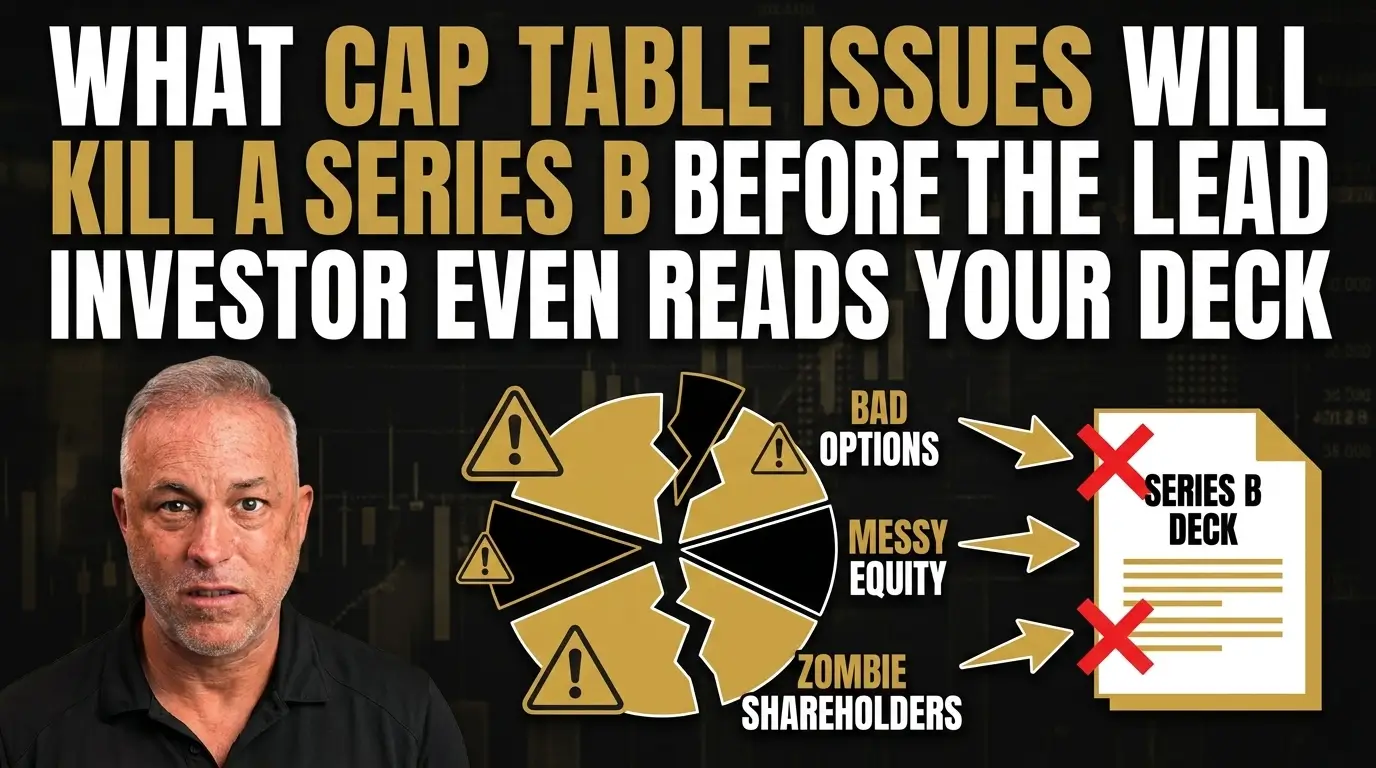
What Cap Table Issues Will Kill a Series B Before the Lead Investor Even Reads Your Deck

Cap Table Forensics: Why Most Founders Own 5 to 15 Percent Less Than They Think
Disclosure
Nothing on this site constitutes an offer to sell, or a solicitation of an offer to purchase, any security under the Securities Act of 1933, as amended, or any applicable state securities laws. Any offering of securities is made only by means of a formal private placement memorandum or other authorized offering documents delivered to qualified investors.
IRC Partners is a capital advisory firm. IRC Partners is not a registered investment adviser under the Investment Advisers Act of 1940 and does not provide investment advice as defined thereunder.
Certain statements in this article may constitute forward-looking statements, including statements regarding market conditions, capital availability, investor demand, and transaction outcomes. Such statements reflect current assumptions and expectations only. Actual results may differ materially due to market conditions, regulatory developments, company-specific factors, and other variables. IRC Partners makes no representation that any outcome, return, or result described herein will be achieved.
References to prior mandates, transaction volume, network credentials, or capital raised are provided for illustrative purposes only and do not constitute a guarantee or prediction of future results. Past performance is not indicative of future outcomes. Individual results will vary. Network credentials and transaction statistics referenced on this site reflect the aggregate experience of IRC Partners' principals and affiliated advisors and are not a representation of assets managed or transactions closed solely by IRC Partners.
Certain data, statistics, and information presented in this article have been obtained from third-party sources. IRC Partners has not independently verified such information and expressly disclaims responsibility for its accuracy, completeness, or timeliness. Readers should independently verify any third-party data before relying on it.
Readers are strongly encouraged to consult qualified legal, financial, and tax professionals before making any investment, capital raising, or business decision.
Schedule A Meeting
You get one shot to raise the right way. If this raise is worth doing, it’s worth doing with precision, leverage, and control.
This isn’t a practice run. Serious capital. Serious strategy. Let’s raise it right.
We onboard a maximum of seven
new strategic partners each quarter, by application only, to maximize your chances of securing the capital you need.
