.svg "CTA Arrow")


.png "Investor Ready Capital decorative background element")

How Do Family Offices Assess Sponsor Liquidity Before Committing $10M or More To a Real Estate Deal?

How Do Family Offices Assess Sponsor Liquidity Before Committing $10M or More To a Real Estate Deal?
TL;DR: Family offices assess sponsor liquidity through GP co-invest, unrestricted reserves, active project exposure, and downside capacity.
- What Sponsor Liquidity Means to a Family Office at $10M+: Sponsor liquidity, in the context of a family office LP evaluation, covers more than whether the GP has cash in a bank account.
- The Four-Part Framework Family Offices Use to Assess Sponsor Liquidity: Credible family offices running $10M+ diligence on a real estate sponsor work through four sequential liquidity checks.
- How Sponsors Should Prepare Before the Liquidity Conversation: Preparation for a family office liquidity review is a documentation exercise.
Family offices will question a real estate sponsor's ability to fund a $10M+ deal if the sponsor cannot document both meaningful co-investment and liquidity outside the project. The solution is to prepare four clear answers before outreach: the exact source and amount of GP co-investment, unrestricted reserves, capital commitments and guarantees across active projects, and the capacity to absorb a defined downside scenario without relying on LP capital.
This article expands on Warning Sign 8 from the warning signs a family office is a realistic $10M+ equity partner series: when a prospective family office never asks about sponsor liquidity, that silence is a diagnostic red flag about their seriousness as an institutional allocator.
What Sponsor Liquidity Means to a Family Office at $10M+
Sponsor liquidity, in the context of a family office LP evaluation, covers more than whether the GP has cash in a bank account. It is a composite assessment of whether the sponsor can fulfill their financial obligations to the deal, sustain operations across the full hold period, and absorb unexpected capital demands without requiring a rescue from the LP.
Family offices draw a sharp line between two types of GP financial exposure:
- Committed equity is the dollar amount the sponsor has pledged as a co-investment into the deal entity. This is the alignment signal.
- Reserve liquidity is the capital the sponsor holds outside the deal that can cover cost overruns, extended lease-up timelines, or a temporary debt service shortfall without triggering a capital call or forcing an early disposition.
Both must be verifiable. A family office investment director will ask for documentation on both, and will discount any co-invest that cannot be traced to a direct cash source.
The alignment logic is straightforward: a sponsor with meaningful skin in the game has a financial incentive to manage the project with the same discipline they would apply to their own capital. A sponsor with a nominal or structurally hollow co-invest carries less downside exposure than the LP, which changes the decision calculus in ways that compound over a multi-year hold.
According to ILPA-aligned reporting standards, institutional allocators increasingly require written documentation of how the GP co-invest is sourced, when it is at risk, and how it is treated in a downside scenario. Deferred fees, promoted interest, or leverage against the deal itself fail this standard.
The Four-Part Framework Family Offices Use to Assess Sponsor Liquidity
Credible family offices running $10M+ diligence on a real estate sponsor work through four sequential liquidity checks. Each one builds on the last. Weakness in any layer raises the probability of a pass or a reduced commitment.
1. GP Co-Investment: Size, Source, and Structure
The first question is how much the sponsor is personally putting in, and where that money is coming from.
Hodes Weill's 2026 institutional investor survey found that 87% of family offices now treat GP co-invest as a hard gate, up from 61% in 2020. The median threshold for lower-middle-market real estate joint ventures sits at 5% to 10% of total equity. Family offices that accept lower percentages typically do so only for repeat operators with multiple completed cycles in the same asset class.
The source matters as much as the size. A co-invest funded by:
- Direct cash from the sponsor's personal or entity accounts: acceptable
- A loan secured by assets outside the deal: acceptable with disclosure
- Deferred acquisition or management fees: rejected by most institutional allocators
- Promoted interest from a prior deal: rejected as circular alignment
- Leverage secured by the subject deal itself: rejected as no alignment value
Sponsors should have a capital contribution agreement or equivalent documentation ready to share within the first two diligence sessions. Allocators operating under ILPA-aligned standards will ask for it.
2. Unrestricted Liquidity Position
Beyond the co-invest, family offices want to understand what the sponsor holds in liquid or near-liquid assets outside the deal. This covers operating accounts, credit facilities, and any reserves set aside for the project.
The question behind the question is: if construction costs run 10% to 15% over budget, or lease-up takes six months longer than projected, can the sponsor absorb the gap without triggering a capital call or seeking a loan modification?
There is no universal threshold published by regulators for this figure. However, institutional practice, as reflected in private market due diligence frameworks, consistently focuses on whether the sponsor's reserve position is proportionate to the scale and risk profile of the deal.
3. Active Project Exposure and Pipeline Burden
A family office does not evaluate sponsor liquidity in isolation. They evaluate it in the context of everything else the sponsor has committed to.
A sponsor with two other active construction projects, each requiring monthly draws and carrying personal guarantees on the senior debt, has a materially different liquidity profile than a sponsor with a single stabilized asset and one new development underway. The LP is underwriting the sponsor's total balance sheet exposure, not just their position in this deal.
Key questions family offices ask at this stage:
- How many active projects carry personal guarantees on senior debt?
- What is the total capital commitment across all active GP co-investments?
- Is there a project in the pipeline that could require emergency capital in the next 12 to 18 months?
- Has the sponsor drawn on any personal lines of credit to fund operations or co-invest obligations in the past 24 months?
Sponsors who can map their entire active portfolio and quantify their total committed capital across all deals demonstrate the kind of financial organization that family offices associate with institutional-grade operators. Those who cannot answer these questions in the first meeting signal a balance sheet that has grown faster than the management infrastructure behind it.
{{main-cta}}
4. Stress-Scenario Capacity
The final layer is the most revealing. Family offices ask sponsors to walk through a downside scenario for the subject deal and explain, specifically, how they would respond.
A credible stress scenario for a $10M+ equity deal typically includes:
- A 15% to 20% construction cost overrun
- A 12-month delay in certificate of occupancy
- A lease-up period that runs 50% longer than the base case
- A refinancing environment that requires a 12-month extension of the senior loan
The LP wants to know: at what point does the sponsor run out of options that do not require LP capital? And if that point is reached, what is the documented process for communicating with the LP and presenting alternatives?
Sponsors who can answer this with a specific number and a documented process demonstrate financial discipline. Those who respond with projections about why the downside scenario will be avoided have failed the question before they finish the sentence. The family office is underwriting the sponsor's capacity to manage adversity, not their confidence that adversity will be avoided.
Family offices evaluating deal-by-deal structures, which now represent the dominant format for $10M+ commitments, apply particular scrutiny to this layer because there is no fund-level buffer. Each deal stands on its own, and the sponsor's personal liquidity is the only backstop below the LP's equity position. For a deeper look at how deal-by-deal structures change the diligence equation, see family office deal-by-deal vs. blind pool structures for real estate developers.
How Sponsors Should Prepare Before the Liquidity Conversation
Preparation for a family office liquidity review is a documentation exercise. The sponsor either has the answers or they do not. The goal is to have everything organized before the first meeting so the conversation can move forward on substance.
Build the Four-Document Liquidity Package
Sponsors preparing for a $10M+ family office conversation should assemble four specific documents before outreach begins. These documents also form the liquidity section of a staged institutional data room that any serious LP will request access to before committing capital:
Know Your Numbers Before You Walk In
A family office investment director will ask for specific figures, not ranges. Sponsors should be able to state:
- The exact dollar amount of their co-invest and the precise source
- Their total unrestricted liquid assets as of the most recent month-end
- The total capital committed across all active GP co-investments
- The number of active projects carrying personal guarantees on senior debt
- The maximum additional capital they can deploy from existing resources before requiring outside support
Sponsors who answer these questions with precision signal that their financial management matches the scale of the capital they are seeking. Those who answer with approximations or defer to their CFO for basic figures signal the opposite. The same discipline applies to track record documentation: a sponsor who can recite their liquidity position but cannot produce a deal-by-deal track record schedule for institutional LP review will face follow-up questions that slow the process.
Understand What a Credible Family Office Will Ask Next
After the liquidity review, a credible family office will move to the waterfall and promote structure to confirm that the sponsor's economics are aligned with LP returns, not structured to pay the GP before the LP earns their preferred return. Sponsors who have completed the liquidity preparation should also review how their promote is structured relative to the preferred return hurdle. For a detailed breakdown of how institutional LPs evaluate GP/LP splits, see how to calculate the right GP/LP split for your deal.
IRC Partners works with real estate sponsors raising $5M to $250M in institutional equity, structuring the capital stack, preparing the diligence package, and coordinating introductions to family offices and institutional allocators who run exactly this kind of liquidity review. Sponsors who have not yet organized their liquidity documentation are working with a gap that will surface in every serious diligence conversation. Closing that gap before outreach begins is the difference between a 4-month raise and one that stalls at the second meeting.
Frequently Asked Questions
What percentage of GP co-invest do family offices require before committing $10M to a real estate deal?
Family offices running institutional-grade diligence on lower-middle-market real estate joint ventures require a median GP co-invest of 5% to 10% of total equity, according to Hodes Weill's 2026 institutional investor survey. 87% of family offices treat this as a hard gate. Family offices that accept lower percentages typically limit that flexibility to repeat operators with at least two completed full-cycle deals in the same asset class and geography.
Can a sponsor use deferred fees to satisfy the GP co-invest requirement?
Deferred acquisition fees, asset management fees, or promoted interest from a prior deal fail the co-invest requirement for most institutional family offices. Allocators operating under ILPA-aligned reporting standards require the co-invest to be traceable to direct cash equity, held in a segregated account or entity, and at risk from the date of capital contribution. A co-invest structured as fee deferral provides no downside alignment because the sponsor has no cash at risk in the event of a loss.
How do family offices verify a sponsor's unrestricted liquidity position?
Family offices typically request a personal financial statement or sponsor balance sheet showing liquid and near-liquid assets held outside the subject deal and outside all active co-invest positions. Some allocators also request bank statements for the accounts holding those reserves, particularly on deals above $50M in total capitalization. The review focuses on whether the reserve position is proportionate to the scale of the deal and the sponsor's total pipeline burden, not whether it meets a fixed dollar threshold.
What does "active project exposure" mean in a family office liquidity review?
Active project exposure refers to the total capital commitment and contingent liability the sponsor carries across all projects currently in development or lease-up. Family offices ask for a portfolio summary that lists each active project, the senior debt structure, whether any carry personal guarantees, and whether any are projected to require additional capital in the next 12 to 18 months. A sponsor with three active construction projects, each carrying a personal guarantee on the senior debt, has a materially higher liquidity risk profile than the subject deal alone would suggest.
How specific does a stress scenario response need to be to satisfy family office diligence?
A credible stress scenario response names specific dollar amounts, identifies the capital source the sponsor would draw on, and outlines the communication protocol with the LP. Responses that describe general contingency plans or project confidence in the base case do not answer the question. Family offices are underwriting the sponsor's capacity to manage a defined adverse event, and the answer needs to demonstrate that the sponsor has modeled the downside and has a funded response, not just an attitude toward risk.
Does a family office liquidity review change for deal-by-deal structures compared to blind pool funds?
The liquidity review is more rigorous for deal-by-deal structures because there is no fund-level capital buffer. In a blind pool fund, capital from other LPs or reserve accounts can absorb deal-level shortfalls without direct LP exposure. In a deal-by-deal structure, each commitment stands alone, which means the sponsor's personal liquidity is the only backstop below the LP's equity position. Family offices that deploy capital on a deal-by-deal basis, which now represents the majority of $10M+ family office real estate commitments, apply the full four-part liquidity framework to every deal independently.
What happens if a sponsor cannot meet the GP co-invest threshold a family office requires?
Sponsors who cannot meet the co-invest threshold have three options. The first is to reduce the deal size to a level their balance sheet can support at the required percentage. The second is to bring in a co-GP with a stronger balance sheet who can contribute the required equity alongside the lead sponsor. The third is to target a different capital source with a lower co-invest requirement, such as a discretionary fund that accepts 2% to 5% from a sponsor with a strong track record. Attempting to negotiate the threshold down without one of these structural solutions typically ends the conversation with a credible family office.
Continue reading this series:
- Family Office Deal-by-Deal vs. Blind Pool: What Real Estate Developers Need to Know
- What Family Offices Actually Look for Before Committing Capital to a Sponsor
- What Should Be Included in an Investor-Ready Materials Package for a Real Estate Sponsor
By the time most founders are rehearsing the pitch, the outcome of the raise has already been set by the structure underneath it. IRC Partners advises operators raising $5M to $250M of institutional capital and accepts seven strategic partners per quarter. If you are going to market this year, have the structure reviewed before investors do. Schedule a call with our team here.
Need guidance on your capital raise?


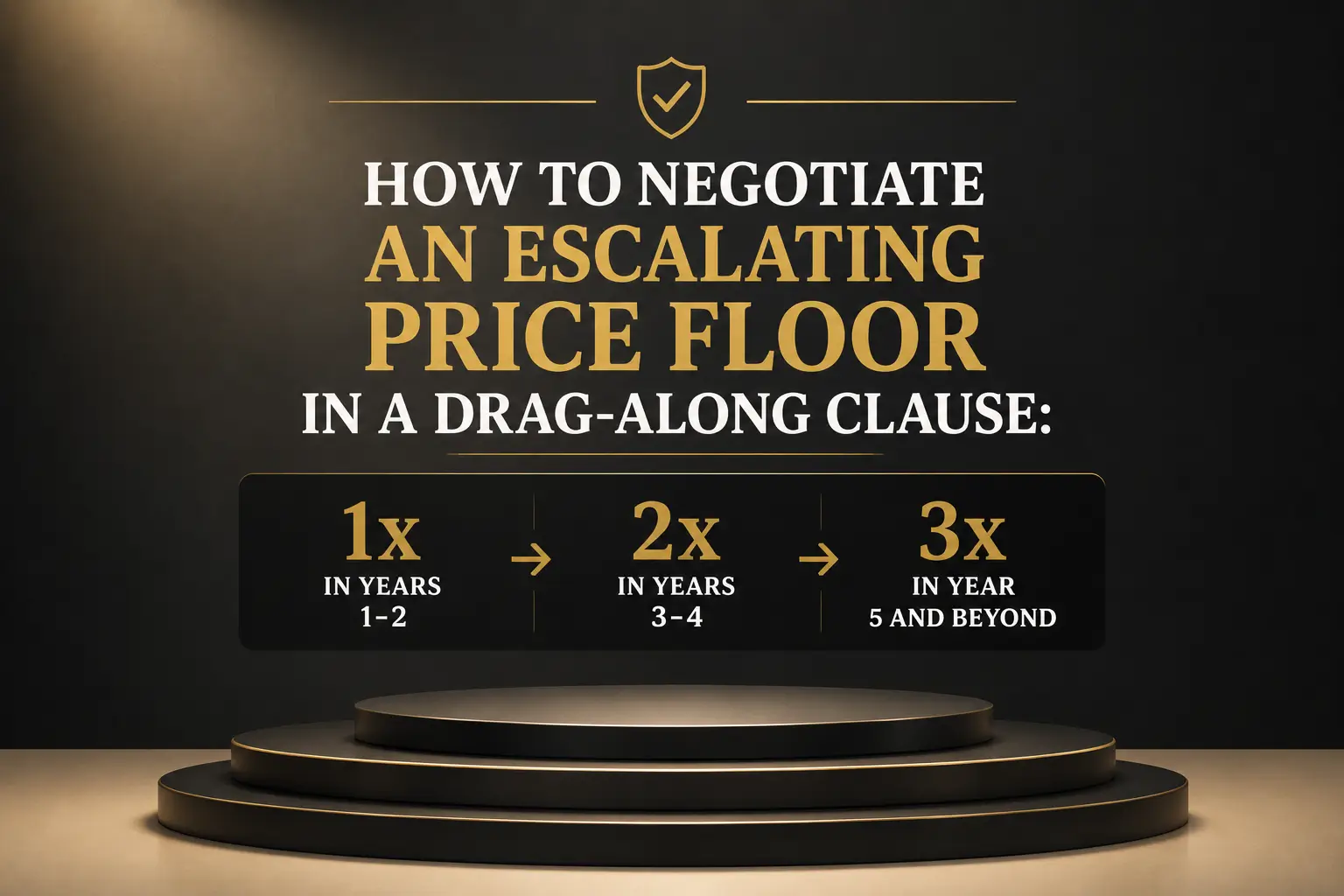
How to Negotiate an Escalating Price Floor in a Drag-Along Clause: 1x in Years 1-2, 2x in Years 3-4, 3x in Year 5 and Beyond
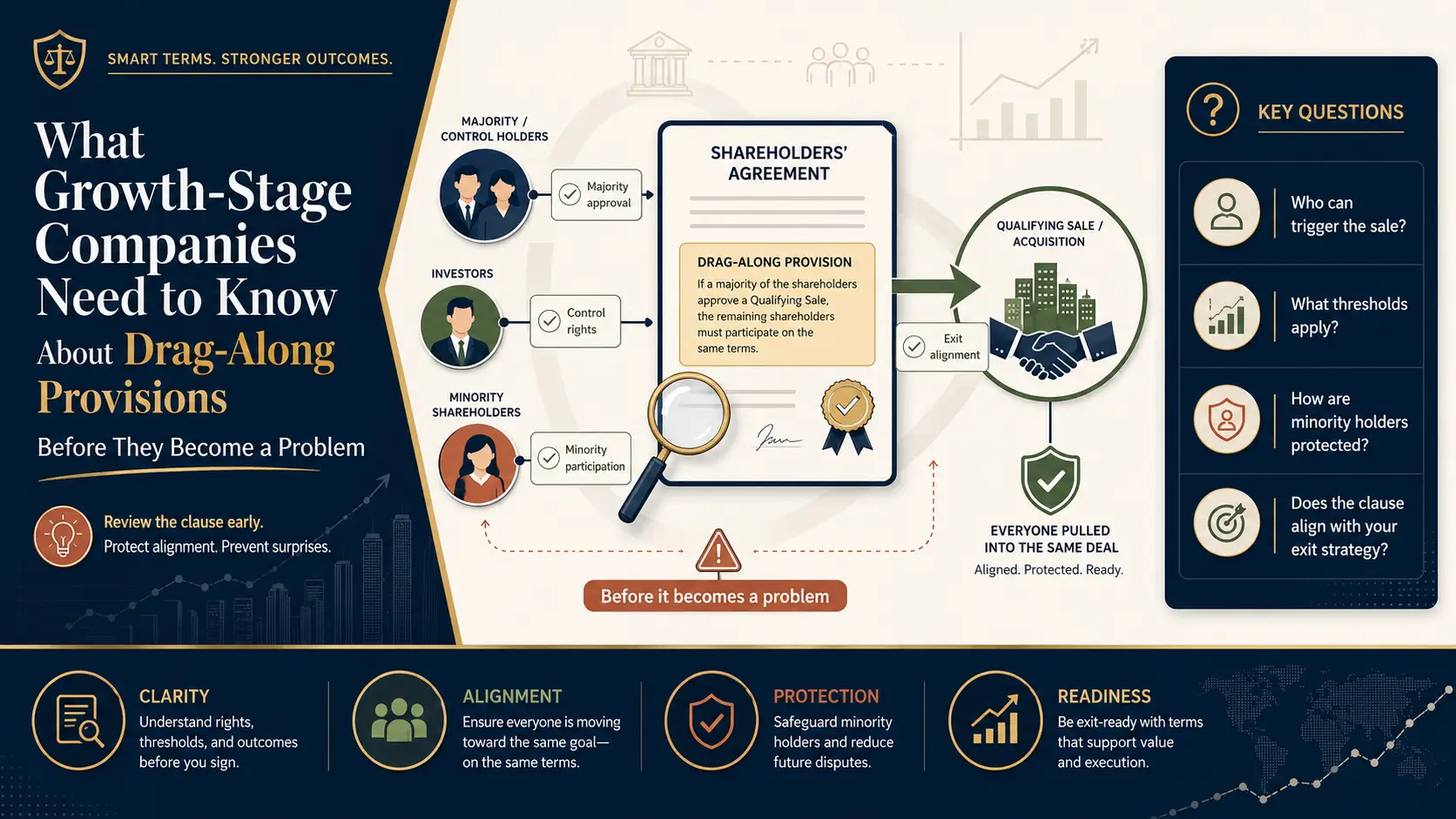
What Growth-Stage Companies Need to Know About Drag-Along Provisions Before They Become a Problem

How Should a Project-Level Financing Exhibit Be Formatted for LP Review Without Duplicating the Full Capital Stack Memo?
Disclosure
Nothing on this site constitutes an offer to sell, or a solicitation of an offer to purchase, any security under the Securities Act of 1933, as amended, or any applicable state securities laws. Any offering of securities is made only by means of a formal private placement memorandum or other authorized offering documents delivered to qualified investors.
IRC Partners is a capital advisory firm. IRC Partners is not a registered investment adviser under the Investment Advisers Act of 1940 and does not provide investment advice as defined thereunder.
Certain statements in this article may constitute forward-looking statements, including statements regarding market conditions, capital availability, investor demand, and transaction outcomes. Such statements reflect current assumptions and expectations only. Actual results may differ materially due to market conditions, regulatory developments, company-specific factors, and other variables. IRC Partners makes no representation that any outcome, return, or result described herein will be achieved.
References to prior mandates, transaction volume, network credentials, or capital raised are provided for illustrative purposes only and do not constitute a guarantee or prediction of future results. Past performance is not indicative of future outcomes. Individual results will vary. Network credentials and transaction statistics referenced on this site reflect the aggregate experience of IRC Partners' principals and affiliated advisors and are not a representation of assets managed or transactions closed solely by IRC Partners.
Certain data, statistics, and information presented in this article have been obtained from third-party sources. IRC Partners has not independently verified such information and expressly disclaims responsibility for its accuracy, completeness, or timeliness. Readers should independently verify any third-party data before relying on it.
Readers are strongly encouraged to consult qualified legal, financial, and tax professionals before making any investment, capital raising, or business decision.
Schedule A Meeting
You get one shot to raise the right way. If this raise is worth doing, it’s worth doing with precision, leverage, and control.
This isn’t a practice run. Serious capital. Serious strategy. Let’s raise it right.
We onboard a maximum of seven
new strategic partners each quarter, by application only, to maximize your chances of securing the capital you need.
