.svg "CTA Arrow")


.png "Investor Ready Capital decorative background element")

How Should a Real Estate Sponsor Structure Capital Calls For a Family Office Investing In a Development Project?

How Should a Real Estate Sponsor Structure Capital Calls For a Family Office Investing In a Development Project?
Sponsors should structure capital calls around construction milestones, compliant notices, defined funding deadlines, and an escalating remedy sequence for defaults. The LPA should also address supplemental calls, excess capital, and the records needed to support every draw.
A capital call structure that works for a family office LP is one that is written into the LPA before the first draw, covers every trigger scenario, and leaves no ambiguity about notice, default, or documentation. Sponsors who defer this work until construction begins find themselves negotiating mechanics under pressure, which is the fastest way to damage a relationship that took months to build. The six decisions below cover how to set the schedule, what makes a call valid, how much notice a family office expects, what happens when an LP fails to fund, how to handle funding variances at the project level, and what records the GP must keep to defend any disputed call.
Family offices that commit $5M to $250M in LP equity on development deals operate on a different timeline than institutional fund managers. They move faster, but they also expect the GP to have the structural discipline to match. As covered in the family office vs. private equity fund comparison for real estate LP equity, family offices are relationship-driven investors who evaluate governance transparency before they evaluate return projections. A capital call framework is one of the clearest signals of that governance quality.
The stakes are high: a capital call that fails to satisfy the notice requirements in the governing documents is technically invalid. The LP faces no funding obligation until the deficiency is cured, and the GP must cure it before exercising any remedies. Getting the mechanics right protects both sides.
How to Set the Capital Call Schedule in the LPA
The LPA should specify the call schedule before closing, tied directly to the project's construction draw schedule. The most defensible structure links each capital call to a defined milestone: land closing, foundation completion, vertical construction, and certificate of occupancy. Milestone-based calls give the family office LP a clear picture of when their capital is needed and why, which reduces friction on every subsequent draw.
A development project spanning 4 to 9 months of active construction will typically require three to six capital calls. The LPA should enumerate them by phase, not by calendar date, because construction timelines shift. Tying calls to milestones prevents a situation where the GP is forced to issue a call before the milestone is reached, or where the LP can argue a call arrived ahead of schedule.
The LPA must also specify:
- Who is authorized to issue the call. The general partner or a designated officer of the fund entity. Ambiguity here creates disputes.
- What the capital may be used for. Permitted uses should be enumerated: land acquisition, hard costs, soft costs, fees, reserves, and any subscription line repayment. Calls used for purposes outside the permitted list are vulnerable to challenge.
- The pro-rata calculation method. Each LP's obligation should be stated as a percentage of their total commitment, applied to the fund-level call amount.
Key point: The schedule is a planning document and a legal document at the same time. Treat it as both from day one.
What Triggers a Valid Capital Call and What Documentation Is Required
A valid capital call requires both a triggering condition and a compliant notice. The triggering condition should be defined in the LPA as the GP's determination that the project requires additional capital to fund a permitted use. That determination must be documented before the notice goes out.
According to capital call mechanics guidance for real estate funds and syndications, a complete capital call notice must include all of the following:
A call that omits any of these elements gives the LP a technical defense. If the LP fails to fund a deficient notice, the GP cannot exercise default remedies until the notice deficiency is cured. This is one of the most common drafting failures in development deal LPAs.
The GP should maintain a call issuance log that records the date each notice was sent, the delivery method, and confirmation of receipt. Email with read receipt or certified delivery is the standard.
How Much Advance Notice Family Office LPs Expect
The notice period for a capital call is a negotiated term. For development deals with family office LPs, the standard range is 10 to 15 business days for planned calls tied to construction milestones. Some fund documents create a two-tier structure: a standard 10-business-day period for scheduled draws and a shorter 3-to-5 business day period when acquisition timing or construction draw deadlines require faster funding.
Family offices are more flexible on notice periods than institutional fund managers, but they still need time to coordinate internal approvals and arrange wire transfers. A 10-business-day standard notice period is the practical minimum for a family office LP managing liquidity across multiple investments.
The LPA should specify:
- Standard notice period: 10 to 15 business days for milestone-triggered calls
- Expedited notice period: 3 to 5 business days, available only for defined circumstances listed in the LPA
- Settlement date vs. notice date: The LPA must distinguish between the date the notice is delivered and the date funds must be received in the entity's account
Sponsors raising for development projects should also consider sending a pre-call advisory 30 days before each anticipated draw. A pre-call advisory carries no funding obligation and gives the family office LP early visibility into upcoming liquidity needs, reducing the chance of a funding delay caused by LP-side cash management issues. Pre-call advisories are a relationship management tool as much as a logistical one.
What Happens When a Family Office LP Defaults on a Capital Call
A default occurs when the LP fails to fund by the settlement date specified in a valid capital call notice. The LPA must define what constitutes a default and what remedies the GP may exercise. Without this language, the GP has limited recourse and the project timeline is at risk.
Defining the Default Event
The LPA should define default as failure to fund the full amount due by the settlement date. Some agreements include a short cure period, typically 5 to 10 business days after the settlement date, before the default is declared. This gives the LP time to resolve a wire delay without triggering full remedies, which is a reasonable accommodation for a family office relationship.
GP Remedies
The LPA should enumerate the remedies available to the GP in order of escalation:
- Interest on the defaulted amount. The LPA should specify a default interest rate, typically prime plus 2% to 5%, accruing from the settlement date.
- Suspension of distributions. The GP may suspend the defaulting LP's right to receive distributions until the default is cured.
- Dilution of ownership interest. The GP may reduce the defaulting LP's percentage interest. The dilution formula must be defined in the LPA and applied consistently.
- Forced transfer or buyout. The LPA may allow the GP or non-defaulting LPs to purchase the defaulting LP's interest at a defined price, often at a discount to fair market value.
The GP must follow the remedy sequence exactly as written. Skipping steps or applying remedies out of order gives the defaulting LP grounds to challenge the action.
How to Handle Over-Funding and Under-Funding at the Project Level
Development projects rarely close exactly at the budgeted capital requirement. The LPA should address both scenarios before they occur.
When the Project Is Over-Funded
Over-funding happens when capital calls draw more equity than the project ultimately requires, often because construction costs came in under budget or a lender advanced more proceeds than initially projected. The LPA should specify what happens to excess capital:
- Return to LPs pro-rata within a defined period after project completion or stabilization
- Hold in reserve for defined contingencies, with a cap on the reserve amount
- Apply to the next project only if the LPA explicitly permits cross-project capital deployment
Family offices expect clear language on this point. Excess capital sitting in the entity without a defined disposition creates questions about GP intent and can damage the relationship heading into a re-up conversation.
When the Project Is Under-Funded
Under-funding occurs when actual costs exceed the budgeted capital raise. This is the higher-risk scenario for both the GP and the LP. The LPA should address it by:
- Specifying whether the GP has authority to issue additional capital calls beyond the original schedule, and if so, under what conditions
- Defining any cap on total LP capital contributions as a percentage of original commitment
- Identifying the GP's obligation to contribute additional capital before issuing a supplemental call to LPs
Sponsors structuring capital stacks for $5M to $250M development deals should also model a cost overrun scenario at underwriting and share it with the family office LP before closing. This gives the LP visibility into the worst-case funding requirement and reduces the chance of a dispute if a supplemental call becomes necessary. For guidance on how capital stack layers interact with these scenarios, see capital stack layers that minimize risk for developers.
{{main-cta}}
What Records the GP Must Maintain to Defend a Disputed Call
Disputes over capital calls almost always come down to documentation. The GP who can produce a complete paper trail for every call will prevail in most disputes. The GP who cannot will spend months in negotiation or litigation.
The minimum records the GP must maintain for each capital call:
- The original capital call notice with the delivery timestamp and the LP's confirmation of receipt
- The LPA provision cited in the notice as the authority for the call
- The project budget and draw schedule showing the capital need that triggered the call
- Bank records confirming receipt of the LP's wire on or before the settlement date
- Any cure notices or default declarations sent after a missed settlement date, with delivery confirmation
- All LP communications related to the call, including any objections, requests for extension, or cure commitments
The GP should also maintain a master capital account ledger showing each LP's total commitment, cumulative calls to date, amount funded, remaining unfunded commitment, and any default interest accrued. This ledger should be updated after every call and available for LP inspection on request. If you need the wider diligence file that usually sits around this process, see 47 Due Diligence Documents $10M+ Sponsors Must Have Ready.
Why this matters: A family office LP who disputes a call will point first to the notice. If the notice was deficient, the GP's default remedies are suspended until the deficiency is cured. If the GP cannot produce the original notice with a delivery timestamp, the LP's counsel will argue the notice was never properly delivered. Records discipline is the GP's primary defense.
Sponsors preparing for a first institutional raise should review their record-keeping infrastructure before the first call goes out. For a broader look at what institutional LPs audit before committing capital, see what family offices actually underwrite before returns.
What a Capital Call Framework Should Include Before the First Draw
The capital call framework is complete when six elements are resolved in the LPA before construction begins:
- A milestone-based call schedule tied to the construction draw timeline
- A compliant notice template covering all required elements
- A defined notice period with both standard and expedited windows
- A default definition with a cure period and an escalating remedy sequence
- Disposition language for over-funded and under-funded scenarios
- A records protocol specifying what the GP must maintain for each call
Sponsors who address these six elements before the first draw give themselves a defensible position on every call that follows. Those who defer the work find the gaps at the worst possible time.
IRC Partners works with real estate sponsors raising $5M to $250M in institutional equity to structure capital call frameworks, LPA mechanics, and LP communication protocols before construction begins.
Frequently Asked Questions
What is a capital call in a real estate development deal?
A capital call is a formal request from the GP to LPs to fund their pro-rata share of a required capital contribution. In a development deal, capital calls are issued as the project draws on equity to fund construction phases, fees, and reserves. Each call must satisfy the notice requirements in the LPA to be valid and enforceable.
How many capital calls should a development deal have?
Most ground-up development projects require three to six capital calls tied to construction milestones: land closing, foundation, vertical construction, and certificate of occupancy. The exact number depends on the project's draw schedule and how the LPA structures permitted uses. Milestone-based calls are more defensible than calendar-based calls because they tie each draw to a documented project event.
Can a family office LP refuse a capital call?
A family office LP can challenge a capital call if the notice is deficient, meaning it omits required elements such as the settlement date, wire instructions, or governing document citation. A deficient notice is technically invalid, and the LP has no funding obligation until the deficiency is cured. An LP who simply refuses to fund a valid, compliant call is in default and subject to the remedies defined in the LPA.
What is the standard notice period for a capital call?
The standard notice period for a planned capital call in a development deal is 10 to 15 business days. Some LPAs include a shorter expedited window of 3 to 5 business days for time-sensitive draws. The notice period is a negotiated term and should be specified in the LPA before closing, with a clear distinction between the notice delivery date and the settlement date when funds must be received.
What happens if a family office LP misses a capital call deadline?
If a family office LP fails to fund by the settlement date in a valid capital call notice, the GP may declare a default after any cure period defined in the LPA. Remedies typically escalate from default interest accrual to suspension of distributions to dilution of the LP's ownership interest. The GP must follow the remedy sequence exactly as written in the LPA or risk the LP challenging the remedy as improperly applied.
How should a GP handle a capital call if construction costs exceed the budget?
If actual project costs exceed the budgeted capital raise, the GP must first determine whether the LPA authorizes supplemental capital calls beyond the original schedule. If it does, the GP should issue a compliant notice citing the specific LPA provision, documenting the cost overrun that triggered the call. Sponsors raising for development deals in the $5M to $250M range should model a cost overrun scenario at underwriting and share it with the LP before closing to reduce dispute risk.
What records should a GP keep for every capital call?
For each capital call, the GP should retain the original notice with a delivery timestamp, the LP's funding confirmation, bank records showing receipt by the settlement date, and the project budget documentation that supported the call. A master capital account ledger tracking each LP's total commitment, cumulative calls, funded amounts, and remaining balance should be updated after every draw and available for LP inspection. These records are the GP's primary defense in any disputed call.
Continue reading this series:
- What Should a Capital Call Schedule Include for Institutional LP Review?
- 10 Mistakes That Kill Your First Institutional Raise
- Five Financial Materials for Institutional LP Follow-Up
IRC Partners advises operators raising $5M to $250M of institutional capital on structure, positioning, and round architecture. We take seven strategic partners per quarter. No placement agent model. No success-only theater. Capital is raised on the strength of how the deal is built. If you want your current raise reviewed before it reaches the market and silently fails, apply here.
Need guidance on your capital raise?


Reviews of Investor Pitch Deck Preparation Advisors
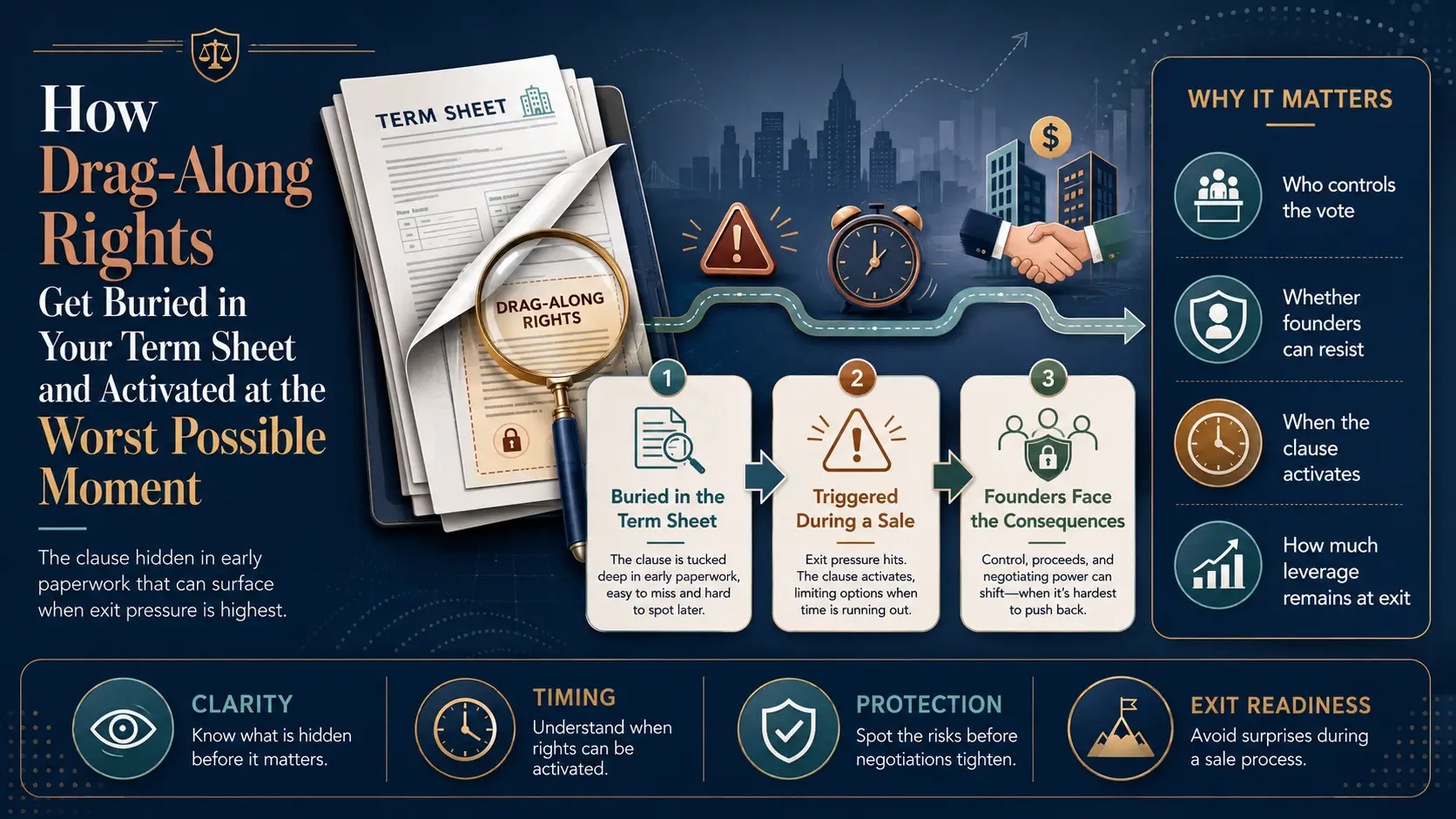
How Drag-Along Rights Get Buried in Your Term Sheet and Activated at the Worst Possible Moment

Multifamily Real Estate Investment: How Sponsors Structure $10M+ Apartment Deals That Institutional Capital Funds
Disclosure
Nothing on this site constitutes an offer to sell, or a solicitation of an offer to purchase, any security under the Securities Act of 1933, as amended, or any applicable state securities laws. Any offering of securities is made only by means of a formal private placement memorandum or other authorized offering documents delivered to qualified investors.
IRC Partners is a capital advisory firm. IRC Partners is not a registered investment adviser under the Investment Advisers Act of 1940 and does not provide investment advice as defined thereunder.
Certain statements in this article may constitute forward-looking statements, including statements regarding market conditions, capital availability, investor demand, and transaction outcomes. Such statements reflect current assumptions and expectations only. Actual results may differ materially due to market conditions, regulatory developments, company-specific factors, and other variables. IRC Partners makes no representation that any outcome, return, or result described herein will be achieved.
References to prior mandates, transaction volume, network credentials, or capital raised are provided for illustrative purposes only and do not constitute a guarantee or prediction of future results. Past performance is not indicative of future outcomes. Individual results will vary. Network credentials and transaction statistics referenced on this site reflect the aggregate experience of IRC Partners' principals and affiliated advisors and are not a representation of assets managed or transactions closed solely by IRC Partners.
Certain data, statistics, and information presented in this article have been obtained from third-party sources. IRC Partners has not independently verified such information and expressly disclaims responsibility for its accuracy, completeness, or timeliness. Readers should independently verify any third-party data before relying on it.
Readers are strongly encouraged to consult qualified legal, financial, and tax professionals before making any investment, capital raising, or business decision.
Schedule A Meeting
You get one shot to raise the right way. If this raise is worth doing, it’s worth doing with precision, leverage, and control.
This isn’t a practice run. Serious capital. Serious strategy. Let’s raise it right.
We onboard a maximum of seven
new strategic partners each quarter, by application only, to maximize your chances of securing the capital you need.
