.svg "CTA Arrow")


.png "Investor Ready Capital decorative background element")

What Board-Level Operating Cadence Do Growth Equity Investors Expect After a Series B Investment?
What Board-Level Operating Cadence Do Growth Equity Investors Expect After a Series B Investment?
A Series B board cadence typically combines quarterly board meetings, advance board packages, and monthly KPI reporting. The cadence gives directors a regular view of performance, decisions, and issues between formal meetings.
Growth equity investors at Series B expect three governance standards from the first post-close quarter: quarterly board meetings at minimum, board packages delivered 48 to 72 hours before each meeting, and KPI reporting on a monthly basis with a trailing 12-month view. These are the operating standards institutional investors use to assess whether a company is ready to scale with institutional discipline.
A founder who arrives at the first post-close board meeting without a structured cadence signals that the company is still running on startup instincts, which creates friction with institutional partners and slows the path to the next milestone.
This guide covers:
- Why institutional investors read board cadence as a governance signal
- What meeting frequency and structure they expect at Series B
- What belongs in a board package and when it must be delivered
- How the cadence connects to the path to the next raise
The output you should build from this guide is a post-close board cadence template and a board package checklist your team can run every quarter without rebuilding it from scratch.
The Capital Raise Pre-Flight is IRC Partners' fixed-fee diagnostic that scores a raise against the same twelve institutional gates a deal must clear before IRC Partners takes it into a strategic partnership. Founders who want to benchmark their company against SaaS financial standards can review Bessemer Venture Partners' State of the Cloud 2023 for context on the efficiency and growth metrics institutional investors use alongside governance assessments. Governance and board cadence discipline is one of those gates.
Why Growth Equity Investors Treat Board Cadence as a Governance Signal
Series B growth equity investors are buying into a company they expect to scale with institutional discipline. The board cadence they observe in the first two quarters after close tells them whether that discipline exists or whether the founder is still improvising.
Board cadence is one of the first observable signals after close. Before the next financing event, before a material exit, and before any formal diligence process begins, the board meeting rhythm is the primary data point investors have about how the company is run.
A structured cadence signals three things to institutional partners:
- The management team can produce consistent, organized reporting under pressure
- The company has a governance system that will hold up through growth, hiring, and eventual re-financing
- The founder respects the institutional relationship and the obligations that come with it
Founders who avoid excessive reporting obligations in their term sheets still need a disciplined internal cadence. Negotiating lighter reporting rights is a reasonable structural move. The cadence itself remains a governance requirement regardless of what the term sheet says.
The inverse is also true. A founder who sends board packages the morning of the meeting, skips monthly KPI updates, or runs board meetings without a structured agenda signals that the company's operating discipline is weak. Institutional investors price that signal into their view of the management team, and it shapes how much friction appears when the Series C conversation begins.
What Meeting Frequency and Structure Institutional Investors Expect at Series B
Standard institutional practice at Series B sets quarterly board meetings as the minimum frequency, with monthly meetings as the appropriate cadence for high-growth stage companies that require more frequent strategic alignment.
Post-Close Board Meeting Frequency
The right frequency depends on how much the company is changing. A company in an active growth sprint has more to discuss each month than one with a stable, predictable growth trajectory. The decision to move from quarterly to monthly meetings should be driven by operational velocity.
Meeting Structure That Works at Institutional Scale
A board meeting with a structured agenda functions as a governance event. One without structure functions as a conversation. Institutional investors expect a defined format they can prepare for in advance. The standard structure for a Series B board meeting runs four segments:
- Consent agenda - Approval of prior meeting minutes, routine resolutions, and any items requiring formal board action
- Business performance review - KPI dashboard, revenue and ARR update, unit economics, and variance explanation against plan
- Strategic discussion - One or two forward-looking topics the CEO brings for board input and strategic discussion
- Closed session - Independent directors and investor directors meet without management to discuss governance matters
The closed session is the element most founders underestimate. Institutional investors use it to align on management performance, compensation, and any concerns that need to be discussed without the CEO present. Founders who resist the closed session create friction with their board partners.
The cap table governance issues that surface at Series B often trace back to board structures that were never formalized after prior rounds. A clean board composition with clear voting rights, properly constituted committees, and documented consent thresholds is the foundation the meeting cadence runs on.
What Belongs in a Board Package and When It Must Be Delivered
Standard institutional practice sets board package delivery at 48 to 72 hours before each meeting. That window exists so board members can read the materials, form questions, and arrive prepared to discuss strategy. A meeting that opens with number catch-up loses the first half to reporting.
A package delivered the morning of the meeting is a package that does not get read. The board meeting then becomes a reporting session instead of a governance event, which is the opposite of what institutional investors are paying attention for.
Board Package Checklist
Every board package at Series B should include these components:
Performance section
- ARR, MRR, and month-over-month growth rate
- Net Revenue Retention and Gross Revenue Retention
- Customer count, churn rate, and new logo additions
- Burn rate, runway, and cash balance
- Headcount by department versus plan
KPI dashboard
- Trailing 12-month view of core metrics
- Variance explanation for any metric materially off plan
- Forward-looking commentary on the next 90 days
Financial statements
- Income statement, balance sheet, and cash flow statement for the period
- Updated financial model with revised projections if anything material changed
Strategic section
- CEO memo: 1 to 2 pages covering the key decisions the board needs to weigh in on
- Pipeline and go-to-market update
- Hiring plan status and any key person changes
- Any material legal, compliance, or operational issues
Consent items
- Minutes from the prior meeting for approval
- Any resolutions requiring formal board action
Key takeaway: The board package is a decision-support document. The performance section gives context. The strategic section is where the board earns its seat.
Monthly KPI Reporting Between Board Meetings
Standard institutional practice sets monthly KPI reporting with a trailing 12-month view as the cadence between formal board meetings. This is a lighter-weight update, typically one to two pages, that keeps investors aligned on performance without requiring a full board meeting.
The monthly KPI update should cover the same core metrics as the board package performance section, delivered as a structured email or shared document. Founders who skip this cadence between quarterly meetings leave a 90-day information gap that institutional investors fill with their own concerns.
Founders who understand what percentage of equity they should retain before a Series B also understand that maintaining governance discipline is part of protecting that ownership. Institutional investors who lose confidence in a founder's operational discipline push for structural changes that erode founder control. A consistent cadence is one of the clearest ways to prevent that dynamic.
{{main-cta}}
How the Operating Cadence Connects to the Path to the Next Milestone
The board cadence built after a Series B close is the same infrastructure that supports the Series C raise. Every quarterly board meeting, every monthly KPI update, and every on-time board package delivery builds a documented governance record that future investors will review.
Series C investors and growth equity funds conducting diligence on a company request board minutes, board packages, and KPI history as standard diligence items. A company with clean, consistent board documentation across multiple quarters signals operational maturity. A company that cannot produce organized board records gives diligence teams a reason to slow the process.
How the Cadence Builds Toward the Next Raise
The cadence creates three specific assets that matter at the next financing event:
1. A documented performance record Monthly KPI reporting with a trailing 12-month view creates a clean time series of company performance. That record is the foundation of the data room for the next raise. Founders who build it consistently do not have to reconstruct it under pressure.
2. A governance track record Quarterly board meetings with documented minutes, formal consent processes, and structured agendas demonstrate that the company operates with institutional discipline. Future investors read that record as evidence that the company can handle the governance requirements of a larger round.
3. Aligned investors Founders who run a disciplined cadence keep their existing investors informed and engaged. Informed investors are more likely to write follow-on checks, make warm introductions to the next lead, and advocate for the company in investor networks. Founders who let the cadence lapse often find their existing investors are less helpful when the next raise begins.
Post-Close Board Cadence Template
Use this as a starting framework for the first 12 months after a Series B close:
Frequently Asked Questions
How many board meetings per year do Series B growth equity investors expect?
Standard institutional practice sets a minimum of four board meetings per year at the quarterly cadence for a Series B company, with up to twelve meetings per year for companies in a high-growth stage that require more frequent strategic alignment. The right number depends on how rapidly the business is changing. A company in a rapid growth phase typically benefits from monthly meetings. A company with a stable, predictable growth trajectory can operate effectively on a quarterly cadence.
How far in advance should a board package be delivered before a Series B board meeting?
Standard institutional practice sets board package delivery at 48 to 72 hours before each meeting. That window gives board members time to read the materials, identify questions, and arrive prepared to discuss strategy. Packages delivered the morning of the meeting deprive the board of preparation time and turn the meeting into a reporting session.
What KPI reporting cadence do institutional investors expect between board meetings?
Standard institutional practice sets monthly KPI reporting with a trailing 12-month view as the cadence between formal board meetings. The monthly update is typically a one to two page structured document covering ARR, growth rate, net revenue retention, burn, and runway. It keeps investors aligned on performance without requiring a full board meeting and prevents the 90-day information gap that leads to investor anxiety.
Does a founder lose control of the company by running a formal board cadence?
A structured board cadence gives a founder more control. Founders who run a disciplined cadence set the agenda, control the narrative, and shape the strategic discussion. Founders who run informal or inconsistent board processes leave a vacuum that institutional investors fill with their own concerns and requests. Governance discipline is a founder tool, and the cadence is how founders demonstrate they are running the company.
What is the difference between a board package and a monthly KPI update?
A board package is a comprehensive document delivered 48 to 72 hours before a formal board meeting. It includes performance data, financial statements, a CEO strategic memo, and any consent items requiring board action. A monthly KPI update is a lighter document delivered between board meetings that covers core metrics with a trailing 12-month view. The board package supports a governance meeting. The monthly KPI update maintains investor alignment between those meetings.
When should a Series B company move from quarterly to monthly board meetings?
The trigger is operational velocity. Standard institutional practice positions monthly meetings as the appropriate cadence for high-growth stage companies where strategic decisions need to be made more frequently than once per quarter. Practical indicators include a hiring plan that is changing monthly, a go-to-market strategy in active iteration, a significant product launch in progress, or a financing event on the horizon. Monthly meetings are a resource commitment for management and the board alike, so the decision should be driven by genuine need.
How does board cadence discipline affect a company's Series C raise?
Series C investors and growth equity funds conducting diligence request board minutes, board packages, and KPI history as standard items. A company with a documented governance record spanning multiple quarters gives diligence teams a clear picture of how management operates under pressure. That record reduces friction, builds investor confidence, and shortens the time from first meeting to term sheet. Companies that arrive at a Series C conversation without organized board records face slower processes and more questions about execution capacity.
Continue reading this series:
- What Do Series B Growth Equity Investors Look for in a Company?
- Five Financial Materials for Institutional LP Follow-Up
- Engagement Model for Venture Capital Fundraising
The Capital Raise Pre-Flight is IRC Partners’ fixed-fee diagnostic that scores a raise against the same twelve institutional gates a deal must clear before IRC Partners takes it into a strategic partnership. It is where every engagement begins, whether you are pre-revenue building toward a first institutional round or scaling a company that has raised before. For deals that clear, the full strategic partnership follows. IRC Partners advises operators raising $5M to $250M of institutional capital. If you are taking a raise to market, start here.
Need guidance on your capital raise?


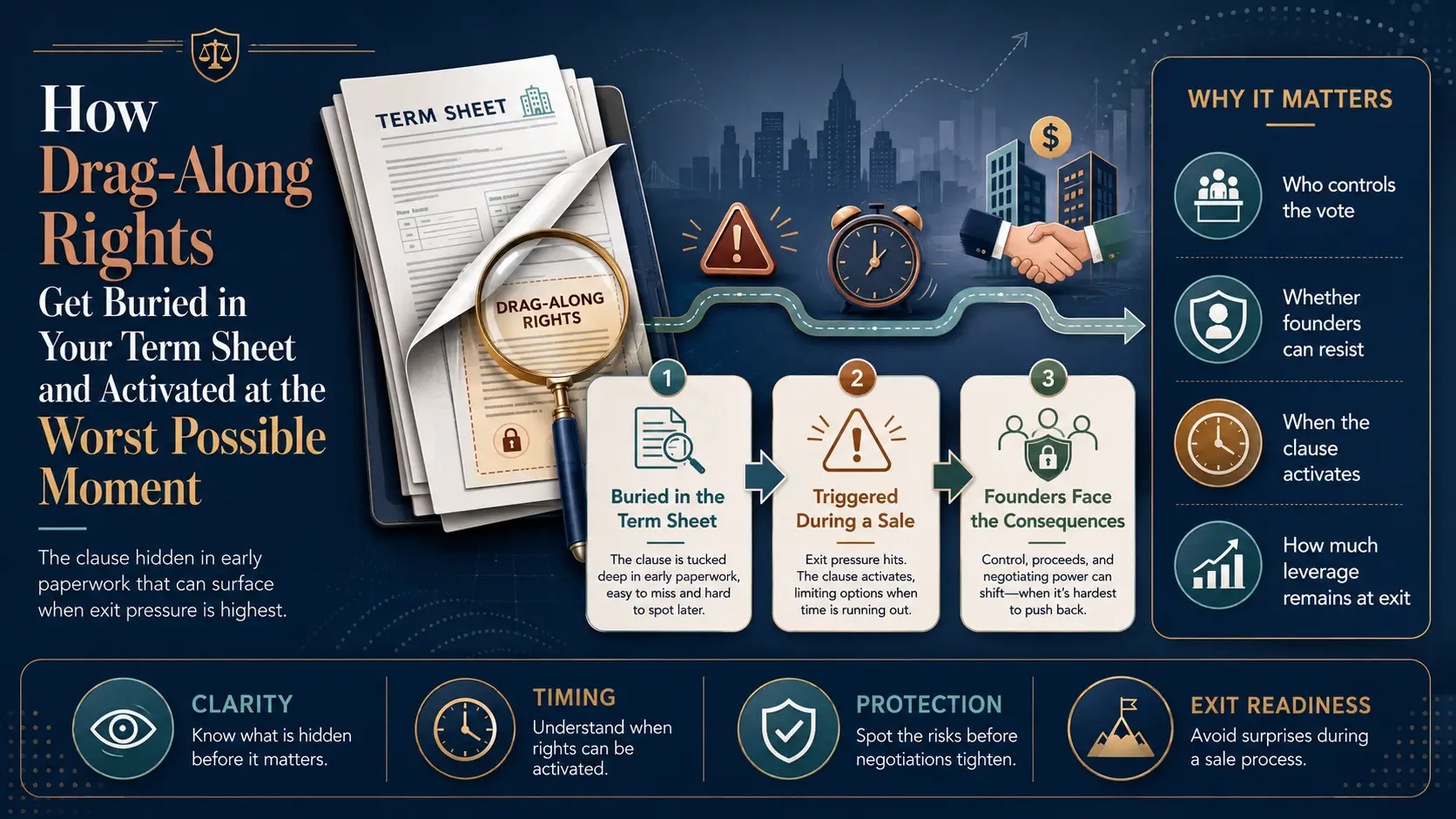
How Drag-Along Rights Get Buried in Your Term Sheet and Activated at the Worst Possible Moment

Best Advisors for Debt Advisory and Venture Debt
What Bridge Financing Terms Create Problems When a Company Expects To Pursue a Strategic Sale Within Twelve Months?
Disclosure
Nothing on this site constitutes an offer to sell, or a solicitation of an offer to purchase, any security under the Securities Act of 1933, as amended, or any applicable state securities laws. Any offering of securities is made only by means of a formal private placement memorandum or other authorized offering documents delivered to qualified investors.
IRC Partners is a capital advisory firm. IRC Partners is not a registered investment adviser under the Investment Advisers Act of 1940 and does not provide investment advice as defined thereunder.
Certain statements in this article may constitute forward-looking statements, including statements regarding market conditions, capital availability, investor demand, and transaction outcomes. Such statements reflect current assumptions and expectations only. Actual results may differ materially due to market conditions, regulatory developments, company-specific factors, and other variables. IRC Partners makes no representation that any outcome, return, or result described herein will be achieved.
References to prior mandates, transaction volume, network credentials, or capital raised are provided for illustrative purposes only and do not constitute a guarantee or prediction of future results. Past performance is not indicative of future outcomes. Individual results will vary. Network credentials and transaction statistics referenced on this site reflect the aggregate experience of IRC Partners' principals and affiliated advisors and are not a representation of assets managed or transactions closed solely by IRC Partners.
Certain data, statistics, and information presented in this article have been obtained from third-party sources. IRC Partners has not independently verified such information and expressly disclaims responsibility for its accuracy, completeness, or timeliness. Readers should independently verify any third-party data before relying on it.
Readers are strongly encouraged to consult qualified legal, financial, and tax professionals before making any investment, capital raising, or business decision.
Schedule A Meeting
You get one shot to raise the right way. If this raise is worth doing, it’s worth doing with precision, leverage, and control.
This isn’t a practice run. Serious capital. Serious strategy. Let’s raise it right.
We onboard a maximum of seven
new strategic partners each quarter, by application only, to maximize your chances of securing the capital you need.
