.svg "CTA Arrow")


.png "Investor Ready Capital decorative background element")
Debt vs Equity Financing: Which Should You Choose? (Complete Guide for Founders)
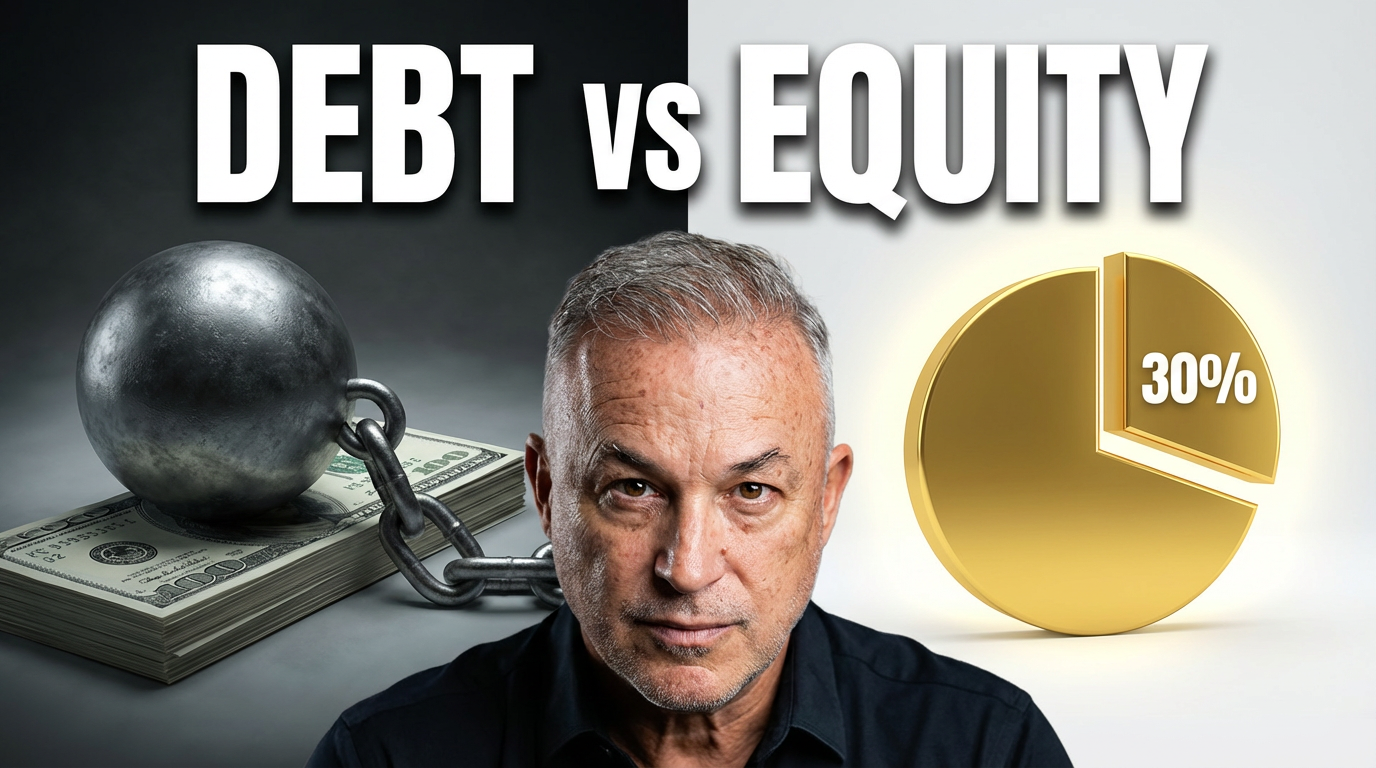
Every founder reaches a point where organic growth hits a wall. You need capital to scale, hire, or build product. The big question is: do you borrow the money (debt) or sell a piece of your company (equity)? This isn't just a math problem. It’s about control, speed, and the future of your business.
Most founders think raising a Series A is the only path. But taking on institutional capital changes everything. If you choose equity, you gain partners but lose ownership. If you choose debt, you keep control but add monthly pressure to your cash flow.
Here is the reality: making the wrong choice here can cost you millions at exit. We see founders who own 5-15% less of their company than they think because they didn't understand the terms. Whether you are looking at venture capital trends or bank loans, you need a strategy, not just cash.
What Is Debt Financing?
Debt financing is straightforward. You borrow money now and agree to pay it back later, usually with interest. It’s like a mortgage for your business. You get the cash you need to grow, but you have to make regular payments regardless of how much revenue you bring in that month.
"Debt financing is when you borrow money to fund a startup." - Graphite Financial Blog (Graphite Financial Blog)
The biggest advantage here is that the lender doesn't get a seat on your board. They don't own a piece of your future success, only the right to be paid back with interest.
How Debt Financing Works for Startups
When you take on debt, the relationship is transactional. The lender provides capital, and you provide a repayment schedule. It works well when you have predictable revenue streams to cover the monthly costs.
Here is how it breaks down:
- Borrow money: You get a lump sum or a line of credit.
- Retain ownership: You do not sell any shares or give up voting rights.
- Repayment obligation: You must pay the money back on time, even if sales are slow.
Types of Debt Options for Founders
Not all debt is a standard bank loan. Startups have access to specialized debt products designed for high-growth companies that might not have years of profit history.
Common options include:
- Term loans: Standard loans with a fixed repayment date.
- Lines of credit: Flexible capital you can draw from as needed.
- Venture debt: Loans specifically for VC-backed startups to extend runway.
- Revenue-based financing: Repayments fluctuate based on your monthly sales.
What Is Equity Financing?
Equity financing is when you trade ownership for capital. You aren't borrowing money; you are selling a slice of the company. Investors give you cash in exchange for shares, and they hope those shares will be worth much more in the future.
"Equity financing involves selling off ownership shares to investors in exchange for funding." - Graphite Financial Blog (Graphite Financial Blog)
This is the standard path for high-growth startups because there are no monthly payments. The capital is yours to use for growth. However, your investors now have a say in how you run things.
How Equity Financing Works in Practice
In an equity deal, you are bringing on long-term partners. These investors take on risk with you. If the company fails, they lose their money. If it succeeds, they share in the rewards.
The core mechanics:
- Sell ownership: You exchange stock for capital.
- No repayment: You don't pay the money back like a loan.
- Shared risk: Investors are aligned with your growth, but they also expect a significant return on investment (ROI).
Equity Rounds from Seed to Series B
Equity fundraising happens in stages. It usually starts with friends and family or angel investors, then moves to institutional rounds like Series A and Series B. Each round dilutes your ownership further.
The cost of capital:
Recent data shows that startups typically give up 20-25% equity during Series A fundraising (Graphite Financial Blog). This is why managing your cap table is critical. If you give up too much early on, you might be left with very little at the exit.
Debt vs. Equity: Key Differences for Founders
Choosing between debt and equity comes down to what you value most right now: control or cash flow. Debt is cheaper in the long run but riskier in the short term if you can't make payments. Equity is safer for cash flow but expensive because you give up future upside.
Here is a quick breakdown of the major differences:
Most founders we work with at IRC Partners use a mix of both strategies depending on their growth stage.
Pros and Cons of Debt Financing
Debt can be a powerful tool if your business is ready for it. It allows you to fuel growth without shrinking your ownership stake. However, it introduces a fixed cost that can cripple a company if revenue dips.
The Pros:
- Ownership preservation: You keep 100% of your equity.
- Lower overall cost: Interest rates are usually cheaper than the future value of equity.
- Tax benefits: Interest payments are often tax-deductible.
- Predictable terms: You know exactly what you owe and when.
The Cons:
- Cash flow pressure: Monthly payments reduce the cash you have for hiring or marketing.
- Qualification hurdles: You often need collateral or strong revenue to qualify.
- Personal risk: Some lenders require personal guarantees from founders.
Pros and Cons of Equity Financing
Equity is often the only option for startups that are burning cash to grow fast. It provides a long runway without the stress of monthly bills. But that capital comes with new bosses and high expectations.
The Pros:
- No repayment pressure: You can focus entirely on growth, not debt service.
- Strategic value: Good investors bring networks, mentorship, and credibility.
- Risk sharing: If the business fails, you don't owe the money back.
The Cons:
- Loss of ownership: You own less of your company after every round.
- Loss of control: Investors may want board seats or veto rights on big decisions.
- Time-consuming: Raising a Series A round can take 6-9 months of full-time work.
When to Choose Debt Over Equity
Debt is the right move when you have a machine that works. If you know that putting $1 into marketing yields $3 in revenue, debt is the cheapest way to scale that machine. It’s about leverage.
Consider debt if:
- Predictable cash flow: You have recurring revenue that easily covers loan payments.
- Preserve ownership: You want to avoid dilution before a major valuation jump.
- Short-term need: You need bridge capital to get to the next milestone.
- Established revenue: You have a clear path to repayment.
Most founders underestimate the power of venture debt to extend their runway between equity rounds.
When to Choose Equity Over Debt
Equity is essential when you are building the machine. If you are pre-revenue or in a high-growth phase where profits are years away, you can't afford debt payments. You need partners who are betting on the long-term vision.
Consider equity if:
- Early stage: You are pre-revenue or high-risk.
- Big capital needs: You need significant cash ($5M+) to capture a market.
- Strategic needs: You need partners who can open doors and provide guidance.
- No cash for payments: You need to reinvest every dollar back into growth.
Here is a quick breakdown of why equity alignment matters so much:
Choosing equity means choosing a long-term partner, so vetting them is just as important as them vetting you.
Hybrid Approaches: SAFEs, Convertibles, and Venture Debt
You don't always have to choose one or the other. Hybrid instruments allow you to take money now and decide the valuation later. This is very common for Seed and bridge rounds.
"Convertible debt vs. equity is quite beneficial for startups looking for funding without having to dilute equity in the firm at the beginning." - nPerspective Insights (nPerspective Insights)
Popular hybrid options:
- SAFEs (Simple Agreement for Future Equity): Not debt, but not quite equity yet. It converts to equity at the next priced round.
- Convertible Notes: Debt that converts to equity. It carries interest but usually converts at a discount.
- Venture Debt: A loan taken alongside an equity round to provide extra cushion.
Key Factors to Evaluate Before Deciding
Before you sign a term sheet, you need to look at your business honestly. The "cheapest" money isn't always the best money. You have to weigh the cost of capital against the risk to your business.
Three main things to check:
- Stage of business: Are you proving the concept or scaling it?
- Cash flow predictability: Can you guarantee monthly payments?
- Risk profile: How much control are you willing to give up?
At IRC Partners, we use a proprietary Cap Table Forensics Report™ to model these scenarios. We often find that founders own 5-15% less than they think due to hidden terms in previous convertible notes.
Your Startup's Stage and Revenue Trajectory
Your stage dictates your options. Banks don't lend to ideas; they lend to cash flow. VCs don't invest in slow growth; they invest in potential unicorns.
"Early-Stage Startups often favor equity financing. Established Businesses may opt for debt financing for expansion." - nPerspective Insights (nPerspective Insights)
If you are raising a Series B round, you might have enough revenue to use debt for some needs while using equity for major expansion.
{{main-cta}}
Dilution Impact and Cap Table Health
Every equity dollar you raise dilutes your ownership. Debt avoids this immediate dilution. However, if your debt converts to equity later (like a convertible note), you still face dilution, often with added interest.
The math matters:
Statistics show that debt financing helps avoid equity dilution and reduce the overall cost of capital (Graphite Financial Blog). But you must model the exit. We see founders accept "standard" terms that include participating preferred stock or full ratchets. These can cost you $10M-$50M at exit.
Market Conditions and Exit Projections
The market determines what capital is available. In a tight market, equity investors demand lower valuations, making equity very expensive. In these times, debt might be a bridge to a better valuation next year.
Think about the exit:
- IPO/Acquisition: Equity investors need a massive exit to make their model work.
- Cash Cow: If you plan to run a profitable business forever, avoid VC money. They will push for an exit you might not want.
Best Practices for Securing Debt or Equity
Getting funded isn't about begging for money. It's about presenting a compelling business case. Whether you talk to a banker or a VC, you need to speak their language.
What they look for:
- Debt providers assess operating cash flow, cash runway, revenue growth, and net profit margin.
- Equity investors look for market size, team quality, and growth velocity.
Actionable steps:
- Build a clear business plan: Show exactly how the money generates a return.
- Clean up your financials: You need positive cash flow or a clear path to it for debt readiness.
Building a Strong Financial Model
Your financial model is your roadmap. It needs to show two things: how you spend the money and how you make it back. For debt, focus on coverage ratios (can you pay the loan?). For equity, focus on growth metrics (CAC, LTV, ARR).
Key metrics to highlight:
- Burn rate: How fast are you spending cash?
- Runway: How long until you run out of money?
- Unit economics: Do you make money on every sale?
Negotiating Favorable Terms
The first offer is rarely the best offer. In debt, negotiate the interest rate, covenants, and personal guarantees. In equity, negotiate the valuation, board seats, and liquidation preferences.
Watch out for:
- Covenants: Rules lenders set (e.g., "you must maintain $500k in the bank"). Breaking these can trigger a default.
- Liquidation preferences: Ensure investors don't get paid 2x or 3x their money before you see a dime.
Here is a breakdown of common mistakes founders make during this process:
Negotiation is where you protect your future payout.
Common Mistakes Founders Make in Financing Choices
The biggest mistake is taking the wrong kind of money for your stage. Using high-interest debt to fund long-term R&D is a recipe for bankruptcy. Giving up 30% of your company for a small seed round is a recipe for losing control.
"When funding urgency is high, ask yourself: Will this money expand your freedom — or mortgage your vision?" - Ilijev (HubSpot Startups)
Avoid these traps:
- Over-leveraging: Taking on more debt than your revenue can support.
- Bad terms: Accepting "participating preferred" stock without understanding the cost.
- Short runway: Raising only enough money for 6 months, forcing you to fundraise again immediately.
Case Studies: Debt and Equity in Action
Let's look at a real example. We worked with a healthcare software company with $12 million in annual revenue. They had a great product but were stuck. They spent four months sending cold emails to 200 investors trying to raise their Series B. Result? Zero responses.
The Pivot:
They stopped the cold outreach. We helped them identify three angel investors who had previously sold companies to the specific VC funds they wanted to target.
- The Strategy: We approached these angels for advice, not money.
- The Result: Two angels made warm introductions to the funds.
- The Outcome: A term sheet in six weeks.
Because they had strong revenue ($12M ARR), they were also able to layer in venture debt alongside the equity round. This reduced the total equity they had to sell, saving the founders about 4% ownership while still getting the full capital amount they needed.
Partnering with Experts Like Investor Ready Capital
Raising capital is a full-time job. Most founders try to do it while running their company, and both suffer. At IRC Partners, we operate differently. We aren't transactional brokers who charge fees just to make introductions.
Our Model:
- Equity-Aligned: We take 2-4% advisory equity in every engagement. If you get bad terms, we get bad terms. We are incentivized to protect your valuation.
- Global Network: We work with a syndicate of 77 global investment banks and 307,000 institutional allocators.
- Permanent Partner: One engagement covers all future rounds through exit.
We use our Embedded Capital Partner Program to position you for institutional raises. We reverse-engineer your cap table to find hidden dilution and architect clean term structures. With over $17 billion in demand from our network, we help you stop chasing investors and start selecting partners.
Conclusion
The choice between debt and equity isn't binary. It's strategic. Debt preserves ownership but demands cash flow. Equity fuels growth but dilutes control. The best founders often use a mix of both to optimize their capital structure.
Don't just look for the check. Look for the terms that let you build the company you want. Whether you are raising a Series A or looking for growth capital, ensure your partners are aligned with your exit goals.
Frequently Asked Questions
What is the main difference between debt and equity financing?
Debt involves borrowing money that must be repaid with interest while allowing you to keep full ownership. Equity involves selling a portion of your company to investors; it does not require repayment, but it permanently dilutes your ownership and control.
When should a startup use venture debt?
Venture debt is best used after raising institutional equity to extend your cash runway without further dilution. It typically requires predictable revenue or strong backing from existing VC investors to service the interest payments.
How does equity financing affect my cap table?
Equity rounds add new owners, which reduces the percentage held by founders. Poorly managed rounds can leave founders with very little ownership at exit, so it is vital to model your dilution before signing any term sheet.
Is convertible debt considered debt or equity?
It is a hybrid. It starts as a loan with interest but is designed to convert into equity shares during a future financing round. Early investors usually receive a discount or a valuation cap as a reward for their early-stage risk.
Why do institutional investors prefer equity over debt?
Venture capitalists take high risks for high rewards. The fixed return of interest on a loan is too low for the startup risk profile. Equity offers unlimited upside potential if the company achieves a massive valuation at exit.
Is revenue-based financing a good alternative for SaaS?
Yes, it is a non-dilutive option for SaaS companies with over $1M in ARR. It ties repayments to a percentage of monthly revenue, offering flexibility during slow months. However, the effective interest rates can be higher than traditional bank loans.
When should founders use a SAFE for bridge funding?
Use a SAFE for smaller bridge rounds when your valuation is uncertain. These convert at a discount to the next priced round, offering a faster and cheaper way to secure capital compared to a full equity negotiation.
Most founders don't lose the raise because of the pitch. They lose it because the structure was wrong before the first investor call. IRC Partners advises founders raising $5M to $250M of institutional capital. 7 strategic partners per quarter. Start here to schedule a call with our team.
The same institutional screen behind this framework is available as a capital raise readiness review you can run on your own deal.
Need guidance on your capital raise?


Capital Raise Audit vs Pitch Deck Review: What Institutional Investors Actually Screen
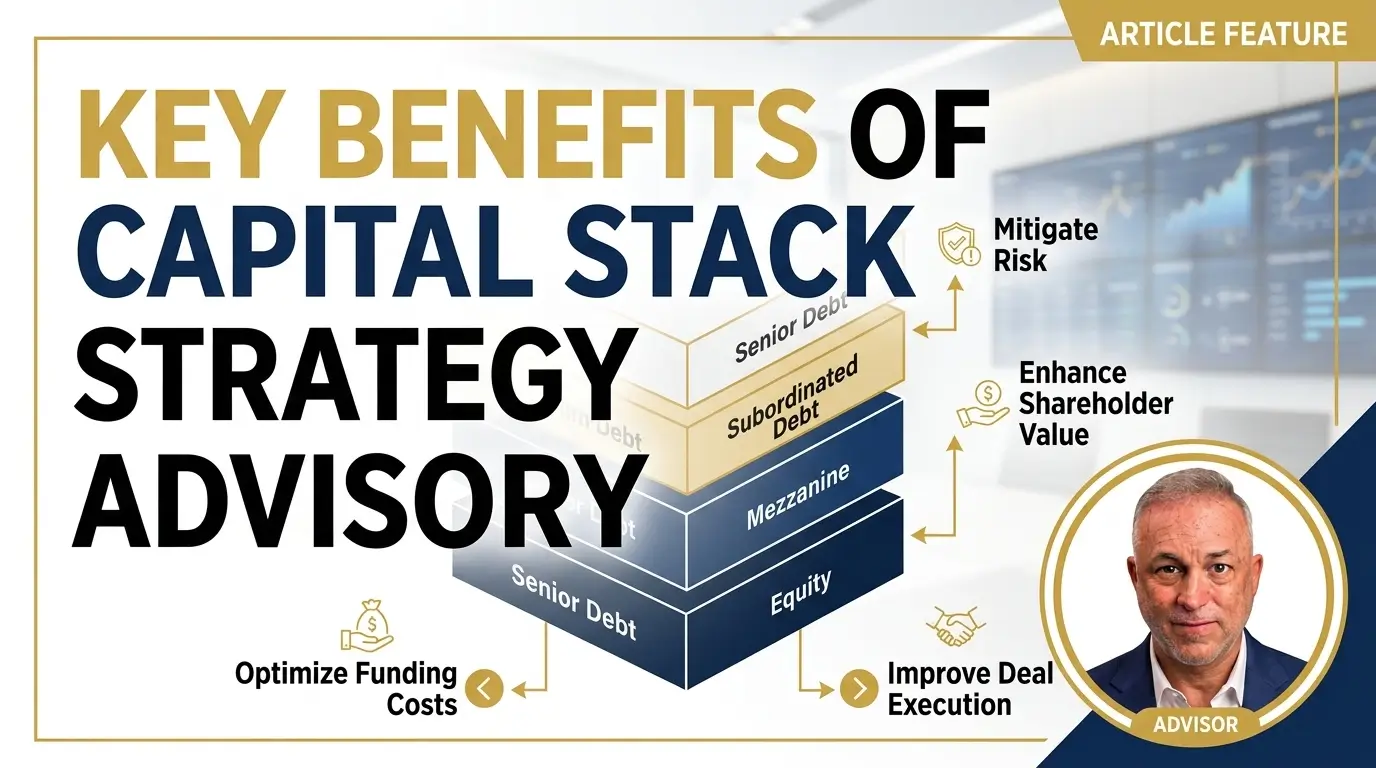
Key Benefits of Capital Stack Strategy Advisory

What Terms Help a Real Estate Sponsor Preserve Decision-Making Authority When a Family Office Writes a $15M Equity Check?
Disclosure
Nothing on this site constitutes an offer to sell, or a solicitation of an offer to purchase, any security under the Securities Act of 1933, as amended, or any applicable state securities laws. Any offering of securities is made only by means of a formal private placement memorandum or other authorized offering documents delivered to qualified investors.
IRC Partners is a capital advisory firm. IRC Partners is not a registered investment adviser under the Investment Advisers Act of 1940 and does not provide investment advice as defined thereunder.
Certain statements in this article may constitute forward-looking statements, including statements regarding market conditions, capital availability, investor demand, and transaction outcomes. Such statements reflect current assumptions and expectations only. Actual results may differ materially due to market conditions, regulatory developments, company-specific factors, and other variables. IRC Partners makes no representation that any outcome, return, or result described herein will be achieved.
References to prior mandates, transaction volume, network credentials, or capital raised are provided for illustrative purposes only and do not constitute a guarantee or prediction of future results. Past performance is not indicative of future outcomes. Individual results will vary. Network credentials and transaction statistics referenced on this site reflect the aggregate experience of IRC Partners' principals and affiliated advisors and are not a representation of assets managed or transactions closed solely by IRC Partners.
Certain data, statistics, and information presented in this article have been obtained from third-party sources. IRC Partners has not independently verified such information and expressly disclaims responsibility for its accuracy, completeness, or timeliness. Readers should independently verify any third-party data before relying on it.
Readers are strongly encouraged to consult qualified legal, financial, and tax professionals before making any investment, capital raising, or business decision.
Schedule A Meeting
You get one shot to raise the right way. If this raise is worth doing, it’s worth doing with precision, leverage, and control.
This isn’t a practice run. Serious capital. Serious strategy. Let’s raise it right.
We onboard a maximum of seven
new strategic partners each quarter, by application only, to maximize your chances of securing the capital you need.
