.svg "CTA Arrow")


.png "Investor Ready Capital decorative background element")
Preferred Equity Real Estate: When Sponsors Use It, What It Costs, and What the Data Room Must Include

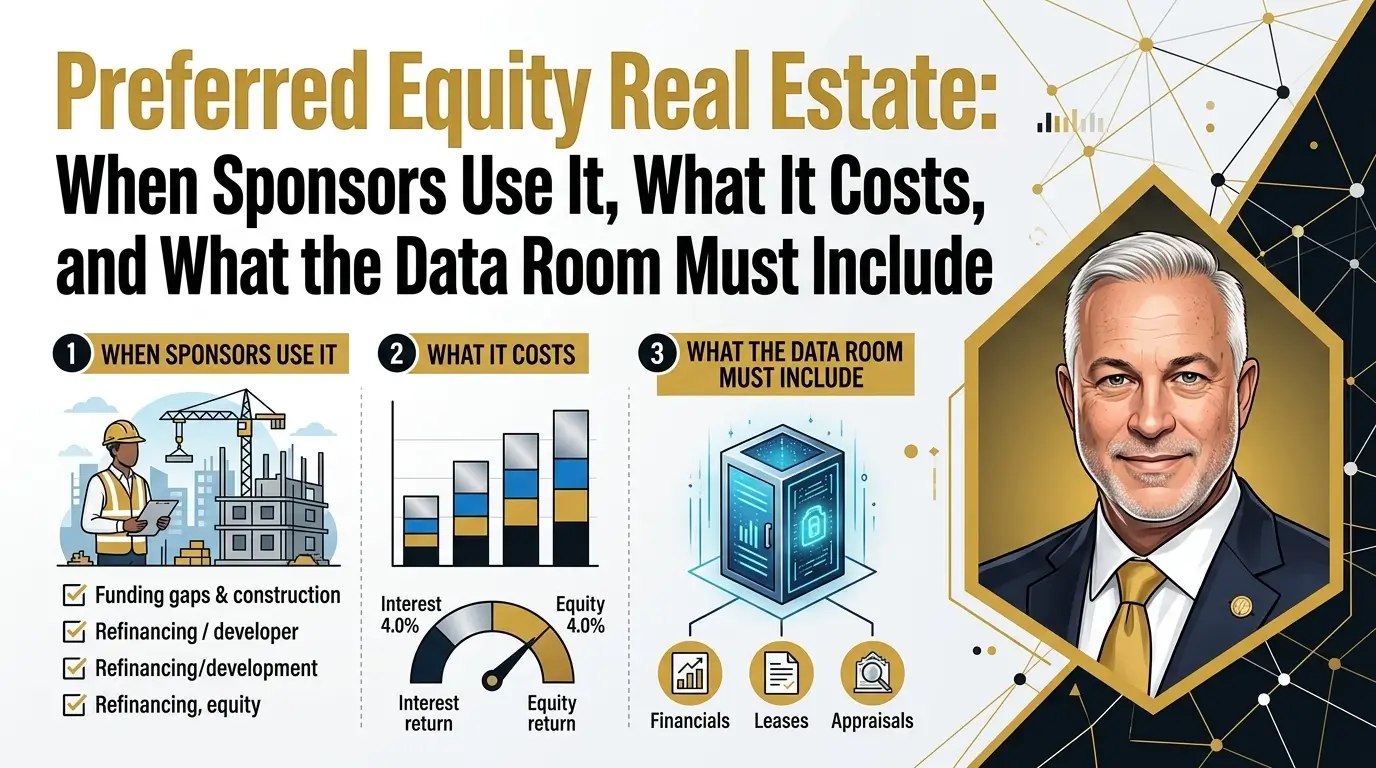
Preferred Equity Real Estate: When Sponsors Use It, What It Costs, and What the Data Room Must Include
Preferred equity is not a fallback. Sponsors who reach for it when the senior lender comes in short, when the mezz quote is too expensive, or when LP equity falls short are treating a precision tool as a last resort—and that framing is costly. Preferred equity has specific use cases, specific economics, and specific investor protections that differ from mezzanine debt in ways that matter most when a deal gets stressed. Sponsors who choose it deliberately, price it correctly, and prepare the right materials close faster and retain more control.
The core distinction most sponsors miss: preferred equity and mezzanine debt can look nearly identical on headline cost but behave very differently under a delayed timeline, uneven cash flow, or an investor seeking to enforce rights.
Sourcing this specific gap layer effectively requires deep synchronization with institutional capital for real estate sponsors. With CRE mortgage originations reaching approximately $633 billion in 2025 and projections near $805 billion for 2026, liquidity is improving. But as the NAIOP Research Foundation’s 2026 CRE Financing Trends report confirms, underwriting remains selective. In that environment, getting the gap capital layer right is not a secondary decision.
This guide covers:
- When preferred equity is the right structural choice and when it is not
- What it costs in 2025-2026 market conditions
- How it compares to mezzanine debt across the six dimensions that actually matter
- What preferred equity investors underwrite and what the data room must include before outreach
When Preferred Equity Makes Sense and When It Does Not
The decision is not about filling a gap. It is about matching the capital structure to the deal's cash flow reality, lender environment, and sponsor control priorities.
When Preferred Equity Is the Right Fit
1. Your senior lender restricts or prohibits mezzanine debt. Agency lenders, including Fannie Mae and Freddie Mac executions, frequently restrict or outright prohibit mezzanine financing. Preferred equity, structured as an equity investment in the entity rather than a pledge of equity interests, is often acceptable where mezz is not. This makes preferred equity the practical choice for most multifamily agency deals.
2. Your business plan has variable or back-loaded cash flow. Preferred equity distributions can accrue. Mezzanine debt requires periodic debt service. If the deal is ground-up, transitional, or value-add with a lease-up period that creates uneven early cash flow, the ability to accrue preferred returns rather than service a fixed coupon reduces execution risk materially. As discussed in 5 Capital Stack Risk Reduction Strategies, replacing short-duration mezz with more patient structured equity can lower risk even if headline cost is higher.
3. You want to avoid UCC foreclosure exposure. Mezzanine lenders hold a pledge of equity interests and can foreclose under UCC Article 9 in a default scenario, which is faster than traditional real estate foreclosure and transfers entity control. Preferred equity holders rely on negotiated contractual remedies, which typically include governance escalation, management replacement rights, and forced-sale triggers, not statutory foreclosure.
When Preferred Equity Is the Wrong Fit
- The deal supports clean mezz debt at lower all-in cost without lender consent issues
- The upside participation required by the preferred equity investor is more expensive than a fixed mezz coupon when modeled to exit
- The governance rights demanded are so broad they functionally transfer operating control
- The hold period is short enough that accrual economics do not create meaningful savings versus fixed debt service
- The deal profile fits a direct lending or private credit structure that avoids equity dilution entirely, as covered in Private Credit Lending: How $10M+ Sponsors Use Direct Lending to Fill Capital Stack Gaps Without Giving Up Equity
What Preferred Equity Costs in 2025-2026: Pricing, Returns, and Structure Norms
Preferred equity pricing is not a single number. It is a package of four components that together determine the real cost to the sponsor. Understanding each layer matters more than quoting a single rate.
Current Market Pricing Bands
Sources: Mayer Brown preferred equity analysis (2026); Anchin CRE financing analysis (2025)
What Drives Pricing Up or Down
- Asset type and business plan risk. A stabilized multifamily deal with agency financing will price tighter than a ground-up mixed-use development with a 36-month lease-up.
- Sponsor track record. Institutional preferred equity investors adjust pricing and governance terms based on how many completed projects of comparable scale a sponsor has behind them.
- Accrual vs. current pay. Deals where the preferred return accrues rather than pays currently carry higher all-in rates to compensate the investor for deferred cash.
- Governance concessions. Preferred investors who accept fewer control rights typically price higher to compensate for weaker downside protection.
The comparison trap: Mezzanine debt often quotes in the 10-15% all-in range, which can look cheaper than preferred equity. But that comparison ignores the intercreditor friction, fixed payment obligations, and UCC enforcement exposure that come with mezz. The right comparison is total cost of capital under a stress scenario, not the headline rate.
{{main-cta}}
Preferred Equity vs. Mezzanine: The 6 Dimensions That Actually Matter
The side-by-side comparison most sponsors see stops at cost and position in the stack. Those two dimensions are not enough. The decision margin between preferred equity and mezz lives in legal form, remedy structure, waterfall treatment, and what happens when the deal runs long.
For a deeper look at how mezzanine debt is structured and when it makes sense on its own, see Senior Debt vs. Mezzanine vs. Preferred Equity: Which Layer Do You Actually Need.
As Mayer Brown's 2026 preferred equity analysis notes, preferred equity holders are equity claimants under insolvency law and remain exposed to restructuring outcomes that may not preserve contractual distribution priorities. That is the structural risk sponsors need to understand before choosing preferred equity over mezz on a highly leveraged deal.
The waterfall difference in practice: In a preferred equity structure, the investor receives 100% of distributions until the preferred return and invested capital are repaid. Only then does common equity, including the sponsor's promote, begin to participate. This is different from a mezz structure, where debt service runs parallel to equity distributions and does not consume the equity waterfall in the same way.
What Preferred Equity Investors Underwrite and Why It Differs From Mezz
The diligence lens is different. Preferred equity investors are underwriting their path to capital recovery and preferred return through the equity waterfall, not through a debt service schedule or a pledge of collateral. That changes what they need to see and what slows them down.
What this means for sponsor preparation: A data room built for a mezz lender will be missing the documents a preferred equity investor needs most. The operating agreement, waterfall model, entity structure, and distribution assumptions are not supplemental materials in a preferred equity raise. They are the core of the diligence package.
Sponsors who understand how to structure GP/LP economics and waterfall mechanics before outreach can significantly accelerate preferred equity diligence. See How to Calculate the Right GP/LP Split for Your Deal for the waterfall design framework that institutional investors expect. For a side-by-side view of what mezz lenders specifically require versus preferred equity investors, Mezzanine Financing Funds: The 5 Types of Mezz Lenders and What Each Requires in a Data Room covers the lender-side checklist in detail.
What the Data Room Must Include Before a Preferred Equity Raise
A preferred equity raise requires a different data room than a senior debt or mezz financing. The investor is underwriting equity governance, waterfall integrity, and downside recovery, not collateral value and debt coverage. Generic data rooms that pass a mezz lender's review will stall a preferred equity investor at the first diligence request.
The table below organizes required materials into four tiers based on what preferred investors review first and what causes the most delays when missing.
For broader guidance on how to structure and organize a real estate data room for institutional investors, see How to Structure a Capital Stack for a $10M-$50M Real Estate Development Deal and Data Room Setup for a First-Time $100M Real Estate Fund.
The most common miss: Sponsors provide a property-level package built for a senior lender and assume it covers preferred equity diligence. It does not. The operating agreement, waterfall model, and governance terms are the documents preferred investors read first. If those are missing or incomplete, diligence stalls regardless of asset quality.
Use Preferred Equity on Purpose
Preferred equity is not a compromise. It is a precision tool with specific use cases, specific economics, and specific investor protections. Sponsors who reach for it by default give away more economics and control than necessary. Sponsors who choose it deliberately, for the right deal type and lender environment, use it to close faster and retain more of the promote.
The structural work comes before outreach. Get the waterfall right, the operating agreement clean, and the data room built for equity governance diligence, not lender review.
Sponsors preparing for a preferred equity raise or evaluating whether preferred equity or mezzanine is the right layer for a current deal can work with IRC Partners on capital stack structuring before approaching investors.
Frequently Asked Questions
Does preferred equity require senior lender consent before closing?
Not always, but it depends on the senior loan documents. Many conventional and bridge lenders include restrictions on additional equity interests or require notice and approval. Agency lenders, including Fannie Mae and Freddie Mac executions, often prohibit mezzanine debt entirely but permit preferred equity, making preferred equity the only viable gap capital option on those deals. Sponsors should review the senior loan agreement for transfer restrictions and consent requirements before structuring a preferred equity tranche.
How does accrued preferred return affect the sponsor's promote at exit?
Accrued preferred return compounds against the sponsor's economics. If a preferred investor has an 8% current pay return plus 3% accrual on a $10M investment over a 36-month delay, the accrued balance grows to roughly $10.9M before the preferred investor's capital is fully repaid. Every dollar of accrued preferred return that clears before common equity participates reduces the distribution pool available for the sponsor's promote. Modeling the accrual under a base and downside case is essential before committing to a preferred equity structure.
What is the difference between a preferred return and a preferred equity investment?
A preferred return is a distribution priority: the investor receives a stated return on invested capital before common equity participates. Preferred equity is the instrument that grants that priority, along with governance rights, removal provisions, and a liquidation preference. A preferred return can also appear in an LP equity structure. What makes preferred equity distinct is the full package of contractual protections governing what happens if the preferred return is not paid on time or the deal underperforms.
Can preferred equity and mezzanine debt coexist in the same capital stack?
Yes, but it adds significant complexity and requires careful coordination with the senior lender. In some larger deals, sponsors use mezzanine debt to fill one portion of the gap and preferred equity to fill another, often because different investors have different return requirements or risk tolerances. Adding both layers requires the senior lender to review the full structure, and the intercreditor dynamics between the mezz lender and the preferred equity investor must be addressed in the deal documents. IRC Partners structures layered capital stacks of this type for $10M-$250M+ real estate deals.
How long does a preferred equity investor typically expect to hold the investment?
Most institutional preferred equity investments are structured with a 3-to-7-year expected hold, aligned to the business plan's stabilization, refinancing, or sale timeline. Preferred equity is not perpetual capital in most real estate deals. The term is governed by the operating agreement and typically includes a mandatory redemption or forced-sale mechanism if the preferred investor has not been repaid by a specified date. Sponsors should model the redemption timeline carefully, as a forced sale triggered by a missed redemption date can override the sponsor's preferred exit strategy.
What tax treatment should sponsors expect on preferred equity distributions?
Preferred equity distributions are not automatically deductible for the sponsor entity the way mezzanine interest payments are. Treatment depends on how the preferred return is classified: as a guaranteed payment, an income allocation, or a return of capital. As Anchin's CRE financing analysis notes, phantom income allocation can create challenges for investors in loss years, and the tax treatment is often a negotiating point when the preferred investor is a tax-exempt entity such as a pension fund or endowment. Sponsors should engage tax counsel before finalizing the preferred equity structure.
What is the most common reason preferred equity diligence stalls?
The most common reason is a missing or incomplete operating agreement. Preferred equity investors underwrite their rights through the LLC or partnership agreement, and if that document is still in draft form, contains placeholder waterfall provisions, or does not clearly define distribution priority, removal triggers, and approval rights, diligence stops until it is resolved. The second most common cause is an incomplete waterfall model that does not show preferred return accrual, catch-up mechanics, and sponsor promote under downside scenarios. Sponsors who pre-build both documents before outreach close preferred equity faster and with fewer mid-diligence re-negotiations.
Continue reading this series:
- 5 Capital Stack Risk Reduction Strategies for $10M+ Raises
- How to Structure a Capital Stack for a $10M-$50M Real Estate Deal
- How to Calculate the Right GP/LP Split for Your Deal
The wrong structure doesn't just cost you this round. It costs you the next three. IRC Partners advises founders raising $5M to $250M of institutional capital. If you're about to go to market and want the structure reviewed before investors see it, book a call here.
Sponsors weighing this decision should first complete a capital raise readiness assessment for sponsors to confirm the raise is investor-ready.
Need guidance on your capital raise?


When Does a Company Need Capital Raising for Real Estate
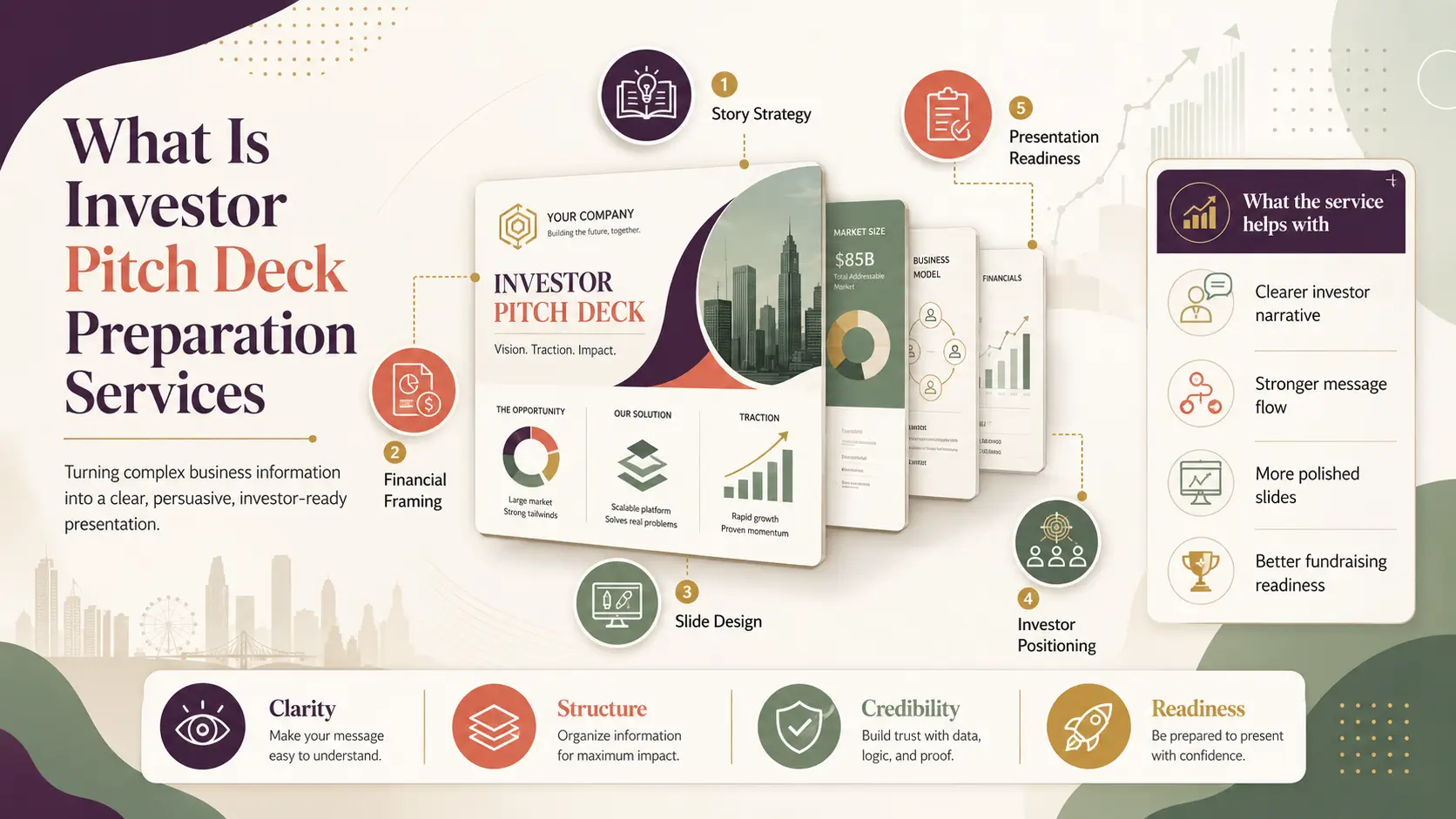
What Is Investor Pitch Deck Preparation Services
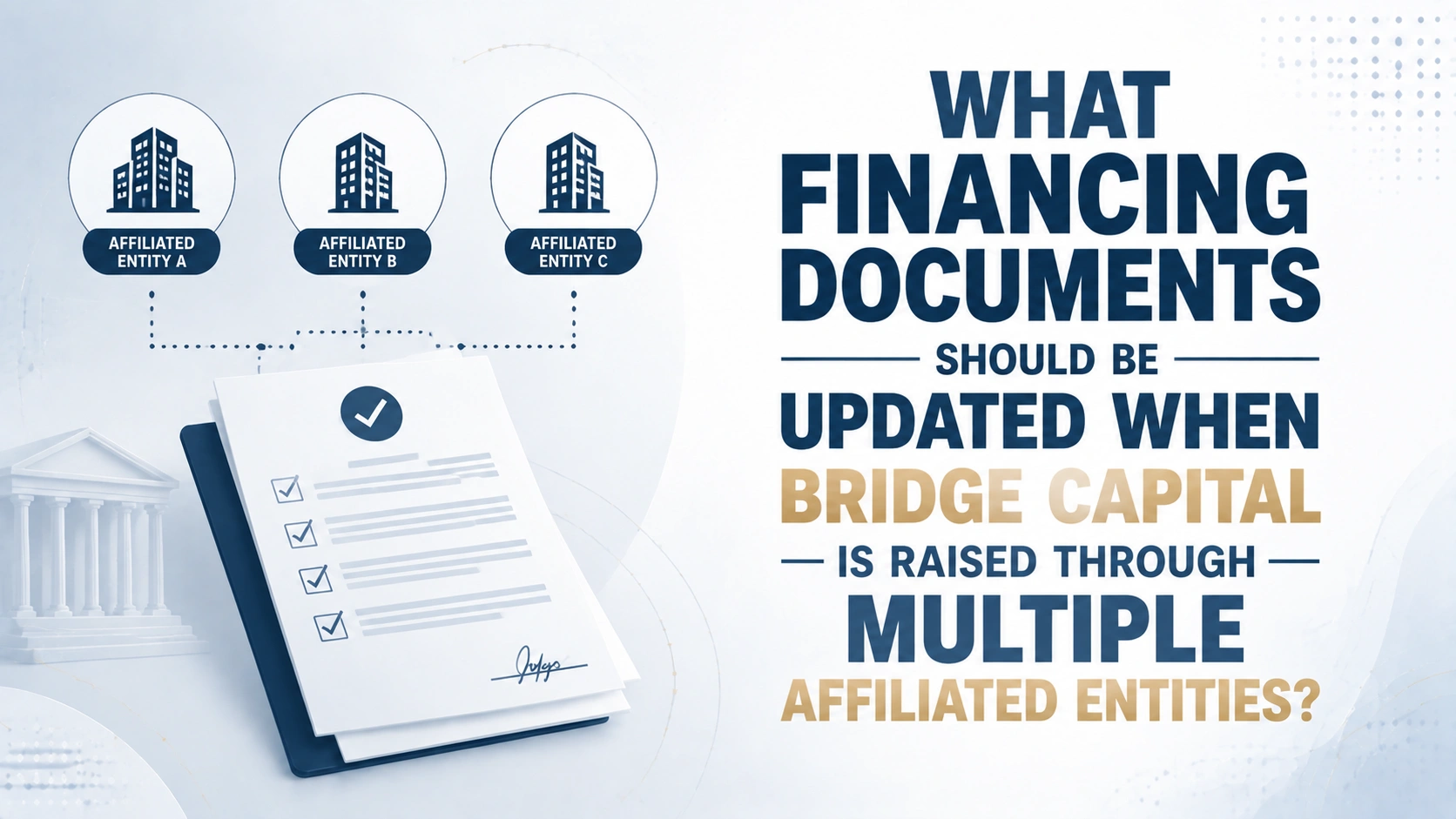
What Financing Documents Should Be Updated When Bridge Capital is Raised Through Multiple Affiliated Entities?
Disclosure
Nothing on this site constitutes an offer to sell, or a solicitation of an offer to purchase, any security under the Securities Act of 1933, as amended, or any applicable state securities laws. Any offering of securities is made only by means of a formal private placement memorandum or other authorized offering documents delivered to qualified investors.
IRC Partners is a capital advisory firm. IRC Partners is not a registered investment adviser under the Investment Advisers Act of 1940 and does not provide investment advice as defined thereunder.
Certain statements in this article may constitute forward-looking statements, including statements regarding market conditions, capital availability, investor demand, and transaction outcomes. Such statements reflect current assumptions and expectations only. Actual results may differ materially due to market conditions, regulatory developments, company-specific factors, and other variables. IRC Partners makes no representation that any outcome, return, or result described herein will be achieved.
References to prior mandates, transaction volume, network credentials, or capital raised are provided for illustrative purposes only and do not constitute a guarantee or prediction of future results. Past performance is not indicative of future outcomes. Individual results will vary. Network credentials and transaction statistics referenced on this site reflect the aggregate experience of IRC Partners' principals and affiliated advisors and are not a representation of assets managed or transactions closed solely by IRC Partners.
Certain data, statistics, and information presented in this article have been obtained from third-party sources. IRC Partners has not independently verified such information and expressly disclaims responsibility for its accuracy, completeness, or timeliness. Readers should independently verify any third-party data before relying on it.
Readers are strongly encouraged to consult qualified legal, financial, and tax professionals before making any investment, capital raising, or business decision.
Schedule A Meeting
You get one shot to raise the right way. If this raise is worth doing, it’s worth doing with precision, leverage, and control.
This isn’t a practice run. Serious capital. Serious strategy. Let’s raise it right.
We onboard a maximum of seven
new strategic partners each quarter, by application only, to maximize your chances of securing the capital you need.
