.svg "CTA Arrow")


.png "Investor Ready Capital decorative background element")

What Operating Covenants Do Family Offices Commonly Request From Real Estate Sponsors After Closing?

What Operating Covenants Do Family Offices Commonly Request From Real Estate Sponsors After Closing?
Sponsors should negotiate operating covenants with defined thresholds, response windows, deemed-approval provisions, and cure periods before closing. This gives family office LPs clear visibility and remedies while preserving the sponsor's ability to manage construction, leasing, and disposition decisions without an open-ended approval queue.
Operating covenants are the governance layer that activates after the operating agreement is signed. Most sponsors focus their negotiating energy on closing-date LP rights: voting thresholds, waterfall mechanics, and removal triggers. Then the deal closes, and a covenant package arrives. That package can create a parallel approval structure that slows construction draws, delays lease execution, and forces sponsor decisions into an LP review queue that was never part of the original term discussion.
Sponsors who understand which covenants family offices commonly request, which are standard, and which quietly expand LP authority can accept reasonable oversight without surrendering execution speed during the hold.
Operating covenants define what the sponsor must do, and must stop to ask permission to do, throughout the hold period. Closing-date LP rights create discrete decision gates. Covenants create a continuous governance layer that runs from day one of the hold through disposition.
For sponsors raising $5M to $250M from family office LPs, the covenant package often arrives as an exhibit to the operating agreement or as a standalone side letter delivered at or shortly after closing. Either way, the terms are binding from day one of the hold. Understanding how to push back on broad investor reporting clauses before closing is one piece of this. Operating covenants go further: they govern construction approvals, leasing decisions, budget variances, key-person continuity, and disposition timing.
Reporting and Financial Covenant Requests
Reporting covenants are the most common post-closing request and the most variable in scope. A well-scoped reporting covenant defines what the sponsor delivers, on what schedule, and in what format.
What is standard
- Quarterly unaudited financials delivered within a defined number of days after quarter-end
- Annual audited financials delivered within a defined period after year-end
- Budget-to-actual variance reports for any line item exceeding a stated percentage of the approved budget
- Material event notices within a defined business day window tied to a specific trigger list
The institutional LP reporting standard most family offices reference, updated in early 2025 to expand fund-level expense and fee reporting categories, gives sponsors a credible framework anchor. Anchoring your reporting package to ILPA standards gives LPs a credible framework and reduces pressure to accept open-ended requests.
What expands LP authority
Watch for "any information reasonably requested" or "books and records upon reasonable notice" with no defined notice period or scope. These phrases convert a reporting covenant into a standing audit right. For a deeper look at narrowing that language, see how to avoid broad audit rights before signing.
Construction and Budget Covenant Requests
Construction covenants are where scope most directly affects execution speed. A family office LP that requires prior written approval for any budget variance above a stated threshold can slow draw requests, change orders, and contractor decisions that need to move in days.
A reasonable covenant requires LP notice, with a defined response window, for any change order or budget reallocation exceeding a stated dollar floor per line item or a stated percentage of the total approved construction budget, whichever is lower.
Aggressive language requires LP consent rather than notice for any variance. Consent requirements with no deemed-approval provision leave the sponsor waiting for LP sign-off before any work moves forward.
Key drafting fix: Replace "LP consent required" with "LP notice required, with deemed approval after 5 business days of no written objection" for any variance below a defined materiality threshold.
Leasing and Disposition Covenant Requests
Leasing covenants govern what the sponsor can execute without LP involvement. Disposition covenants govern when and how the sponsor can sell. Both categories turn on scope language.
A standard leasing covenant requires LP notice for any commercial lease above a defined square footage threshold or any anchor tenant commitment above a defined annual dollar value. Aggressive language requires LP approval for any lease that deviates from the approved leasing plan, including rent concessions and tenant improvement allowances. If the leasing plan was drafted at underwriting, market conditions at lease-up may require flexibility the covenant has already removed.
On disposition, a right of first offer is standard. A right of first refusal, which gives the LP the right to match any third-party offer, is more aggressive and can reduce the buyer pool in a competitive sale process.
Key-Person and Management Covenant Requests
Key-person covenants define what happens if a named principal leaves during the hold. They are standard. The question is how broadly the trigger is defined.
A reasonable covenant names one or two principals, triggers on death, permanent disability, voluntary resignation, or termination for cause, and provides a defined cure period before the LP can exercise any remedy. Aggressive language adds "material reduction in time commitment," which can fire if a principal takes on a new project, or gives the LP the right to appoint a replacement manager if the cure period expires.
Institutional LPs apply a structured evaluation framework to key-person risk, covered in depth at how LPs evaluate key person risk in a first-time fund.
{{main-cta}}
How to Negotiate the Covenant Package Before Closing
The covenant package is easiest to negotiate before closing, when the LP still needs the sponsor's signature. Request a complete draft at the term sheet stage, alongside the operating agreement. This surfaces scope issues before LP counsel has finalized language.
A sponsor-protective covenant framework includes four elements:
- Defined approval thresholds with deemed-approval provisions. Every consent right should specify a dollar or percentage threshold, a response window, and a deemed-approval outcome if the LP does not respond.
- Notice rights in place of consent rights for operational decisions. Construction draw approvals, contractor substitutions, and leasing concessions below a materiality threshold should require LP notice, not LP consent.
- Cure periods for every trigger covenant. Key-person events, budget overruns, and schedule deviations should carry a defined cure period before the LP can exercise any remedy.
- Scope limits on information access. Every covenant that gives the LP the right to request information should name the categories covered and exclude privileged communications, vendor pricing, and employee data.
Sponsors who understand what family offices underwrite before they commit capital can frame covenant negotiations as a governance design conversation. The LP wants visibility and defined remedies. The sponsor wants execution speed. A well-drafted covenant package delivers both.
Frequently Asked Questions
What is the difference between an operating covenant and an LP right in an operating agreement?
An LP right defines what the LP can do at a specific decision point, such as voting to remove the GP or approving a major capital event. An operating covenant is an ongoing obligation the sponsor carries throughout the hold period. It defines what the sponsor must do regularly, what the sponsor must stop to seek permission to do, and what triggers the LP's right to act. Covenants create a continuous governance layer; LP rights create discrete decision gates.
Can a family office add operating covenants after the operating agreement is already signed?
A family office can request additional covenants through a side letter or amendment after closing. The sponsor must agree for those terms to be binding. Sponsors have more leverage before closing. Once the operating agreement is executed and capital is deployed, the LP's negotiating position strengthens and the sponsor's declines. Most post-close covenant requests succeed because sponsors feel obligated to accommodate an active LP relationship.
What budget variance threshold is reasonable for a family office LP covenant?
A reasonable threshold is a stated percentage of the total approved construction budget per line item, paired with a fixed dollar floor per change order, with the lower of the two controlling. Any variance below that threshold should require LP notice only, with deemed approval after a defined number of business days of no written objection. Thresholds set too low create approval queues that interfere with routine construction management.
What is a deemed-approval provision and why does it matter in a covenant?
A deemed-approval provision states that if the LP does not respond to a required notice within a specified number of business days, the sponsor's proposed action is considered approved. Without this provision, a consent covenant gives the LP an indefinite hold on any decision requiring its sign-off. Deemed-approval language is standard in well-negotiated institutional operating agreements and is the single most important drafting protection for sponsors who need to move quickly during construction or lease-up.
How do family offices typically define a key-person departure in a covenant?
Family offices most commonly define departure as death, permanent disability, voluntary resignation, or termination for cause of a named principal. More aggressive definitions add "material reduction in time commitment," which can trigger the covenant if the principal takes on a second project. The safest sponsor position limits the definition to death, permanent disability, voluntary resignation, and termination for cause, names the fewest principals possible, and negotiates a defined cure period before the LP can exercise any remedy.
Do operating covenants appear in the LPA or in a separate side letter?
Operating covenants appear in both. In a fund structure, the limited partnership agreement typically contains the primary covenant package covering reporting, key-person events, and major decision approvals. Side letters then layer on LP-specific covenants that apply only to that investor. In a deal-by-deal structure, covenants often appear as an exhibit to the operating agreement or as a standalone governance schedule. Sponsors should review all documents together to identify where covenants overlap or conflict.
What is the most common covenant language that quietly expands LP authority beyond the operating agreement?
The most common expansion language is "any information reasonably requested," "upon reasonable notice," and "material adverse change" without a defined dollar or percentage threshold. Each phrase sounds limited but functions as an open-ended right. "Any information reasonably requested" converts a reporting covenant into a standing audit right. "Upon reasonable notice" removes the defined notice period that gives sponsors time to prepare. "Material adverse change" without a threshold gives the LP the right to call a default based on a subjective standard. All three should be replaced with specific scope, notice period, and threshold language before the documents are signed.
Continue reading this series:
- Negotiate Information Rights Before Signing $10M+ Deals
- Family Office vs. PE Fund: Right LP for Your Development
- Quarterly LP Reporting Requirements for Real Estate Funds
By the time most founders are rehearsing the pitch, the outcome of the raise has already been set by the structure underneath it. IRC Partners advises operators raising $5M to $250M of institutional capital and accepts seven strategic partners per quarter. If you are going to market this year, have the structure reviewed before investors do. Schedule a call with our team here.
Need guidance on your capital raise?


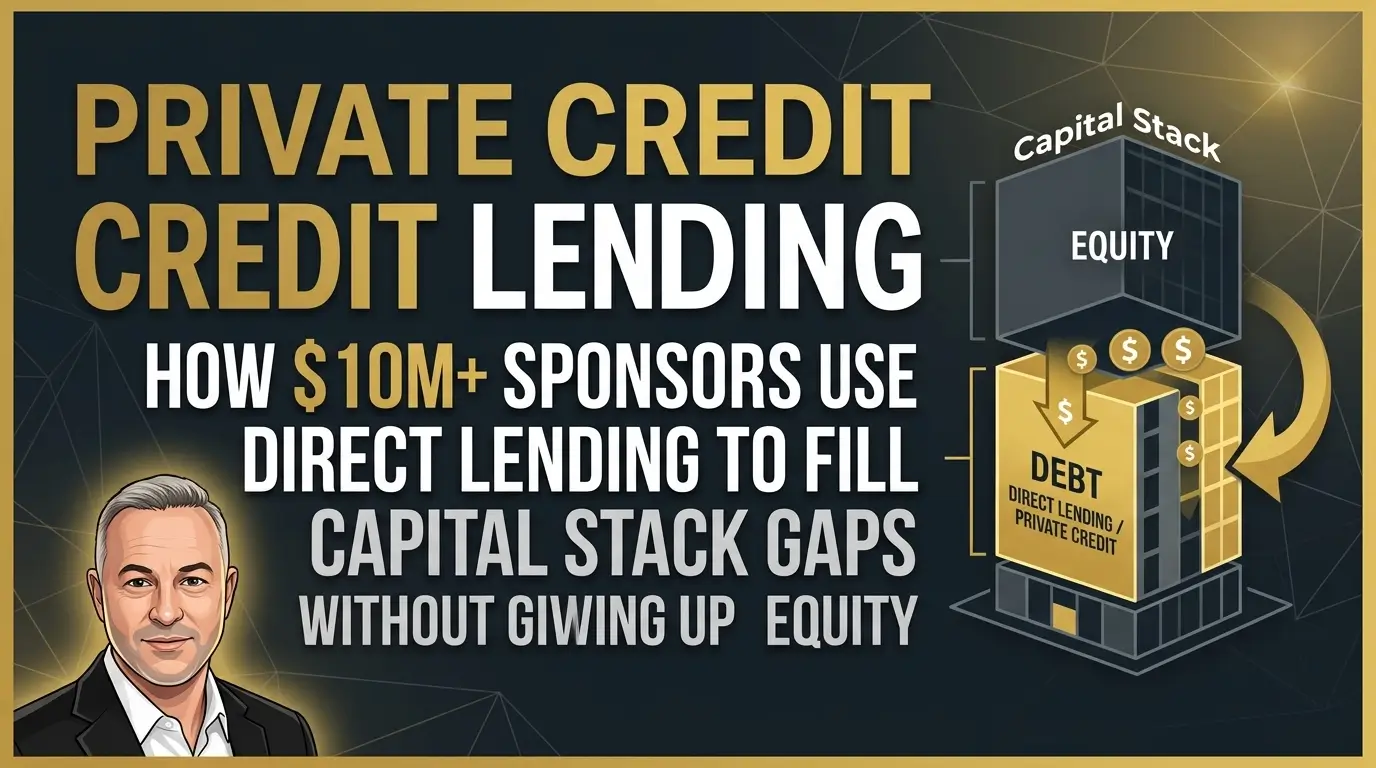
Private Credit Lending: How $10M+ Sponsors Use Direct Lending to Fill Capital Stack Gaps Without Giving Up Equity
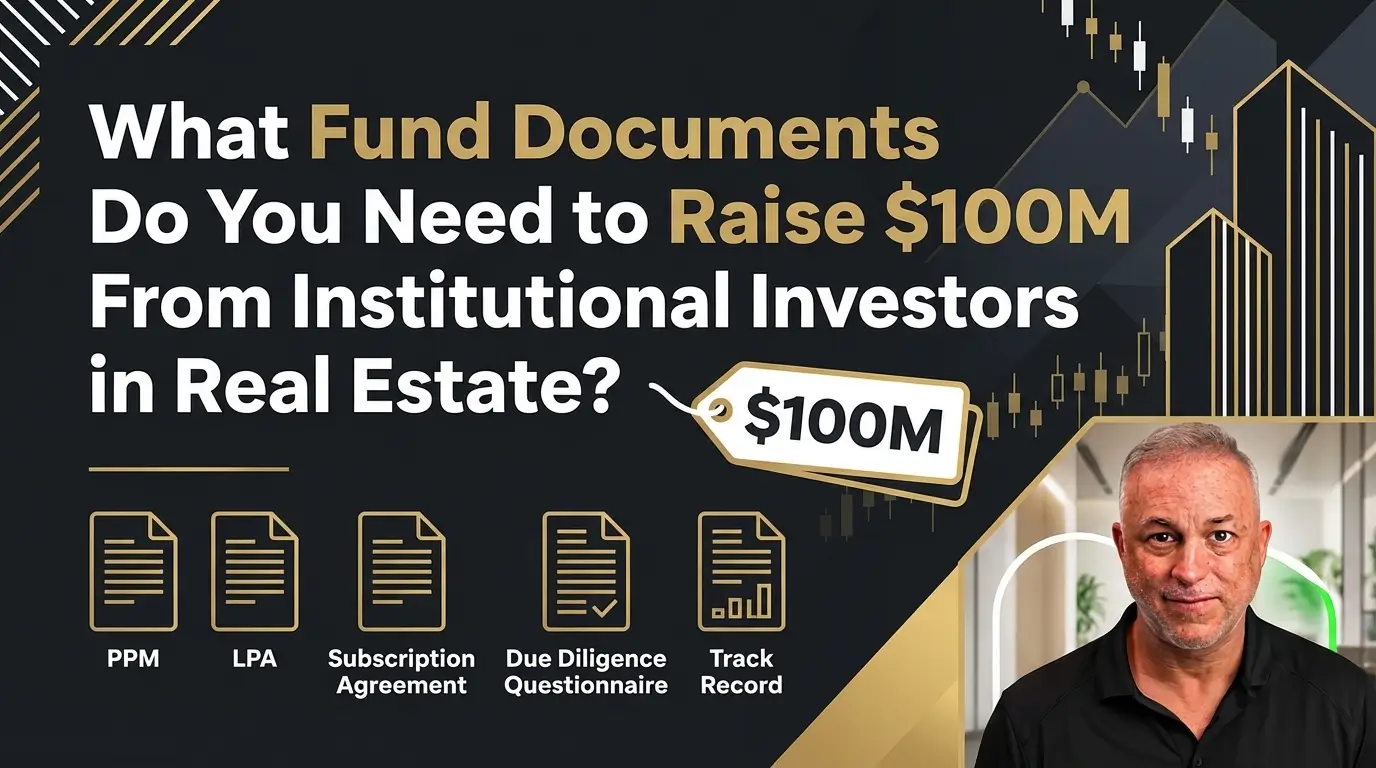
What Fund Documents Do You Need to Raise $100M From Institutional Investors in Real Estate?

What is the minimum track record needed to launch a $100M real estate fund?
Disclosure
Nothing on this site constitutes an offer to sell, or a solicitation of an offer to purchase, any security under the Securities Act of 1933, as amended, or any applicable state securities laws. Any offering of securities is made only by means of a formal private placement memorandum or other authorized offering documents delivered to qualified investors.
IRC Partners is a capital advisory firm. IRC Partners is not a registered investment adviser under the Investment Advisers Act of 1940 and does not provide investment advice as defined thereunder.
Certain statements in this article may constitute forward-looking statements, including statements regarding market conditions, capital availability, investor demand, and transaction outcomes. Such statements reflect current assumptions and expectations only. Actual results may differ materially due to market conditions, regulatory developments, company-specific factors, and other variables. IRC Partners makes no representation that any outcome, return, or result described herein will be achieved.
References to prior mandates, transaction volume, network credentials, or capital raised are provided for illustrative purposes only and do not constitute a guarantee or prediction of future results. Past performance is not indicative of future outcomes. Individual results will vary. Network credentials and transaction statistics referenced on this site reflect the aggregate experience of IRC Partners' principals and affiliated advisors and are not a representation of assets managed or transactions closed solely by IRC Partners.
Certain data, statistics, and information presented in this article have been obtained from third-party sources. IRC Partners has not independently verified such information and expressly disclaims responsibility for its accuracy, completeness, or timeliness. Readers should independently verify any third-party data before relying on it.
Readers are strongly encouraged to consult qualified legal, financial, and tax professionals before making any investment, capital raising, or business decision.
Schedule A Meeting
You get one shot to raise the right way. If this raise is worth doing, it’s worth doing with precision, leverage, and control.
This isn’t a practice run. Serious capital. Serious strategy. Let’s raise it right.
We onboard a maximum of seven
new strategic partners each quarter, by application only, to maximize your chances of securing the capital you need.
