.svg "CTA Arrow")


.png "Investor Ready Capital decorative background element")

How to Push Back on Broad Investor Reporting Clauses Pre-Close

What Makes a Reporting Clause Broad, and Why This Is the Moment to Narrow It
A reporting clause is "broad" when it goes beyond a defined financial package and delivery schedule into open-ended territory: custom operational metrics, undefined KPI sets, board-level information rights extended to non-board investors, or event-notice triggers tied to vague language like "any development the investor may deem material." That language is not a reflection of what your specific investors actually need. It is what investor counsel drafts by default to protect every possible future scenario.
The practical problem is not the reporting itself. It is the post-close workload that vague language creates. Open-ended clauses require ongoing judgment calls about what to produce, what qualifies as a "material event," and how much to share. That judgment call happens repeatedly, at your expense, for the life of the agreement.
If you are navigating a $10M+ investors' rights agreement for the first time, the full negotiation framework is covered in the comprehensive guide to negotiating information rights and reporting obligations with institutional investors. This article goes one level deeper: it focuses on how to identify the clauses that create the most burden and how to propose specific, narrower language before the agreement is signed. Once the agreement is executed, those obligations are locked. The pre-close window is the only realistic moment to fix them without reopening price or control.
The three red flags that signal a broad reporting clause:
- The clause requires the company to produce information it does not already maintain in the ordinary course of business
- The clause grants board-style information access to investors who do not hold a board seat or observer right
- The event-notice trigger is undefined, subjective, or tied to investor discretion rather than a specific threshold or category of event
Find the Clauses That Create the Real Burden After Close
Most founders focus their negotiation energy on the obvious items: quarterly versus annual cadence, delivery deadlines, and who qualifies as a Major Investor. Those matter, but they are not usually where the real post-close burden lives.
The highest-burden clauses are the ones that require your team to build something new, exercise judgment repeatedly, or produce custom work that does not already exist in your normal operations. Before you mark up the agreement, read each clause through a workload lens: who produces this, how often, from which system, and whether it already exists.
Before raising a $10M+ round, it also helps to understand how the capital stack shapes what institutional investors expect in governance and reporting terms, since the instrument type often drives the reporting standard.
The right negotiation priority is to fix the clauses that require new workstreams, judgment-heavy bespoke memos, or ongoing legal review. Adjusting a delivery deadline by 15 days is a much lower-value edit than adding an "existing materials only" qualifier to an open-ended metrics obligation.
Frame the Pushback as Stage-Appropriate Governance, Not Founder Resistance
How you frame the markup matters as much as what you change. Investors and their counsel are watching for signs that a founder is trying to reduce accountability. The goal is to make your edits read as commercially reasonable and stage-appropriate, not defensive.
The strongest framing is that a $10M growth-stage company should commit to reliable baseline reporting but should not be held to late-stage or public-company-style obligations that do not match its systems, team size, or operational maturity. The NVCA Model Legal Documents, updated in October 2025, explicitly note that reporting obligations should be appropriate for the company's stage and size. That is not a founder argument. It is the industry's own standard.
SEC Commissioner Hester Peirce made a related point at SEC Speaks 2026: "Mandating immaterial information harms investors via production costs that exceed benefits." That framing works in your favor. Broad reporting clauses that require custom builds or low-threshold event notices often produce noise rather than decision-useful information.
Use investor-facing language in your markup comments and any email exchanges:
"We want to make sure our reporting is consistent, decision-useful, and deliverable on time. We have anchored the proposed edits to the NVCA baseline, which is designed to reflect appropriate obligations for a company at our stage."
"We are committed to full transparency on financial performance. The proposed change limits the obligation to materials we already maintain, which ensures you receive reliable, timely information rather than ad hoc reports."
"We have kept the event-notice obligation intact but added a defined threshold so the trigger is clear and consistent for both parties."
These are not concession lines. They are governance lines. They frame narrower language as a quality improvement, not a reduction in accountability.
Mark Up the Clause with NVCA-Anchored Replacement Language
The October 2025 NVCA Model Investors' Rights Agreement gives founders a credible, industry-endorsed anchor for every major edit. Use it explicitly. Investor counsel knows these documents. Citing the NVCA baseline signals that your edits are grounded in market norms, not founder preference.
The core NVCA baseline for a $10M+ growth-stage company:
- Quarterly unaudited financials: delivered within 45 days of quarter-end
- Annual audited financials: delivered within 120 days of fiscal year-end
- Monthly financials: available upon reasonable written request only, not as a default obligation
- New information: no obligation to create reports, models, or datasets beyond what the company reasonably maintains in the ordinary course of business
The "existing materials only" standard is one of the most useful tools in the markup. It converts open-ended production obligations into deliver-if-it-exists obligations. If the company already produces a monthly dashboard, it can be shared. If it does not, there is no obligation to build one.
The table below shows three common broad-clause patterns and how to replace them with NVCA-anchored, materiality-gated language:
The CAQ's 2026 Institutional Investor Survey found that 91% of institutional investors trust audited financial statements as their primary financial information source, and 90% rely on them for investment decisions. That data point matters in your markup conversation: a well-structured package anchored to audited annuals and quarterly unauditeds already covers what the overwhelming majority of institutional investors actually use. Broad supplemental clauses often go beyond that.
For Major Investor thresholds, the NVCA model typically sets full information rights at 5-10% post-financing ownership. If the draft agreement extends board-style rights to holders below that threshold, propose limiting the expanded package to investors who meet the Major Investor definition.
Handle the "Non-Negotiable" Pushback Without Creating Deal Friction
When investor counsel says a clause is "standard" or "non-negotiable," the conversation is not over. It is a signal to narrow the fight, not abandon it. Keep the concept. Negotiate the scope, threshold, recipient group, or production standard.
The mistake most founders make is treating the pushback as binary: accept the clause or lose the deal. In practice, investors rarely need every word of broad default language. They need the underlying information. Your job is to give them a reliable path to that information without locking in an undefined production obligation.
Work through this fallback ladder in sequence. Stop when the investor accepts a position:
- Scope limit: Add "existing materials only" or "to the extent prepared in the ordinary course" to any open-ended obligation. This preserves the right without creating a new workstream.
- Materiality threshold: Define what triggers event-notice obligations. Propose a specific threshold tied to financial condition, litigation exposure, or regulatory action rather than investor discretion.
- Recipient narrowing: Limit the expanded package to Major Investors as defined by the NVCA threshold. Investors below that threshold receive the standard quarterly and annual package.
- Cadence adjustment: If monthly reporting is non-negotiable as a concept, propose request-based delivery rather than automatic production. The investor gets the data when they ask for it; the company does not produce it on a fixed cycle.
- Template agreement: Offer to agree on a defined reporting template at close. This gives the investor certainty about what they will receive and gives the company a fixed scope rather than an open-ended obligation.
Sequencing matters. Fix bespoke production obligations first, then broad event notices, then cadence details. A markup that leads with cadence changes looks like the founder is trying to hide the ball. A markup that leads with scope and materiality looks like the founder is trying to build a reliable, sustainable reporting relationship.
What a Narrower Package Looks Like in Practice
A founder closing a $12M Series A received a draft investors' rights agreement with three broad reporting obligations: monthly financials within 20 days of month-end, an undefined operating metrics package, and prompt notice of "any development the investor may deem material."
Rather than accepting the draft or pushing back on the entire reporting section at once, the founder and their advisor prioritized by burden. The monthly default and the undefined metrics package were the highest-risk items because both required new recurring workstreams. The event-notice clause was the second priority because the trigger was entirely subjective.
The markup proposed three targeted changes:
- Monthly financials converted to request-based delivery for Major Investors only, with a 15-business-day response window
- Operating metrics obligation replaced with "financial and operational information the Company maintains in the ordinary course, as reasonably requested with advance notice"
- Event-notice trigger replaced with a defined threshold: written notice within 10 business days of any event with a material adverse effect on financial condition or operations
Investor counsel pushed back on the monthly financials change. The founder held on the request-based standard but offered a defined template for what the monthly package would include when requested, giving the investor certainty about the scope. That resolved the objection.
The round closed on the same economics as the original term sheet. The reporting package was narrower, more specific, and more sustainable for a company at that stage. The key was that every edit was framed around reliability and consistency, not reduction.
This is the practical value of approaching the markup before documents harden. The same edits proposed after signing require a formal amendment, investor consent, and often legal fees that exceed the cost of getting it right the first time. For a broader look at how to approach the pre-close negotiation window, the guide to securing better information rights terms in growth capital raises covers the full arc of that process.
{{main-cta}}
What to Confirm Before the Agreement Is Signed
Before you execute the investors' rights agreement, run through these five checks against the final document:
- Cadence and deadlines are defined. Every reporting obligation has a specific delivery window tied to a calendar event, not investor discretion.
- The recipient group is limited. Expanded information rights apply only to investors who meet the Major Investor threshold. Non-Major Investors receive the standard quarterly and annual package.
- No new-information obligation exists. Every clause is limited to materials the company already maintains or will maintain in the ordinary course. There is no obligation to create custom reports, models, or analyses.
- Event-notice triggers are specific. Every notice obligation is tied to a defined threshold or category of event, not subjective language like "any development the investor may deem material."
- Side letters and disclosure schedules are consistent. Narrowed language in the investors' rights agreement is not re-broadened through a side letter with a single investor. Check every ancillary document before signing.
If any of these checks fails, the clause needs one more round of markup before you sign. The cost of that conversation is low. The cost of living with a vague obligation for the next five years is not.
For founders who want a second set of eyes on the full document package before close, IRC Partners works with operators raising $10M and above to tighten institutional terms before they harden. The goal is always the same: a reporting package that is reliable for investors, sustainable for the company, and clean enough to survive the next round of due diligence.
For a complete breakdown of how to approach quarterly reporting obligations specifically, the tactics for limiting quarterly reporting burdens when signing with VCs cover the cadence negotiation in detail.
Frequently Asked Questions
Which reporting clause in a $10M+ investors' rights agreement typically creates the most post-close burden?
The highest-burden clause is usually an open-ended operating metrics or KPI obligation with no defined scope. Unlike quarterly financials, which have a known format and production cycle, an undefined metrics obligation requires ongoing judgment about what to include, how to format it, and how often to produce it. That judgment call repeats indefinitely and creates exposure to claims of under-reporting if the company's view of "material" differs from the investor's.
How do I identify whether a reporting clause requires me to create new information or just deliver existing information?
Read the clause for production language. Words like "prepare," "compile," "provide analysis of," or "report on" signal a new-information obligation. Words like "deliver," "make available," or "provide copies of" suggest the clause is limited to existing materials. If the clause uses production language, add "to the extent prepared in the ordinary course of business" before you sign. That single qualifier converts a new-information obligation into a deliver-if-it-exists obligation.
What does "stage-appropriate" mean when pushing back on reporting clauses, and how do I use it in conversation with investor counsel?
Stage-appropriate means the reporting obligation fits the company's current systems, team size, and operational maturity. A $10M Series A company does not have the finance infrastructure of a pre-IPO company, and the NVCA Model Legal Documents acknowledge that obligations should reflect company stage and size. In conversation, use language like: "We want to commit to obligations we can meet consistently and on time. The proposed language reflects a later-stage standard that we would like to anchor to the NVCA baseline for a company at our stage."
Can I push back on reporting clauses after the term sheet is signed but before the investors' rights agreement is executed?
Yes. The term sheet typically outlines economics, governance, and deal structure, not the granular drafting of individual reporting clauses. The investors' rights agreement is negotiated separately, and the reporting section is part of that negotiation. The window between term sheet execution and document signing is the right time to propose clause-level edits. Once the investors' rights agreement is executed, changes require a formal amendment and investor consent.
What is the practical difference between a materiality threshold in a reporting clause and a "may be material" standard?
A defined materiality threshold gives both parties a clear, objective trigger. For example: "any event reasonably expected to result in a material adverse effect on the Company's financial condition or operations." A "may be material" standard is investor-discretion language. It means the investor, not the company, decides what triggers the notice obligation. That creates ongoing legal uncertainty and requires the company to consult counsel before any significant business decision to assess whether notice is required.
If an investor insists their reporting clause is market standard, how do I respond without appearing to resist accountability?
Acknowledge the investor's position and redirect to the NVCA baseline: "We understand this reflects your standard package. We have proposed edits that align with the NVCA Model Investors' Rights Agreement, which is the industry benchmark for growth-stage companies. Our goal is a reporting structure that is reliable and consistent, not one that is lighter. The proposed changes narrow scope, not substance." This frames the conversation as a quality discussion rather than a resistance discussion.
How do I make sure narrowed reporting language in the investors' rights agreement is not re-broadened in a side letter with the lead investor?
Before signing, cross-check every side letter against the investors' rights agreement. Look specifically for provisions that grant the lead investor information rights, reporting rights, or access rights that go beyond the negotiated package. If a side letter includes language like "in addition to the rights set forth in the Investors' Rights Agreement," that is the trigger to review carefully. Any side letter expansion that conflicts with the narrowed package should be flagged and resolved before close.
Continue reading this series:
- How to negotiate information rights and reporting obligations with institutional investors before signing
- Top negotiation tactics for VC information rights before signing
- Limit quarterly reporting burdens when signing with VCs for $10M deals
IRC Partners works with operators raising $5M to $250M of institutional capital. The full engagement is for founders at $1M+ ARR who have raised before. The $2,997 Capital Raise Pre-Flight audit is open to earlier-stage companies, including pre-revenue, that are raising $5M+ and have a pitch deck and financial model ready for review. If that's you, schedule a call to discuss HERE.
Sponsors weighing this decision should first complete a capital raise readiness assessment for sponsors to confirm the raise is investor-ready.
Need guidance on your capital raise?


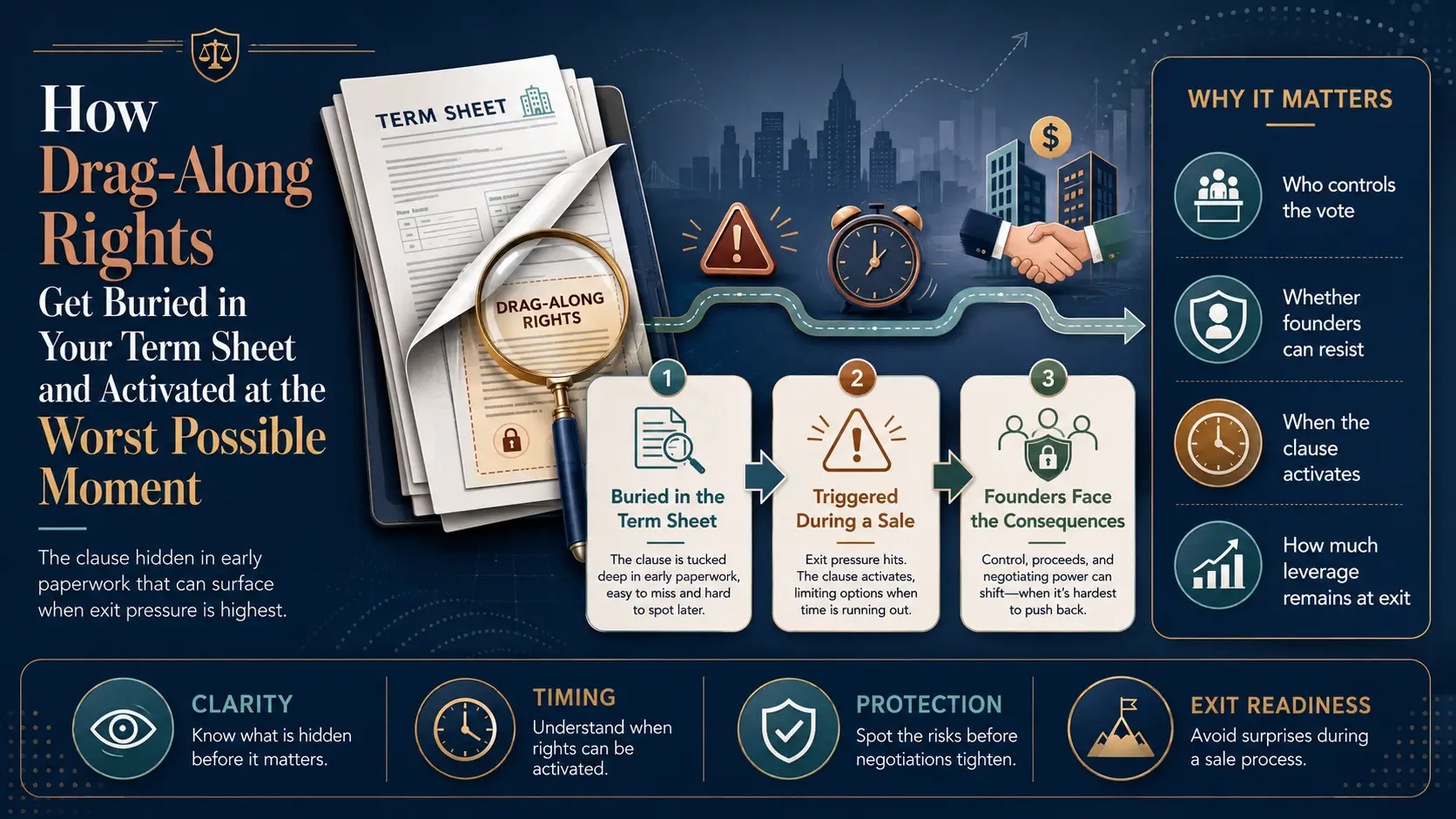
How Drag-Along Rights Get Buried in Your Term Sheet and Activated at the Worst Possible Moment

Co-Sale Rights and Tag-Along Provisions: The Cap Table Clauses That Force Institutional Investors to Share Their Deal With Your Seed Angels

The Investor Update Paper Trail: How What You Told Investors in Writing Becomes a Series B Diligence Liability
Disclosure
Nothing on this site constitutes an offer to sell, or a solicitation of an offer to purchase, any security under the Securities Act of 1933, as amended, or any applicable state securities laws. Any offering of securities is made only by means of a formal private placement memorandum or other authorized offering documents delivered to qualified investors.
IRC Partners is a capital advisory firm. IRC Partners is not a registered investment adviser under the Investment Advisers Act of 1940 and does not provide investment advice as defined thereunder.
Certain statements in this article may constitute forward-looking statements, including statements regarding market conditions, capital availability, investor demand, and transaction outcomes. Such statements reflect current assumptions and expectations only. Actual results may differ materially due to market conditions, regulatory developments, company-specific factors, and other variables. IRC Partners makes no representation that any outcome, return, or result described herein will be achieved.
References to prior mandates, transaction volume, network credentials, or capital raised are provided for illustrative purposes only and do not constitute a guarantee or prediction of future results. Past performance is not indicative of future outcomes. Individual results will vary. Network credentials and transaction statistics referenced on this site reflect the aggregate experience of IRC Partners' principals and affiliated advisors and are not a representation of assets managed or transactions closed solely by IRC Partners.
Certain data, statistics, and information presented in this article have been obtained from third-party sources. IRC Partners has not independently verified such information and expressly disclaims responsibility for its accuracy, completeness, or timeliness. Readers should independently verify any third-party data before relying on it.
Readers are strongly encouraged to consult qualified legal, financial, and tax professionals before making any investment, capital raising, or business decision.
Schedule A Meeting
You get one shot to raise the right way. If this raise is worth doing, it’s worth doing with precision, leverage, and control.
This isn’t a practice run. Serious capital. Serious strategy. Let’s raise it right.
We onboard a maximum of seven
new strategic partners each quarter, by application only, to maximize your chances of securing the capital you need.
