.svg "CTA Arrow")


.png "Investor Ready Capital decorative background element")

How Do I Present Risk In an Investment Committee Deck?
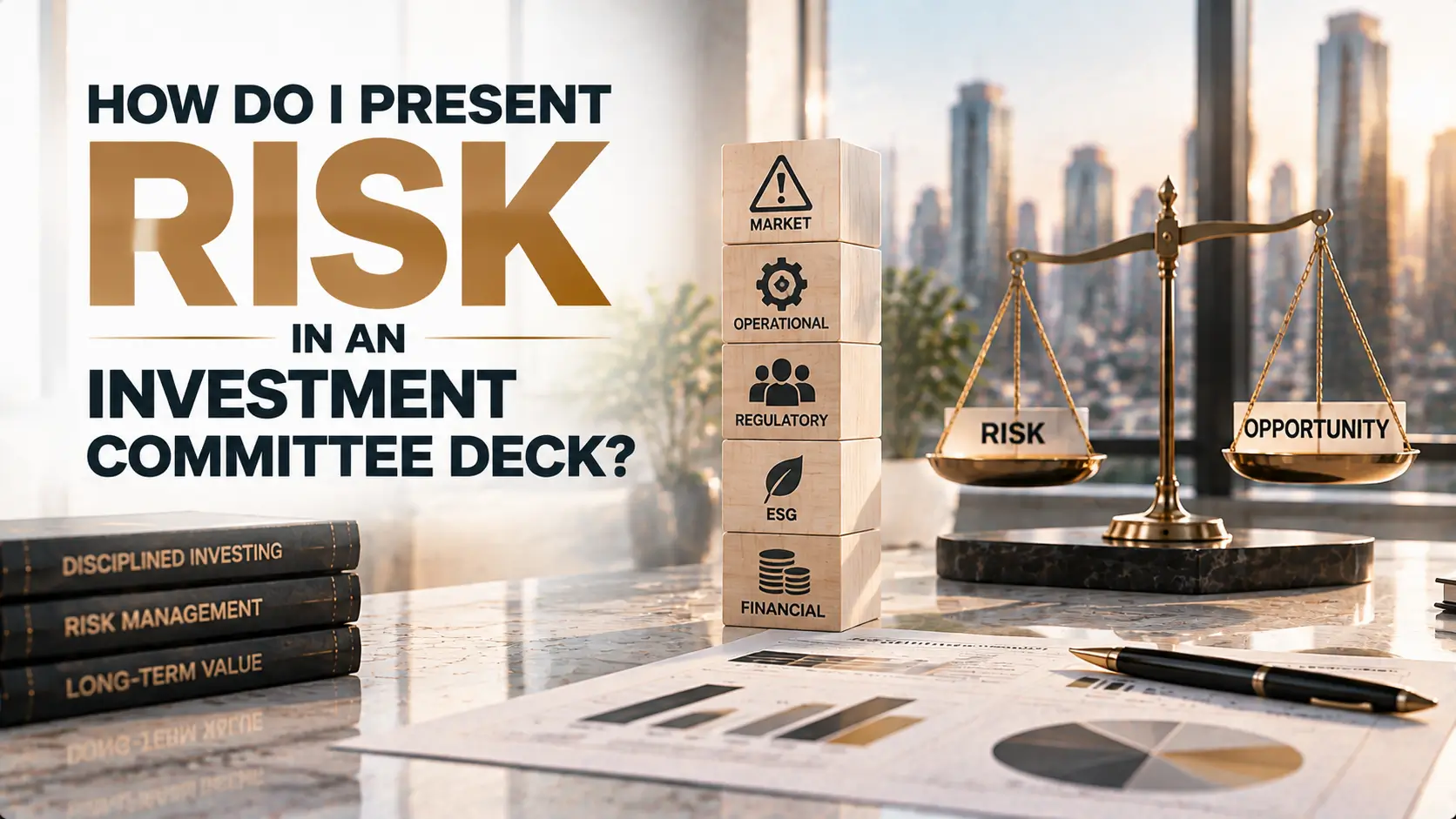
Present risk through a dedicated scenario analysis slide after the return summary, using base, downside, and stress cases with explicit assumptions and net LP return outputs. This lets committees evaluate downside discipline while keeping the supporting math in the financial exhibits.
To present risk in an investment committee deck, include a dedicated scenario analysis slide after the return summary. Show three scenarios: a base case, a downside case with one or two adverse inputs applied independently, and a stress case combining adverse inputs. Each scenario must state the specific assumption changed, the basis point or percentage shift applied, and the resulting net LP IRR and equity multiple. LP capital returned in the stress case is a threshold institutional committees commonly apply at screening.
Sponsors who keep risk disclosure vague, bury it in the appendix, or leave it out entirely are working from a flawed premise: that a clean base case is more persuasive than one that acknowledges friction. Committees read it differently.
Committees review a deck before any sponsor conversation takes place. When a reviewer reaches the financial slides and finds no risk analysis, the deal can stall at screening. A committee has no way to evaluate downside discipline from a deck that shows none, and a missing risk section raises questions the sponsor cannot answer in real time. Institutional reviewers working through a well-structured investor-ready materials package look for risk disclosures that are present and specific, and they expect the exit cap rate to carry a real decompression buffer. A package that omits them raises questions before the first conversation begins.
The fix is structural. Risk disclosure belongs in the deck itself, presented with specific inputs, bounded scenarios, and clear mitigants. Sponsors who do this move from screening to diligence because committees can evaluate the deal on its merits. The financial projections institutional LPs expect include a scenario analysis slide for exactly this reason: the gap between base and stress cases is where underwriting discipline becomes visible, especially when the underwriting buffer on exit cap rate is explicit.
The core principle: A risk slide with specific inputs and bounded scenarios strengthens a deck. Generic disclaimers leave the committee without a basis to evaluate the downside.
Why Committees Flag Missing Risk Analysis
A sponsor who presents a deck with no risk analysis gives the committee nothing to evaluate on the downside. The deal can stall at screening because the reviewer has no basis to assess whether adverse conditions have been examined.
What reviewers look for in the first pass
Committee analysts cover an initial deck review in a defined pass. In that window, they are scanning for three things:
- Clarity on the opportunity. Does the deck explain why this deal exists and why now?
- Evidence of underwriting discipline. Are the assumptions grounded and the return math defensible?
- Acknowledgment of downside. Has the sponsor shown they understand what could go wrong?
The third item draws scrutiny when it is absent. A reviewer who finds no risk section may annotate the deck with a single question before passing it to the committee: "Where is the risk analysis?" That question, if unanswered, is enough to delay a diligence invitation.
The signal a risk slide actually sends
A well-constructed risk slide tells the committee that the sponsor has stress-tested the deal before asking for capital. It shows that the sponsor's confidence in the base case comes from having examined the downside. That distinction matters to institutional reviewers who are accountable for their allocation decisions.
The Capital Raise Pre-Flight is IRC Partners' fixed-fee diagnostic that scores a raise against the same twelve institutional gates a deal must clear before IRC Partners takes it into a strategic partnership.
Risk disclosure quality is one of those gates. Sponsors who score below 85 on the Institutional Readiness Score often show gaps in their downside scenario documentation.
The Four Risk Categories Committees Expect to See
Institutional committees review risk disclosures against a mental checklist. A risk slide that addresses only one or two categories reads as incomplete. The four categories below cover the full range a committee expects. Each one requires specific inputs.
1. Market risk
Market risk addresses the external conditions that could compress returns. For real estate development deals, this means exit cap rate assumptions and the sensitivity of LP returns to cap rate movement, which a disciplined exit cap rate framework anchors to prevailing capital market benchmarks. The standard disclosure shows what happens to net IRR and equity multiple if exit cap rates widen by 50 basis points and by 100 basis points from the base case assumption, consistent with NCREIF ODCE cap rate analysis.
Vague language such as "market conditions may change" leaves the requirement unmet. The committee needs to see the specific cap rate used in the base case, the basis point range tested in the downside scenario, and the resulting return impact.
2. Execution risk
Execution risk covers the sponsor's ability to deliver the project on time and on budget. The relevant inputs are construction cost contingency, timeline buffer assumptions, and the sponsor's plan if a general contractor defaults or a key subcontractor exits the project.
3. Financing risk
Financing risk addresses what happens if debt market conditions shift between the current date and the loan close, or between construction completion and the permanent financing event. The relevant scenarios include a construction loan rate increase of 50 to 100 basis points, a lender pullback that requires an alternative debt source, and a refinancing delay that extends the hold period by six to twelve months.
The five financial exhibits behind the deck include a sensitivity summary that covers exactly these scenarios. The risk slide in the deck should reference that exhibit so the committee knows where to find the supporting detail.
4. Sponsor and governance risk
This category covers the people and process behind the deal. Who makes decisions? What happens if a key principal leaves? Does the sponsor have the operational bandwidth to execute this project alongside existing commitments?
Committees that allocate $10M or more to a single sponsor need confidence that the team structure can absorb disruption. A governance risk disclosure that identifies key-person dependencies and states the succession or coverage plan addresses the question before the committee has to ask it.
How to Frame Downside Scenarios Without Undermining the Base Case
A frequent mistake when sponsors do include a downside scenario is framing it in a way that makes the base case look fragile. A stress test that produces negative returns, or a downside case that barely clears the preferred return, raises more questions than it answers.
The goal is a bounded downside: a scenario that shows the deal survives realistic adverse conditions while LP capital remains protected.
The three-scenario structure
Institutional committees expect three scenarios, each with a clear input set and a return output:
- Base case. Current market assumptions, sponsor's underwriting inputs, and the return profile presented in the deck. This is the primary scenario.
- Downside case. One or two adverse inputs applied independently. For a development deal, the standard inputs are a cap rate widening of 50 to 100 basis points, a lease-up extension of six to twelve months, or a construction cost overrun of 5% to 10%. Each input is tested separately so the committee can see which variable has the greatest return impact.
- Stress case. A combination of adverse inputs applied simultaneously. This is the worst realistic scenario, and it should still show that LP capital is returned, even if the return falls below the base case target.
What committees check in the stress case: Does LP capital come back? Does the preferred return coverage hold? If the stress case shows an LP loss, the deal structure needs to be revisited before the deck goes out.
Anchoring the downside to specific inputs
A downside scenario that states the base case cap rate assumption, the basis point widening applied in the downside case, and the resulting net LP IRR for each scenario gives the committee something to evaluate. Phrases such as "returns may be lower in adverse conditions" provide no analytical basis for that evaluation.
The deck's risk slide should reference that analysis so reviewers know where to find the detailed scenario math.
Keeping the base case intact
The downside section works best when it follows the base case return summary. Present the opportunity and the base case first. Then introduce the scenario analysis as evidence that the base case assumptions have been stress-tested. This sequence tells the committee: here is what we expect, and here is the range of outcomes if conditions move against us.
Place the scenario analysis after the return summary and before the appendix.
{{main-cta}}
Where Risk Analysis Belongs in the Deck Sequence
Deck sequence is a usability decision. Committees move through a deck in a defined order, and each slide should answer the question the previous slide raised. Risk analysis fits into that sequence at two points: a brief acknowledgment in the executive summary section, and a dedicated scenario analysis slide after the return summary.
The two-point placement rule
Point one: executive summary acknowledgment. The executive summary slide or section should include a one-line risk acknowledgment. This signals to the committee that risk has been considered, without making it the lead message. A sentence such as "Downside scenarios are addressed in the scenario analysis section" is sufficient. It tells the reviewer where to look without front-loading the deck with caveats.
Point two: dedicated scenario analysis slide. This slide sits after the return summary and before any appendix or supplemental material. It contains the three-scenario structure described above: base case, downside case, and stress case, each with specific inputs and net return outputs. Keep it to one slide, limit it to three scenarios, and label each one clearly.
What to Remove from the Risk Slide
Generic language that does not quantify the risk or bound the downside adds length without adding information. Replace vague disclaimers with the specific inputs and outputs the committee needs to evaluate the deal.
Key takeaway: A risk slide with specific inputs and bounded scenarios is evidence of underwriting discipline. Generic language gives the committee no basis to evaluate the downside.
Frequently Asked Questions
How many risk scenarios should a real estate sponsor include in an investment committee deck?
Three scenarios is the institutional standard: a base case, a downside case, and a stress case. The base case uses the sponsor's current underwriting assumptions. The downside case applies one or two adverse inputs independently, such as a cap rate widening of 50 to 100 basis points or a lease-up extension of six to twelve months. The stress case combines adverse inputs simultaneously and should still show LP capital returned in full.
Where in the deck sequence does the scenario analysis slide belong?
After the return summary and before any appendix or supplemental exhibits. The executive summary can include a one-line reference pointing reviewers to the scenario section, but the full analysis stays in the financial section. Placing it earlier leads the committee with doubt before establishing the opportunity.
What specific inputs does a committee expect to see in a downside scenario?
Inputs tied to the deal's actual underwriting assumptions. For a development deal: exit cap rate movement in basis points from the base case, lease-up extension in months, and construction cost overrun as a percentage of the hard cost budget. Each input should be paired with the resulting net LP IRR and equity multiple so the committee can evaluate the return impact directly.
Does presenting risk scenarios reduce a sponsor's credibility with institutional LPs?
Presenting risk scenarios with specific inputs and bounded downside outcomes increases credibility. Institutional LPs underwrite manager judgment, and a sponsor who has stress-tested the deal before asking for capital demonstrates that the base case confidence is earned. A deck with no risk analysis leaves reviewers with no basis to evaluate whether the sponsor has considered downside conditions at all.
What is the difference between a risk disclosure and a risk slide?
A risk disclosure is a legal acknowledgment that outcomes may differ from projections. A risk slide is an analytical tool that shows the committee what happens to LP returns under specific adverse conditions. Generic disclaimers satisfy a legal standard. A scenario analysis with specific inputs and outputs satisfies an underwriting standard, and that is the bar institutional committees apply at screening.
How should a sponsor handle a stress case that shows LP returns below the preferred return?
A stress case below the preferred return threshold signals a structural problem with the deal. The stress case inputs should be calibrated so that LP capital is returned even under the worst realistic scenario. If the stress case produces an LP loss, the capital structure needs adjustment before the deck goes to market.
Should risk disclosures appear in both the pitch deck and the investment memorandum?
Risk disclosures belong in both documents, but the level of detail differs. The pitch deck contains a single scenario analysis slide with three scenarios and specific return outputs. The investment memorandum contains a full risk factors section with narrative descriptions of each risk category, the sponsor's mitigation approach, and the scenario analysis in greater detail. The scenarios and inputs in the deck must match the memorandum exactly.
Continue reading this series:
- What Institutional Investors Actually Screen: Capital Raise Audit vs. Pitch Deck Review
- Which Fundraising Document Closes Institutional Investors and When
- One-Page Project Capitalization Exhibit for LPs
By the time most founders are rehearsing the pitch, the outcome of the raise has already been set by the structure underneath it. IRC Partners advises operators raising $5M to $250M of institutional capital and accepts seven strategic partners per quarter. If you are going to market this year, have the structure reviewed before investors do. Schedule a call with our team here.
Need guidance on your capital raise?


I Pitched 1,000 Investors. Here's What Actually Works.
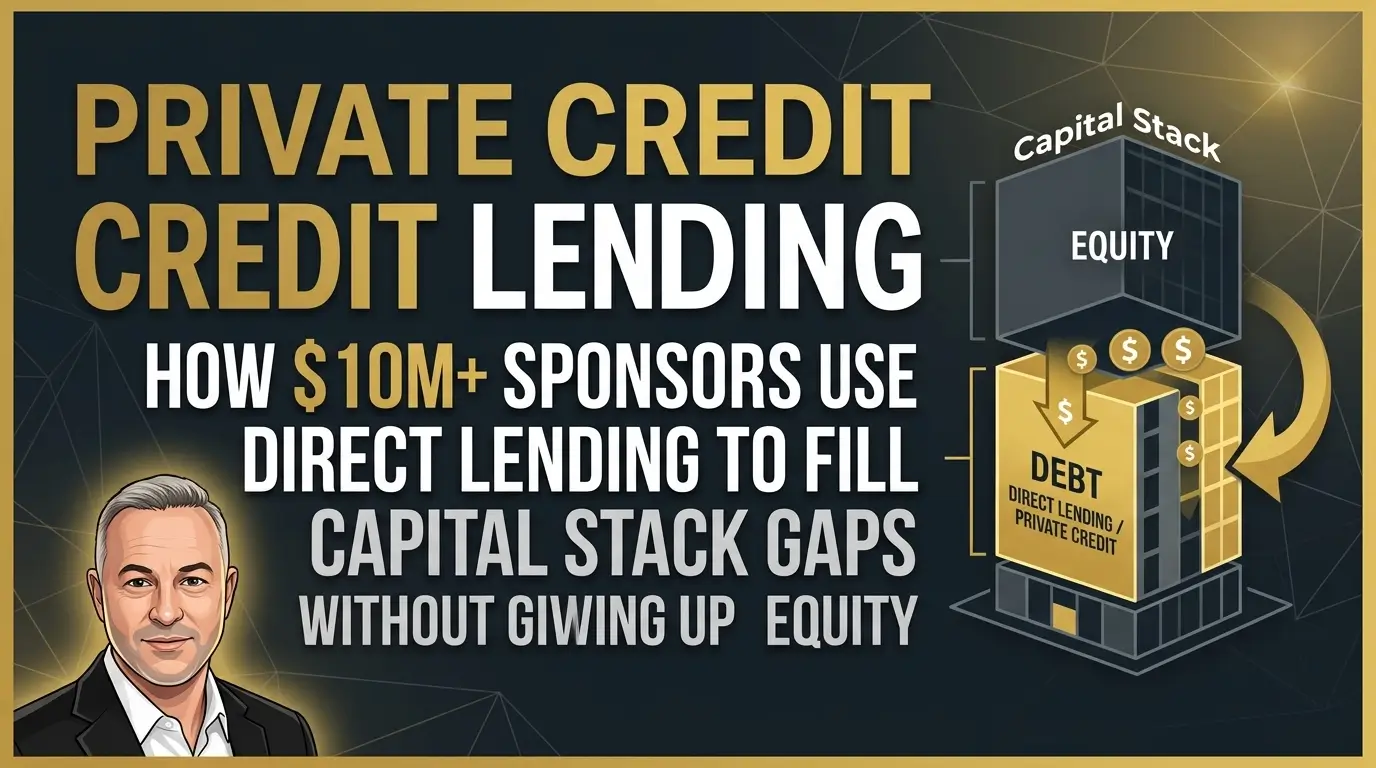
Private Credit Lending: How $10M+ Sponsors Use Direct Lending to Fill Capital Stack Gaps Without Giving Up Equity

What Happens to Drag-Along Rights When You Layer a Series B on Top of Your Series A
Disclosure
Nothing on this site constitutes an offer to sell, or a solicitation of an offer to purchase, any security under the Securities Act of 1933, as amended, or any applicable state securities laws. Any offering of securities is made only by means of a formal private placement memorandum or other authorized offering documents delivered to qualified investors.
IRC Partners is a capital advisory firm. IRC Partners is not a registered investment adviser under the Investment Advisers Act of 1940 and does not provide investment advice as defined thereunder.
Certain statements in this article may constitute forward-looking statements, including statements regarding market conditions, capital availability, investor demand, and transaction outcomes. Such statements reflect current assumptions and expectations only. Actual results may differ materially due to market conditions, regulatory developments, company-specific factors, and other variables. IRC Partners makes no representation that any outcome, return, or result described herein will be achieved.
References to prior mandates, transaction volume, network credentials, or capital raised are provided for illustrative purposes only and do not constitute a guarantee or prediction of future results. Past performance is not indicative of future outcomes. Individual results will vary. Network credentials and transaction statistics referenced on this site reflect the aggregate experience of IRC Partners' principals and affiliated advisors and are not a representation of assets managed or transactions closed solely by IRC Partners.
Certain data, statistics, and information presented in this article have been obtained from third-party sources. IRC Partners has not independently verified such information and expressly disclaims responsibility for its accuracy, completeness, or timeliness. Readers should independently verify any third-party data before relying on it.
Readers are strongly encouraged to consult qualified legal, financial, and tax professionals before making any investment, capital raising, or business decision.
Schedule A Meeting
You get one shot to raise the right way. If this raise is worth doing, it’s worth doing with precision, leverage, and control.
This isn’t a practice run. Serious capital. Serious strategy. Let’s raise it right.
We onboard a maximum of seven
new strategic partners each quarter, by application only, to maximize your chances of securing the capital you need.
