.svg "CTA Arrow")


.png "Investor Ready Capital decorative background element")

When Does a Company Need Capital Raising From Sovereign Wealth and Pension Funds?

Sovereign wealth fund and pension fund capital becomes the right channel once a sponsor's raise size, repeatable strategy, reporting infrastructure, and governance are mature enough to justify a 12-to-24-month institutional diligence cycle. For most sponsors raising under $50M on a first institutional raise, a more executable path closes faster and with higher probability. The threshold for this channel is readiness, not ambition - wanting a larger check does not create mandate fit, and spending 12 to 18 months on a low-probability process carries a direct cost to raise execution and firm momentum that most early-stage sponsors cannot absorb.
This article is a timing and fit diagnostic, not a primer on what sovereign wealth funds are.
Key takeaways:
- The threshold for this channel is readiness, not ambition. Wanting a larger check does not create mandate fit.
- The preparation burden is real. Audit-ready financials, structured governance, and a clean data room are required before outreach, not after.
- Opportunity cost matters. Spending 12-18 months on a low-probability process has a direct cost to raise execution and firm momentum.
The sections below walk through the specific readiness signals that separate sponsors who are positioned for this channel from those who need to build infrastructure first.
The Short Answer: The Timing Threshold for This Capital
Most sponsors do not need sovereign wealth or pension capital early in their institutional capital journey. According to the Hodes Weill 2025 Real Estate Allocations Monitor, institutions managing a combined $14.7 trillion in assets remain under-allocated to real estate, but that capital is not broadly accessible. Allocators are more selective, not less, and their internal approval processes have lengthened.
The channel begins to make sense when four conditions are true at the same time:
Sponsors who meet three of four conditions may still be early. All four need to be true before the process is rational to start.
Signs a Sponsor Is Ready for Sovereign Wealth or Pension Capital
Readiness is not a feeling. It is a set of verifiable conditions that institutional allocators confirm during diligence. Sponsors who understand what pension funds require from real estate managers recognize that these standards apply before the first meeting, not after an LOI. Having a complete institutional data room in place before first contact is one of the clearest signals of readiness an allocator sees.
Readiness Checklist
Use this as a self-diagnostic before targeting this channel:
- Track record: 3 or more completed projects with clean, attributable returns. Attribution matters. Returns that cannot be clearly tied to the GP's decision-making do not count.
- Repeatable strategy: A documented investment thesis that applies across multiple assets, markets, or cycles. Not a single strong deal.
- Audit-ready financials: Annual audited financials and quarterly unauditeds available on a defined cadence. The ILPA Reporting Template sets the standard most institutional LPs expect.
- Governance documentation: Defined investment committee process, conflict-of-interest policy, and fund-level governance structure already in place.
- Clean data room: Organized, current, and complete. No missing documents, no informal side arrangements without documentation.
- Named role coverage: Investment, asset management, finance and reporting, and compliance each have a named person responsible. Team depth is evaluated by function, not headcount.
- Raise size and patience: Equity target justifies the process length, and the sponsor has enough runway to close without rushing an allocator.
Sponsors who can check every item on this list are positioned to begin the process. Those who cannot should sequence infrastructure work first.
Signs a Sponsor Is Pursuing This Channel Too Early
The most common mistake is not targeting the wrong allocator. It is targeting the right allocator at the wrong time. Reviewing a real estate due diligence checklist before outreach is one of the fastest ways to identify structural gaps that will surface in diligence anyway. Institutions can tell within the first diligence call whether a sponsor is structurally prepared. A weak first impression in this channel is difficult to recover from.
The Invesco 2025 Global Sovereign Asset Management Study, covering 83 sovereign funds and 58 central banks, found that governance quality and transparency are now primary factors in allocator decisions, ranking above return projections in several categories. A sponsor without documented governance is not a work in progress to an institutional allocator. It is a pass.
Why Sponsors Confuse Wanting Institutional Capital With Needing It
Sovereign wealth and pension capital carries a prestige signal. That signal distorts channel selection more than most sponsors admit. Three patterns explain most of the misalignment:
- Prestige bias over mandate fit. Sponsors target sovereign and pension allocators because of name recognition, not because their raise size, strategy, or structure matches the allocator's actual deployment mandate. Mandate fit is the only thing that matters. Name recognition of the LP does not close a round.
- Confusing theoretical check size with executable probability. A sovereign fund's theoretical check size may be $100M+. Its actual minimum underwriting threshold, approval committee requirements, and co-investment structure may make a $30M commitment from that source effectively impossible for a first-time relationship. The headline number is not the real number.
- Underestimating opportunity cost. A 12-to-18-month process that ends without a close is not a neutral outcome. It consumes management attention, delays capital deployment, and can signal to other LPs that a raise is stalled. Sponsors who pursue this channel before they are ready often find themselves rebuilding momentum from a weaker position.
The question is not whether sovereign or pension capital would be valuable. It almost always would be. The question is whether the process is executable now, given current firm infrastructure and raise parameters.
{{main-cta}}
What to Pursue First if This Channel Is Not the Right Fit Yet
Not being ready for sovereign or pension capital now is not a permanent condition. It is a sequencing issue. The sponsors who eventually close with institutional allocators at this level almost always built the infrastructure first, then targeted the channel.
Four steps that create the foundation:
- Build the attribution file. Document each project's returns with clear GP decision-making attribution. Returns that cannot be isolated to the GP's actions will not survive institutional track record review.
- Establish a reporting cadence. Quarterly unauditeds and annual audited financials are the baseline. Sponsors who cannot produce these on a defined schedule are not ready to manage institutional LP relationships at this level. Understanding institutional reporting standards for real estate sponsors helps frame what that cadence looks like in practice.
- Tighten the capital stack and governance map. Fee structures, waterfall logic, preferred return mechanics, and downside-case underwriting need to be documented and defensible before allocator outreach.
- Target a more executable institutional channel first. Some sponsors are better positioned to raise from family offices, private equity funds, or institutional co-investors whose diligence cycles, check sizes, and mandate fit align with the current raise. A family office vs. PE fund comparison helps clarify which path fits the current raise profile. Building a track record of managing outside capital at that level strengthens the eventual sovereign or pension conversation.
Readiness work is not a detour. It is the fastest path to eventually closing with the right allocator. Sponsors who build warm introductions to institutional capital into their raise strategy consistently move through diligence faster than those who rely on cold outreach.
Frequently Asked Questions
What is the minimum raise size that makes sovereign wealth or pension capital worth pursuing?
Most institutional allocators in this channel have internal minimums that make commitments below $25M in equity difficult to justify given their underwriting and approval costs. In practice, sponsors with equity needs below $50M are often better served by family offices or private equity funds with lower minimum deployment thresholds and shorter diligence cycles.
How long does the diligence process typically take?
A realistic range is 12 to 24 months from first contact to close for a new relationship with a sovereign wealth fund or pension fund. Some processes move faster with a warm introduction and a pre-existing allocator relationship. Cold processes at this level rarely close in under 18 months.
What track record do institutional allocators require?
Most sovereign and pension allocators want to see 3 or more completed projects with audited, attributable returns. Attribution is the critical word. Returns that cannot be clearly tied to the GP's specific decisions do not satisfy institutional track record standards, even if the deals were profitable.
Should a sponsor pursue a direct deal or fund structure for this channel?
That depends on the allocator's mandate. Some sovereign funds and pensions prefer co-investment or direct deal structures. Others require a commingled fund. Sponsors should understand the target allocator's deployment preference before structuring the offering, not after.
What internal team does a sponsor need before approaching this channel?
Named role coverage across investment, asset management, finance and reporting, and compliance is the baseline. Institutional allocators evaluate whether the team can sustain operations and LP reporting obligations independently. A one-person GP with external contractors handling reporting is unlikely to pass team diligence at this level.
Is this an appropriate channel for a sponsor's first institutional raise?
Rarely. Most first institutional raises are better suited to family offices or institutional co-investors with faster timelines and lower infrastructure requirements. Sovereign and pension capital typically makes sense after a sponsor has managed outside capital at a smaller institutional scale and can demonstrate the reporting and governance maturity those earlier relationships required.
Can a sponsor pursue sovereign and pension capital at the same time as other institutional channels?
Yes, but with caution. Running parallel processes across multiple channel types is resource-intensive and can create timeline conflicts if one channel moves faster than expected. Sponsors should be honest about their team's capacity to manage concurrent diligence processes without degrading the quality of any single relationship.
Continue reading this series:
- How Capital Raising From Sovereign Wealth and Pension Funds Works
- Key Benefits of Capital Raising From Sovereign Wealth and Pension Funds
- Common Mistakes Companies Make in Capital Raising From Sovereign Wealth and Pension Funds
IRC Partners advises operators raising $5M to $250M of institutional capital on structure, positioning, and round architecture. We take seven strategic partners per quarter. No placement agent model. No success-only theater. Capital is raised on the strength of how the deal is built. If you want your current raise reviewed before it reaches the market and silently fails, apply here.
Sponsors weighing this decision should first complete a capital raise readiness assessment for sponsors to confirm the raise is investor-ready.
Need guidance on your capital raise?



How Should a Company Sequence Readiness Work, Materials Preparation, Deal Structuring, and Diligence Before Launching an Institutional Raise?
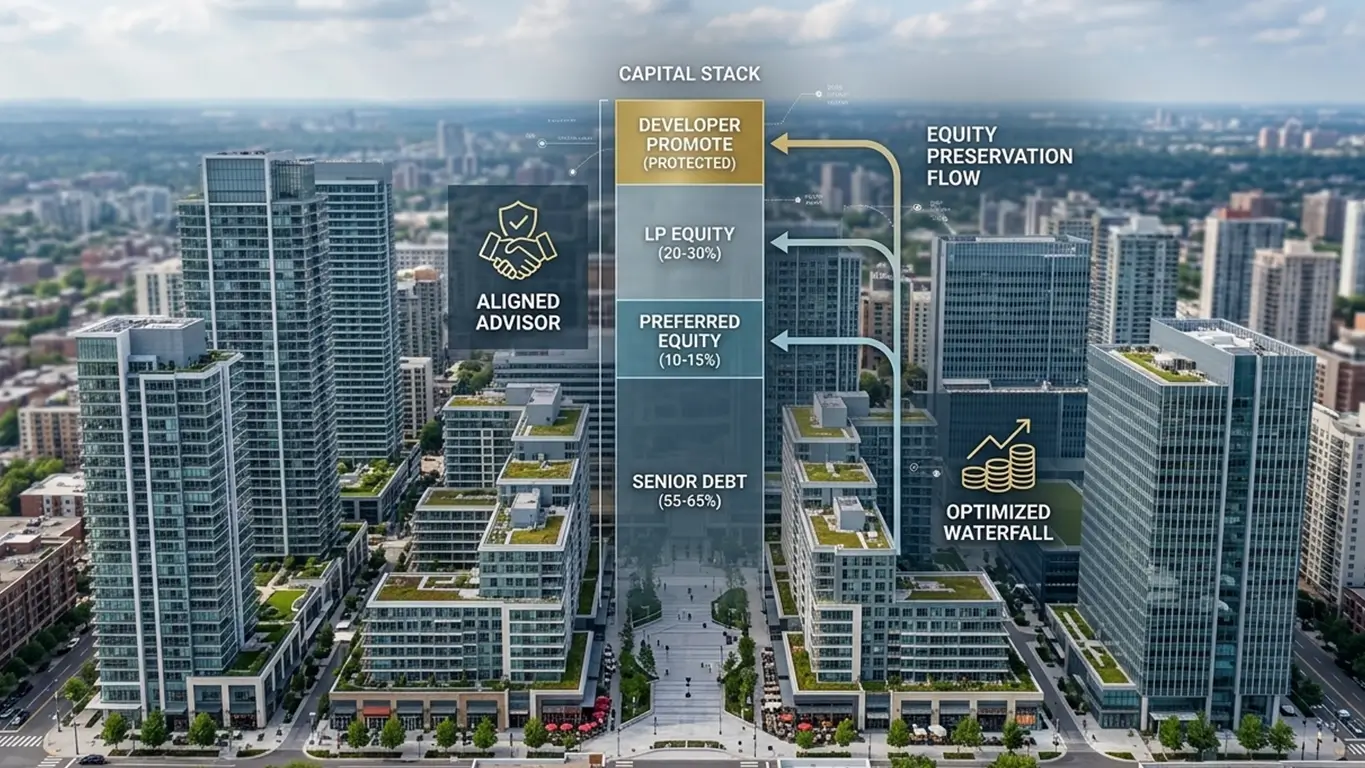
Top Firms for Real Estate Capital Raising Without Losing Equity

Top Firms for Capital Stack Strategy
Disclosure
Nothing on this site constitutes an offer to sell, or a solicitation of an offer to purchase, any security under the Securities Act of 1933, as amended, or any applicable state securities laws. Any offering of securities is made only by means of a formal private placement memorandum or other authorized offering documents delivered to qualified investors.
IRC Partners is a capital advisory firm. IRC Partners is not a registered investment adviser under the Investment Advisers Act of 1940 and does not provide investment advice as defined thereunder.
Certain statements in this article may constitute forward-looking statements, including statements regarding market conditions, capital availability, investor demand, and transaction outcomes. Such statements reflect current assumptions and expectations only. Actual results may differ materially due to market conditions, regulatory developments, company-specific factors, and other variables. IRC Partners makes no representation that any outcome, return, or result described herein will be achieved.
References to prior mandates, transaction volume, network credentials, or capital raised are provided for illustrative purposes only and do not constitute a guarantee or prediction of future results. Past performance is not indicative of future outcomes. Individual results will vary. Network credentials and transaction statistics referenced on this site reflect the aggregate experience of IRC Partners' principals and affiliated advisors and are not a representation of assets managed or transactions closed solely by IRC Partners.
Certain data, statistics, and information presented in this article have been obtained from third-party sources. IRC Partners has not independently verified such information and expressly disclaims responsibility for its accuracy, completeness, or timeliness. Readers should independently verify any third-party data before relying on it.
Readers are strongly encouraged to consult qualified legal, financial, and tax professionals before making any investment, capital raising, or business decision.
Schedule A Meeting
You get one shot to raise the right way. If this raise is worth doing, it’s worth doing with precision, leverage, and control.
This isn’t a practice run. Serious capital. Serious strategy. Let’s raise it right.
We onboard a maximum of seven
new strategic partners each quarter, by application only, to maximize your chances of securing the capital you need.
