.svg "CTA Arrow")


.png "Investor Ready Capital decorative background element")

What should an LP-Facing Financial Model Summary Include When Presenting a Single Real Estate Development Project?

What should an LP-Facing Financial Model Summary Include When Presenting a Single Real Estate Development Project?
An institutional LP reviewer who cannot quickly verify a development project's sources and uses, return metrics, waterfall structure, and key assumptions from a single summary view will either generate a list of follow-up questions or move to the next deal. A full financial model alone does not solve this problem because it requires navigating multiple tabs to reconstruct the economic logic. An LP-facing model summary solves it by condensing the project's capital structure, labeled LP-level and project-level returns, waterfall distribution tiers, and disclosed assumptions into one readable page that supports first-pass validation without requiring the sponsor to explain it live.
Institutional LP reviewers use the summary page as a first-pass screen. If the economics read clearly and the outputs are traceable, the reviewer moves forward. If the summary is missing, incomplete, or formatted as a raw tab dump, the reviewer has to reconstruct the logic manually. That adds friction and signals that the sponsor has not translated the model into a decision-ready format. For sponsors raising $5M to $250M for a single development project, that friction can slow or derail a first-pass review that should take minutes.
A well-built LP-facing summary also connects directly to preferred return coverage and the financial model tabs that sit behind it. The summary does not replace those tabs. It organizes their outputs into one readable view.
The four required elements of an LP-facing model summary:
- Sources and uses at project level with plain-English labels
- Return metrics labeled by recipient layer (project-level and LP-level)
- Waterfall output summary showing pref, return of capital, and residual splits
- Disclosed assumption block covering timing, exit, leverage, and cost drivers
LP-Facing Summary vs. Full Model vs. Executive Summary
These three deliverables serve different functions. Sponsors who conflate them create confusion for reviewers before diligence even begins.
The executive summary introduces the deal. The full model proves it. The LP-facing summary is the bridge a reviewer uses to confirm that the story in the executive summary is supported by the numbers in the model, without having to navigate every tab to get there.
Sponsors create friction when they treat the summary page as a slide pulled from the deck or as a raw spreadsheet tab with no labels reorganized for a reviewer. The LP-facing summary has its own format: outputs organized by what a reviewer needs to validate, with labels that match the rest of the package.
What Belongs on the Summary Page
The LP-facing summary page should be organized into four discrete blocks. Each block answers a specific question a reviewer will ask when they open the document.
1. Project Identity and Business Plan Block
This block tells the reviewer what they are looking at before they read a single number. It should include asset type, market, development strategy (ground-up or value-add), planned hold period, and major timing milestones such as construction start, expected stabilization, and projected exit. Keeping this block tight and consistent with the executive summary prevents the reviewer from encountering conflicting descriptions across the package.
2. Capital Structure Block
Show the capital stack in order of seniority: senior construction loan, mezzanine or preferred equity if applicable, LP equity, and GP equity. Include amounts or percentages for each layer so the reviewer can confirm the equity split and leverage position without opening the debt schedule tab. This block also sets up the waterfall output summary that follows it.
3. Sources and Uses Block
Present total project cost broken into decision-relevant categories. Include sources in the same order as the capital stack. Keep labels plain and consistent with every other document in the package. The sources and uses block is often the first place a reviewer looks to test whether the equity need is coherent, so it must be complete and clearly labeled.
4. Headline Economics Block
This block contains the return metrics and exit assumptions the reviewer will use to evaluate the deal. It should show project-level and LP-level returns separately, include the exit cap rate or sale price assumption, and display the debt snapshot used in the model. According to institutional real estate underwriting standards, LP-level returns must be clearly distinguished from project-level outputs to avoid misrepresentation risk.
How to Condense Sources and Uses for LP Review
The sources and uses schedule in the full model is granular by design. The LP-facing version should be condensed into categories a reviewer can read and test in under two minutes.
Group uses into six decision-relevant categories:
- Land or acquisition cost
- Hard construction costs
- Soft costs (architecture, engineering, permits, legal)
- Financing costs (origination, interest reserve, lender fees)
- Developer fee and overhead if capitalized
- Contingency and reserves
Group sources by capital layer in seniority order:
- Senior construction loan
- Mezzanine or preferred equity (if applicable)
- LP equity
- GP equity or co-invest
A few rules that matter for LP review. Labels must match exactly across the executive summary, the model summary, and the data room. A reviewer who sees "hard costs" on the summary and "construction costs" in the data room will flag the inconsistency. Keep the same terminology throughout the package. Second, do not bury reserves or contingency in a catch-all line. Reviewers look for contingency because its size relative to hard costs signals how conservatively the project is underwritten. Third, avoid combining sources and uses into a single table if the result is hard to read. Two clean side-by-side blocks are easier to validate than a merged schedule with subtotals that require mental reconstruction.
The hold-period model and construction draw schedule connect directly to the uses side of this schedule. Timing-sensitive costs that shift the equity need should be flagged in the assumption block, not buried in the uses table.
Which Return Metrics and Waterfall Outputs to Show
Return metrics on the LP-facing summary must be labeled precisely. A reviewer who cannot tell whether an IRR is project-level or LP-level will treat the number as unreliable until clarified.
Return Metrics Matrix
Present project-level and LP-level returns in separate rows. Never blend them into a single "projected return" line. A reviewer needs to see the spread between project economics and LP economics to evaluate whether the promote and fee structure is reasonable relative to the return profile. A detailed breakdown of how institutional LPs evaluate risk-adjusted return by strategy quadrant can help sponsors anchor their projected IRR and equity multiple to the right benchmark before the summary page is finalized.
Waterfall Output Summary
The waterfall summary on the LP-facing page should show four tiers in plain English. A detailed breakdown of real estate waterfall structures is available from institutional finance education resources.
- Return of capital: LP and GP contributions returned before any profit distributions begin
- Preferred return: LP preferred rate applied to unreturned capital for the duration of the hold
- Catch-up (if applicable): GP catch-up tier before residual splits, disclosed clearly if present
- Residual splits: Profit split percentages above the pref tier, shown by LP and GP layer
The waterfall summary on the LP-facing page should reference the detailed waterfall tab so the reviewer can trace each output back to the underlying distribution logic. The fee income and promote economics article covers how GP participation and promote structures should be disclosed in the full model. The summary page shows the output of that logic, not the mechanics.
How to Disclose Key Assumptions on the Summary Page
The assumption block on the LP-facing summary should cover only the inputs that drive the economics a reviewer will test first. The full assumption architecture belongs in the model. The summary page needs a short, readable disclosure block.
Assumption disclosure checklist for the LP-facing summary:
- Projected construction timeline and expected completion date
- Exit assumption: cap rate, sale price per unit, or comparable metric for the asset type
- Lease-up or stabilization timeline (for income-producing projects)
- Loan-to-cost ratio and interest rate assumption used in the model
- Major cost assumption: hard cost per square foot or per unit
- Contingency percentage relative to hard costs
- Hold period used in the return calculations
Present these as a labeled block, not a narrative paragraph. A reviewer scanning the summary needs to locate the exit cap rate or the LTC in seconds. Buried assumptions inside prose require reconstruction. A clean labeled block makes the outputs interpretable and the model auditable from the summary page alone.
Timing assumptions that affect the equity need should be cross-referenced to the hold-period model. If a cost assumption materially affects the return output, it belongs in the disclosure block even if it is also visible in the full model.
{{main-cta}}
What LP Reviewers Check First When They Open the Summary
Experienced LP reviewers follow a predictable sequence when they open a model summary for the first time. Understanding that sequence helps sponsors organize the page so the reviewer reaches a positive first-pass conclusion faster.
Reviewer sequence for a single development project:
- Sources equal uses check. The reviewer confirms total sources match total uses and that the equity need shown on the summary matches the capital stack shown in the executive summary and data room. A mismatch here stops the review.
- Return label check. The reviewer scans the return block to confirm LP-level and project-level economics are presented separately and labeled clearly. Unlabeled or blended return figures generate immediate follow-up questions.
- Waterfall reconciliation check. The reviewer tests whether the waterfall outputs on the summary page are traceable to the distribution logic in the full model. If the pref rate or residual split shown on the summary does not match the waterfall tab, the reviewer flags the inconsistency before going further.
- Assumption coherence check. The reviewer looks at the exit assumption and the hold period and tests whether the return outputs are plausible given those inputs. An exit cap rate that is materially below current market without explanation is a common friction point.
- Friction signal scan. The reviewer looks for inconsistent labels, missing timing milestones, unexplained reserves, and outputs that cannot be traced back to supporting tabs. Sponsors who understand what documents should support a real estate financial model in an investor data room can anticipate which cross-references a reviewer will run against the summary page. Each friction signal adds a question to the diligence list and extends the review cycle.
A model summary that passes all five checks in the first review moves the deal forward. One that generates questions on the first pass extends the timeline, sometimes by weeks.
If the Model Exists but the Summary Has Not Been Built
A completed financial model without a structured LP-facing summary still creates review friction. The model contains the right numbers. The problem is that a reviewer cannot access them without navigating multiple tabs, cross-referencing schedules, and reconstructing the logic that the summary page should have organized for them.
Sponsors who are preparing for active LP outreach and have a built model should prioritize organizing the LP-facing summary before sending materials. Reviewing what materials institutional investors use to evaluate a sponsor's capital formation readiness can help clarify where the model summary fits within the full diligence picture. That means condensing sources and uses into a labeled one-page view, separating LP-level and project-level return metrics, building the waterfall output summary, and adding the assumption disclosure block. This work connects the model to the institutional LP executive summary and the broader investor-ready package in a way that supports first-pass review rather than complicating it.
IRC works with sponsors raising $5M to $250M for single development projects to structure LP-facing model summaries that are organized, verifiable, and ready for institutional review from the first conversation. If the model exists but the summary needs to be built or reorganized for committee-level review, that is the starting point.
Ready to organize your model summary for institutional review? Book a strategy call with IRC to discuss how to structure your LP-facing financial model summary before active outreach begins.
Frequently Asked Questions
What is an LP-facing financial model summary and how is it different from the full model?
An LP-facing financial model summary is a condensed one-page view of a development project's financial outputs organized for institutional reviewer use. The full model contains monthly cash flows, granular assumption architecture, debt schedules, and sensitivity tables. The summary extracts the outputs a reviewer needs to validate the deal economics: sources and uses, return metrics, waterfall tiers, and key assumptions. The full model proves the mechanics. The summary makes them readable in a single view.
Which return metrics must appear on the LP-facing model summary?
An LP-facing model summary for a single development project must show project-level IRR (labeled as levered or unlevered), LP-level net IRR after pref and promote, LP equity multiple, and GP equity multiple. Cash-on-cash yield should be included only for income-producing phases and labeled by period. All metrics must be presented in separate labeled rows. Blending project-level and LP-level returns into a single figure is a common error that generates immediate reviewer follow-up.
How should sources and uses be condensed for LP review?
Sources should be listed in order of capital stack seniority: senior debt, mezzanine or preferred equity if applicable, LP equity, and GP equity. Uses should be grouped into six categories: land, hard costs, soft costs, financing costs, developer fee if capitalized, and contingency. Labels must match exactly across the executive summary, the model summary, and the data room. Inconsistent terminology between documents is one of the most common friction signals reviewers flag during first-pass diligence.
What waterfall tiers should the LP-facing summary show?
The waterfall output summary on the LP-facing page should show four tiers: return of capital, preferred return applied to unreturned LP capital, catch-up tier if applicable with the percentage disclosed, and residual profit splits by LP and GP layer. Each tier should reference the detailed waterfall tab in the full model so the reviewer can trace the output back to the underlying distribution logic. A waterfall summary that cannot be reconciled to the model tab generates verification questions before deeper diligence begins.
What assumptions belong in the disclosure block on the model summary?
The assumption disclosure block on the LP-facing summary should include the projected construction timeline, exit assumption (cap rate or sale price per unit), lease-up or stabilization timeline for income-producing projects, loan-to-cost ratio and interest rate, hard cost per square foot or per unit, contingency percentage relative to hard costs, and the hold period used in return calculations. These are the inputs a reviewer will test first. Full assumption architecture belongs in the model. The summary block makes the outputs interpretable without requiring tab navigation.
How does the LP-facing model summary connect to the executive summary?
The executive summary presents the market thesis, sponsor background, and investment highlights. The LP-facing model summary validates that the economics behind those highlights are coherent and verifiable. A reviewer reads the executive summary to understand the deal and opens the model summary to confirm the numbers support the narrative. When the two documents use inconsistent labels, different hold periods, or conflicting equity figures, reviewers treat the discrepancy as a diligence flag before the first call.
What signals tell an LP reviewer that a model summary is not institutional-grade?
Reviewers identify five friction signals that indicate a model summary is below institutional standard: sources and uses totals that do not reconcile, return metrics that blend project-level and LP-level economics without labels, waterfall outputs that cannot be traced to a supporting tab, assumption blocks buried in prose rather than presented as a labeled disclosure, and terminology that differs from the rest of the investor-ready package. Sponsors preparing for first-call conversations can cross-reference the full list of what institutional LPs audit before the first call to identify which gaps in the model summary would surface during a pre-screen review. Each signal adds a question to the diligence list and extends the review cycle for a raise that could take 4 to 9 months under normal conditions.
Continue reading this series:
- What financial model tabs should a real estate sponsor prepare before institutional LP outreach?
- What should a hold-period model include for a real estate development project?
- How should a real estate sponsor present preferred return coverage in investor materials?
IRC Partners advises operators raising $5M to $250M of institutional capital on structure, positioning, and round architecture. We take seven strategic partners per quarter. No placement agent model. No success-only theater. Capital is raised on the strength of how the deal is built. If you want your current raise reviewed before it reaches the market and silently fails, apply here.
Need guidance on your capital raise?



How Do Growth Equity Investors Calculate CAC Payback for a Series B SaaS Company?
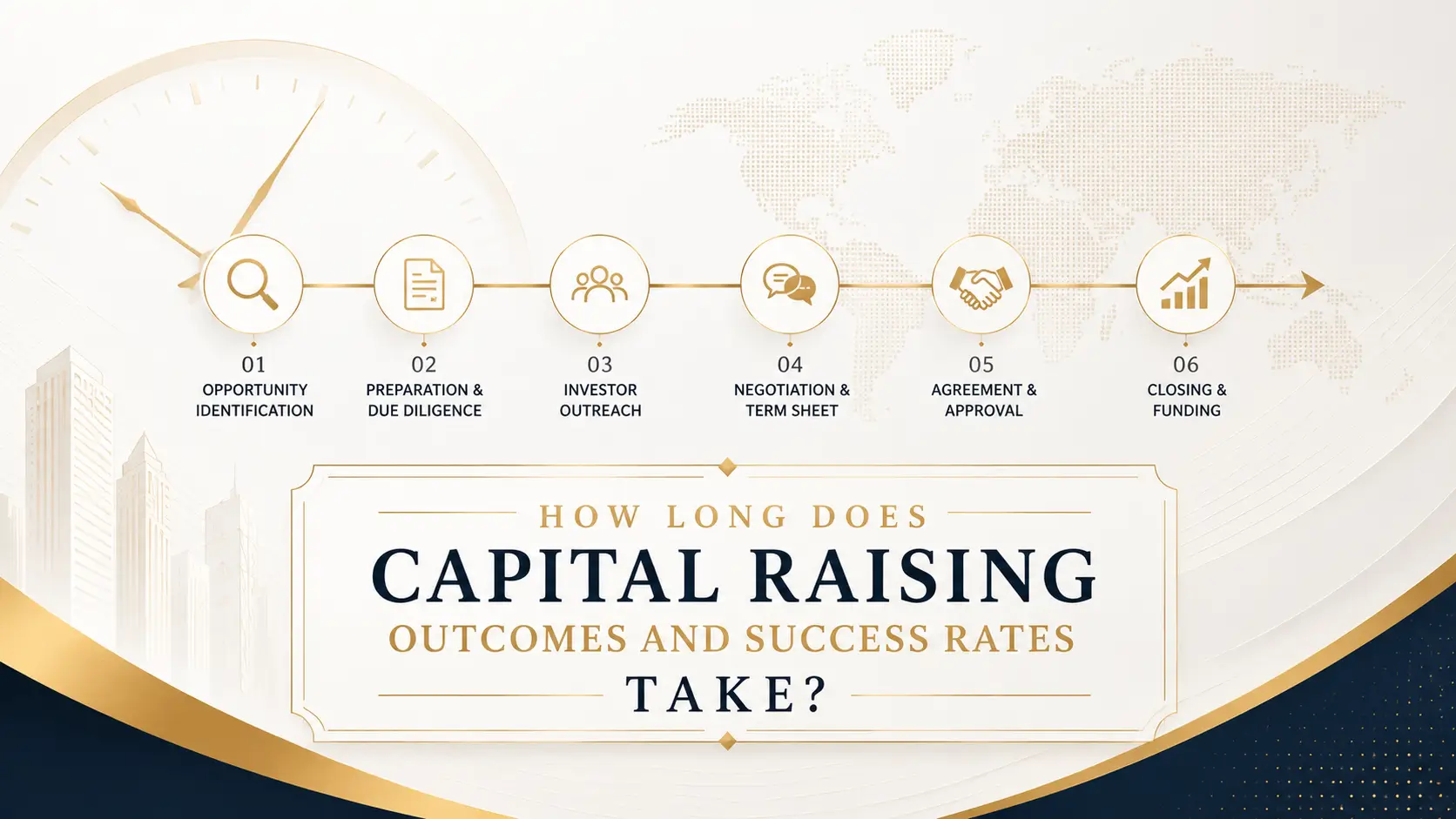
How Long Does Capital Raising Outcomes and Success Rates Take?
How Should a Startup Structure Bridge Financing if a Major Customer Contract is Expected to be The Next Financing Catalyst?
Disclosure
Nothing on this site constitutes an offer to sell, or a solicitation of an offer to purchase, any security under the Securities Act of 1933, as amended, or any applicable state securities laws. Any offering of securities is made only by means of a formal private placement memorandum or other authorized offering documents delivered to qualified investors.
IRC Partners is a capital advisory firm. IRC Partners is not a registered investment adviser under the Investment Advisers Act of 1940 and does not provide investment advice as defined thereunder.
Certain statements in this article may constitute forward-looking statements, including statements regarding market conditions, capital availability, investor demand, and transaction outcomes. Such statements reflect current assumptions and expectations only. Actual results may differ materially due to market conditions, regulatory developments, company-specific factors, and other variables. IRC Partners makes no representation that any outcome, return, or result described herein will be achieved.
References to prior mandates, transaction volume, network credentials, or capital raised are provided for illustrative purposes only and do not constitute a guarantee or prediction of future results. Past performance is not indicative of future outcomes. Individual results will vary. Network credentials and transaction statistics referenced on this site reflect the aggregate experience of IRC Partners' principals and affiliated advisors and are not a representation of assets managed or transactions closed solely by IRC Partners.
Certain data, statistics, and information presented in this article have been obtained from third-party sources. IRC Partners has not independently verified such information and expressly disclaims responsibility for its accuracy, completeness, or timeliness. Readers should independently verify any third-party data before relying on it.
Readers are strongly encouraged to consult qualified legal, financial, and tax professionals before making any investment, capital raising, or business decision.
Schedule A Meeting
You get one shot to raise the right way. If this raise is worth doing, it’s worth doing with precision, leverage, and control.
This isn’t a practice run. Serious capital. Serious strategy. Let’s raise it right.
We onboard a maximum of seven
new strategic partners each quarter, by application only, to maximize your chances of securing the capital you need.
