.svg "CTA Arrow")


.png "Investor Ready Capital decorative background element")

RE Sponsor Mode: What Institutional LPs Audit Before the First Call

TL;DR: Institutional LPs screen real estate sponsors across 12 readiness gates before agreeing to a first call or reviewing the full deal.
- Gates 1 to 3: Pitch Deck, Financial Model, and Cap Table / Capital Stack: These three gates answer one question: does the sponsor's materials package hold up under a first-pass read?
- Gates 4 to 6: Market Thesis, Traction, and Team: These three gates shift from materials quality to operator credibility.
- Gates 7 to 9: Use of Funds, Data Room, and Deal Terms: These gates test whether the sponsor has done the institutional work before reaching out, not after.
Institutional LPs often decide whether a real estate sponsor deserves a first call before they evaluate the full deal. A sponsor with an unclear track record, aggressive pro forma, misaligned capital stack, incomplete data room, or poorly matched LP target can receive a soft pass before a meeting is scheduled. The solution is to audit the sponsor package against the 12 institutional readiness gates before outreach, then fix the gaps that would prevent a serious LP conversation.
The question worth asking before any outreach campaign is this: would the sponsor pass the pre-call audit an institutional LP runs right now?
Most sponsors cannot answer that with confidence. That gap is what drives soft passes, delayed responses, and the kind of vague feedback that never names the real problem.
The Capital Raise Pre-Flight is IRC Partners' fixed-fee diagnostic that scores a raise against the same twelve institutional gates a deal must clear before IRC Partners takes it into a strategic partnership.
Here is what each gate looks like when the operator is a real estate sponsor.
Gates 1 to 3: Pitch Deck, Financial Model, and Cap Table / Capital Stack
These three gates answer one question: does the sponsor's materials package hold up under a first-pass read?
Gate 1: Pitch Deck
For a founder, this gate checks whether the deck tells a coherent company story across problem, solution, market, and team. For a real estate sponsor, it checks whether the offering materials present a coherent investment thesis across submarket, strategy, structure, and operator credibility. A sponsor who leads with asset photography and projected returns before establishing operator track record fails Gate 1. Institutional LPs read the sponsor narrative before they read the numbers.
Gate 2: Financial Model
For a founder, this gate checks revenue assumptions, unit economics, and burn rate. For a sponsor, it checks the pro forma. LPs look at rent growth assumptions, cap rate on exit, construction cost contingency, and debt coverage ratios. Aggressive assumptions on any one line item raise a flag. Aggressive assumptions across multiple line items generate a pass before a first call. Sponsors should understand how financial model red flags get caught in institutional diligence before finalizing their pro forma.
Gate 3: Cap Table / Capital Stack
For a founder, this gate checks ownership structure, dilution history, and whether prior investors have blocking rights. For a sponsor, it checks the capital stack. LPs want to see a clean layering of senior debt, preferred equity, and GP/LP equity with clear waterfall logic. A capital stack with undefined mezzanine positions, stacked deferred fees, or a GP promote that front-loads extraction before LP return of capital signals structural misalignment before a first conversation begins.
Gates 4 to 6: Market Thesis, Traction, and Team
These three gates shift from materials quality to operator credibility. LPs are asking whether the sponsor has earned the right to deploy institutional capital into this specific strategy.
Gate 4: Market Thesis
For a founder, market thesis means total addressable market size and growth trajectory. For a sponsor, it means submarket specificity. Macro real estate trends do not pass Gate 4. Submarket-level absorption data, vacancy rates, and comparable transaction evidence do. Sponsors who cannot explain why this submarket, why this supply-demand dynamic, and why now have not done the work.
Gate 5: Traction
This is the gate where most sponsors fail the comparison. For a founder, traction means revenue, retention, and growth rate. For a sponsor, traction means realized exits with clear role attribution. Realized outcomes, deal by deal, with the sponsor's specific role documented on each one.
Sponsors who blur attribution, claim credit on deals where they were a minority co-sponsor, or omit exits that underperformed projections do not pass Gate 5. LPs are looking for an honest track record.
Gate 6: Team
For a founder, team means executive depth, functional coverage, and key-person risk. For a sponsor, it means the same thing with a real estate lens. Who is the lead GP on this deal? Who controls construction decisions? Who manages LP relationships after close? A sponsor who cannot answer these questions with named individuals and defined roles signals that the operation is too principal-dependent to scale.
Gates 7 to 9: Use of Funds, Data Room, and Deal Terms
These gates test whether the sponsor has done the institutional work before reaching out, not after.
Gate 7: Use of Funds
For a founder, a list of departments fails this gate. For a sponsor, the equivalent failure is "land acquisition, construction, and soft costs" with no specificity. LPs want to see a capital deployment schedule: how much equity is drawn at each phase, what triggers the next draw, and what happens to LP capital if the construction timeline shifts. Vague deployment language tells LPs the sponsor has not modeled the capital stack with precision.
Gate 8: Data Room
For a founder, the data room gate checks whether the materials can support diligence without requiring the founder to narrate every document. For a sponsor, it checks whether the sponsor package is complete, internally consistent, and can survive a first-pass review without follow-up confusion. A 15-slide pitch deck is a conversation starter that tells LPs the sponsor is not ready for the scrutiny that follows a first meeting. Sponsors who want to understand what institutional LPs expect in a real estate capital stack review will find the structural framework directly applicable.
{{main-cta}}
Gate 9: Deal Terms
For a founder, this gate flags participating preferred, full ratchet anti-dilution, and uncapped pro-rata rights. For a sponsor, it flags the GP/LP split and waterfall design. LPs model the promote structure before a first call to see whether the GP is aligned with LP outcomes or extracting value regardless of performance.
A preferred return set below market, a waterfall that accelerates GP fees before LP capital is returned, or a fee stack that generates GP income independent of deal performance all signal the same thing: this structure was built for the sponsor. The way management fees and carried interest in a fund terms sheet are structured matters more to institutional LPs than most sponsors realize.
Gates 10 to 12: Raise Strategy, Decision Friction, and Mandate Alignment
The final three gates determine whether the sponsor can operate as an institutional steward and whether the raise itself is structured to close.
Gate 10: Raise Strategy
For a founder, raise strategy means knowing which investors to approach, in what order, and with what sequencing logic. For a sponsor, it means the same discipline applied to LP type, check size, and mandate fit. Sponsors who blast introductions to every family office in their network without filtering by strategy, geography, or check size burn their best relationships in the first 60 days of the raise. The raise strategy gate checks whether the sponsor has a sequenced outreach plan, not just a contact list.
Gate 11: Decision Friction
This gate checks whether there is anything on the sponsor's side of the table that slows or blocks a decision. For a founder, that might be a co-founder dispute, a messy cap table, or a prior investor with blocking rights. For a sponsor, it might be pending litigation on a prior project, a GP structure with undefined economics, or a raise that has been in market long enough that LPs question why it has not closed. Decision friction on the sponsor side compounds across the raise timeline. Every month of unresolved friction is a month of market exposure that cannot be recovered.
Gate 12: Mandate Alignment
For a founder, mandate alignment means pitching a Series A investor on a pre-revenue idea, or pitching a sector-specialist fund on a deal outside their thesis. For a sponsor, it means pitching a core-plus LP on a ground-up development, or pitching a fund with a $3M check ceiling on a $40M equity raise. Mandate mismatch is the leading source of pre-call rejections across a raise process. The wrong LP was never a fit, regardless of deal quality.
Judge the Sponsor Before the Market Does
The 12 gates are a pre-screening tool that institutional LPs run before they agree to a first call. Sponsors who pass earn real conversations. Sponsors who do not learn why the hard way, usually after burning their best LP relationships in the first 60 days of the raise.
The right sequence is to audit the sponsor package first, fix the gaps, then open the market.
IRC Partners runs a structured readiness review across all 12 categories before any LP outreach begins. The engagement produces a scored assessment on the 0 to 100 scale, identifies which gates would generate soft passes. A fee credit applies toward the capital raise advisory engagement.
Sponsors who go to market audit-ready earn meetings. Sponsors who do not spend their raise cycle finding out which gate failed.
Frequently Asked Questions
What do institutional LPs actually review before agreeing to a first call with a real estate sponsor?
Institutional LPs pre-screen at least four of the 12 gates before a first call: Traction (realized exits with role attribution), Deal Terms (promote structure and waterfall alignment), Team (named roles and key-person depth), and Mandate Alignment (strategy, geography, and check size fit). Most of this review is complete before any response is sent to an introduction package.
How is the institutional due diligence process different for a real estate sponsor versus a company founder?
The 12 gates are the same for both. What changes is the evidence that satisfies each gate. For a founder, Gate 5 (Traction) means revenue and retention. For a sponsor, it means realized exits with documented role attribution. For a founder, Gate 9 (Deal Terms) flags participating preferred and full ratchet provisions. For a sponsor, it flags the waterfall structure and whether the promote is aligned with LP outcomes or structured to extract GP fees regardless of performance.
What is the most common reason a real estate sponsor gets a soft pass before the first meeting?
Mandate mismatch generates more pre-call rejections than any other sponsor-side failure. Pitching a core-plus LP on a ground-up development, or a fund with a $3M check ceiling on a $40M equity raise, produces a pass before a conversation begins. The second most common reason is a track record package that cannot survive basic attribution scrutiny, where the sponsor claims credit on deals where they held a passive co-sponsor role. Both failures are fixable before outreach begins, and neither is recoverable after a soft pass has been issued.
How long should a real estate sponsor package be for institutional LP review?
A sponsor package prepared for institutional LP review should be long enough to cover a concise sponsor overview, attributed track record with realized outcomes, deal-specific financials, capital stack summary, GP economics, governance structure, and use of proceeds with a capital deployment schedule. A 15-slide pitch deck does not meet the first-pass review standard most institutional LPs apply before agreeing to a call.
What does Gate 11 (Decision Friction) look like for a real estate sponsor specifically?
Decision friction for a sponsor takes three common forms: pending litigation on a prior project, a GP structure with undefined economics, and a raise that has been in market long enough that LPs question why it has not closed. Each of these signals a problem on the sponsor's side of the table that will slow or block an LP decision. Decision friction compounds across the raise timeline and is rarely resolved once it is visible to the market.
Does a weak track record automatically disqualify a sponsor from institutional LP capital?
A weak track record does not automatically disqualify a sponsor. An incomplete or inflated one does. Institutional LPs fund operators who are honest about underperforming exits and can explain what changed. What they will not fund is a sponsor whose track record cannot be verified, whose attribution is unclear, or whose narrative does not hold up under reference checks.
How does IRC Partners help real estate sponsors prepare for institutional LP outreach?
IRC Partners runs a structured readiness review across all 12 categories before any LP outreach begins. The engagement scores the sponsor on the 0 to 100 scale, identifies the specific gates that would generate soft passes, and delivers a 20 to 30 page diagnostic report within 10 business days of engagement. A fee credit applies toward the capital raise advisory, so the diagnostic cost is not additive to the raise budget.
Continue reading this series:
Need guidance on your capital raise?


What Is a Fund Fact Sheet and Do Institutional LPs Require One Before a First Meeting?
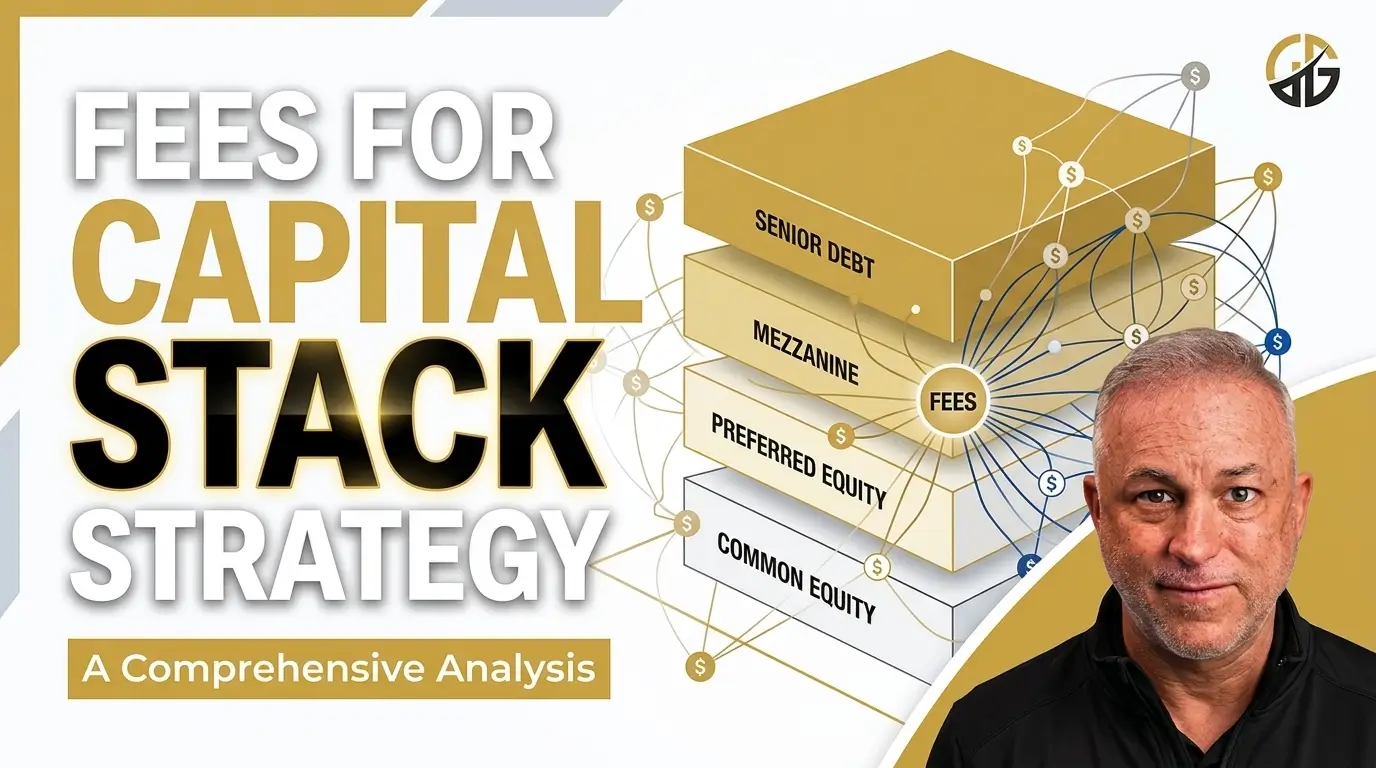
Fees for Capital Stack Strategy

Key Benefits of Investor Relations Management for Growth Companies
Disclosure
Nothing on this site constitutes an offer to sell, or a solicitation of an offer to purchase, any security under the Securities Act of 1933, as amended, or any applicable state securities laws. Any offering of securities is made only by means of a formal private placement memorandum or other authorized offering documents delivered to qualified investors.
IRC Partners is a capital advisory firm. IRC Partners is not a registered investment adviser under the Investment Advisers Act of 1940 and does not provide investment advice as defined thereunder.
Certain statements in this article may constitute forward-looking statements, including statements regarding market conditions, capital availability, investor demand, and transaction outcomes. Such statements reflect current assumptions and expectations only. Actual results may differ materially due to market conditions, regulatory developments, company-specific factors, and other variables. IRC Partners makes no representation that any outcome, return, or result described herein will be achieved.
References to prior mandates, transaction volume, network credentials, or capital raised are provided for illustrative purposes only and do not constitute a guarantee or prediction of future results. Past performance is not indicative of future outcomes. Individual results will vary. Network credentials and transaction statistics referenced on this site reflect the aggregate experience of IRC Partners' principals and affiliated advisors and are not a representation of assets managed or transactions closed solely by IRC Partners.
Certain data, statistics, and information presented in this article have been obtained from third-party sources. IRC Partners has not independently verified such information and expressly disclaims responsibility for its accuracy, completeness, or timeliness. Readers should independently verify any third-party data before relying on it.
Readers are strongly encouraged to consult qualified legal, financial, and tax professionals before making any investment, capital raising, or business decision.
Schedule A Meeting
You get one shot to raise the right way. If this raise is worth doing, it’s worth doing with precision, leverage, and control.
This isn’t a practice run. Serious capital. Serious strategy. Let’s raise it right.
We onboard a maximum of seven
new strategic partners each quarter, by application only, to maximize your chances of securing the capital you need.
