.svg "CTA Arrow")


.png "Investor Ready Capital decorative background element")
What Is Venture Capital Fundraising Advisory
TL;DR: Venture capital fundraising advisory helps founders improve investor positioning, process design, diligence readiness, and term-sheet outcomes.
- Why This Question Matters More in 2026: The venture market recovered in volume terms.
- What Venture Capital Fundraising Advisors Actually Do: The confusion about what advisors do comes from the fact that the label covers a wide range of services.
- When Founders Should Hire Advisory and When They Should Not: This is the question most pages on this topic avoid.
Venture capital fundraising advisory is a structured engagement that helps founders improve investor positioning, fundraising process design, diligence readiness, and term-sheet execution before and during a capital raise. For companies raising $5M or more, the advisor’s role is not to polish a deck or distribute a contact list. It is to diagnose process gaps, sharpen the capital narrative, build the right investor target list, prepare materials for institutional diligence, and manage the path from first investor conversation to signed term sheet.
Direct answer: Venture capital fundraising advisory is a strategic engagement where an experienced advisor helps a company improve investor positioning, fundraising process design, and term-sheet readiness before and during a capital raise. It is most valuable when a founder already has traction but is not converting investor meetings into commitments.
Not every founder needs this service. A repeat founder with a strong investor network, a clean process, and a lead already in motion may have no gap to fill. But a founder who is getting meetings and losing momentum somewhere between initial interest and a term sheet often has a structural problem that advisory is specifically designed to fix.
This article is the starting point for a full content series covering how advisory works, when to hire an advisor, what it costs, and how to evaluate the right fit for your raise. The sections below build a decision framework, not a sales pitch.
What venture capital fundraising advisory typically covers:
- Investor readiness assessment and gap analysis
- Fundraising narrative and positioning refinement
- Investor target list design and prioritization
- Outreach sequencing and meeting management
- Diligence room preparation and document review
- Term-sheet framing, milestone structuring, and negotiation support
- Post-term sheet process coordination through close
Why This Question Matters More in 2026
The venture market recovered in volume terms. According to the NVCA 2026 Yearbook, U.S. venture firms closed 15,352 deals worth $320 billion in 2025. That headline number looks healthy until you look at where the capital actually went. Concentration increased. Median round sizes at Series B and above grew, but the number of companies capturing those rounds did not grow proportionally. First-time fund formation fell sharply from its 2021 peak, meaning fewer new investors are entering the market to spread capital across more companies.
For founders, the practical implication is this: capital is available, but the bar for accessing it is higher than it was three years ago. Investors are running longer diligence cycles, requesting more structured materials earlier, and passing on companies that cannot clearly explain their capital efficiency story. A founder with $1.5M ARR and a 90% net revenue retention rate can still lose a term sheet if the fundraising process is disorganized, the investor list is poorly targeted, or the narrative does not frame the business in terms institutional investors actually use to make decisions. Understanding what institutional readiness actually requires before outreach begins is the first diagnostic step.
Market signals that make advisory more situationally valuable in 2026:
- Median time to close a U.S. VC fund stretched to 15.3 months, reflecting deeper investor scrutiny across the board
- Series B and C term sheet activity rebounded, but better terms concentrated with companies demonstrating cleaner unit economics and stronger process control
- Family offices and institutional allocators are moving to deal-by-deal structures, requiring more tailored positioning per investor rather than a single pitch deck sent broadly
- Founders are burning goodwill with warm contacts by running unstructured processes that generate interest but not decisions
None of this means advisory is automatically the answer. It means the cost of a poorly run fundraising process is higher than it used to be. For founders already in market and not converting meetings into term sheets, that gap is worth diagnosing before running more outreach. If you are preparing for a raise and want to understand whether your capital strategy is structured for this market, IRC Partners works with founders on institutional capital readiness before the raise begins, not after momentum stalls.
What Venture Capital Fundraising Advisors Actually Do
The confusion about what advisors do comes from the fact that the label covers a wide range of services. Some advisors focus almost entirely on introductions. Others take full process ownership from readiness through close. Understanding the difference matters before you evaluate whether to hire one.
A credible venture capital fundraising advisor typically works through a structured sequence, not a one-time engagement.
The Advisory Workflow
- Readiness assessment. Before any outreach begins, the advisor evaluates the company's fundability: metrics, narrative clarity, capital structure, competitive positioning, and diligence materials. This step identifies whether the business is ready to be introduced to institutional investors or whether structural gaps need to be resolved first.
- Narrative and positioning refinement. The advisor works with the founding team to sharpen how the business is described in investor terms, not just founder terms. This includes reframing the market opportunity, tightening the unit economics story, and clarifying the use of proceeds in a way that maps to investor return expectations.
- Investor target list design. A good advisor builds a curated list of investors based on stage fit, sector focus, check size, and portfolio conflicts. Broad outreach to a generic list is one of the most common reasons founders burn goodwill early without generating real momentum.
- Outreach sequencing and meeting management. Advisors help founders sequence conversations strategically, starting with investors who provide useful signal before approaching top-priority targets. Managing timing across multiple parallel conversations is a process skill that most founding teams have not had to develop.
- Diligence preparation. Once investor interest advances, the advisor helps prepare the data room, anticipates diligence questions, and ensures materials are organized to the standard institutional investors expect. Disorganized or incomplete diligence is one of the most common reasons a term sheet stalls or dies.
- Term-sheet support. The advisor helps frame valuation, milestones, and structure in ways that protect founder leverage. This is not legal counsel, but it is strategic input on how terms are framed, what to push back on, and how to manage competing offers if they exist.
- Process coordination through close. After a term sheet is signed, the advisor often supports the coordination of legal, diligence, and investor communications to keep the deal moving toward close.
What Advisory Is Not
Venture capital fundraising advisory is distinct from three adjacent services that founders sometimes conflate with it:
- Legal counsel handles the legal documentation of a financing round. An advisor does not replace securities counsel.
- Internal finance support includes a CFO or finance lead managing financial models and investor reporting. An advisor works on process and positioning, not financial operations.
- Broker-style placement services focus primarily on introductions for a success fee. An advisor may make introductions, but the primary value is process design and strategic preparation, not a contact list.
Understanding how venture capital fundraising advisory actually works in practice is the clearest way to evaluate whether the scope matches your situation. The distinction between a strategic advisor and a transactional placement agent is one of the most important decisions a founder makes before entering the market.
When Founders Should Hire Advisory and When They Should Not
This is the question most pages on this topic avoid. The honest answer is that advisory is not always the right call. Hiring an advisor when the business is not ready, or when the founder already has the process under control, is a waste of money and can send the wrong signal to investors who notice the involvement.
The right decision depends on one question: is the bottleneck in the business, or is the bottleneck in the fundraising process?
If the business is the problem, advisory will not fix it. If the fundraising process is the problem, advisory is often the fastest way to fix it.
When Advisory Is Worth Considering
Founders should seriously evaluate advisory support when one or more of the following is true:
- Getting meetings but not term sheets. This is the clearest signal. Investor interest exists, but something in the process, the narrative, or the investor fit is breaking down before commitment.
- Entering a new investor tier. Moving from angel or seed investors to institutional Series A or B capital requires a different process, different materials, and different investor relationships. Founders who have only raised at one tier often underestimate the gap.
- Struggling to position metrics clearly. If founders cannot confidently explain their unit economics, capital efficiency, or growth story in the language institutional investors use, narrative work is needed before more outreach.
- Lacking high-quality investor access. Warm introductions to the right investors at the right stage are not equally distributed. An advisor with genuine institutional relationships can change who a founder gets in front of.
- Running a parallel process without process management experience. Managing 15-20 investor conversations simultaneously across different stages of diligence is a skill. Doing it poorly burns relationships and creates the appearance of desperation.
When Advisory Is Probably Not Needed
- The founder already has a credible lead investor in motion and the round is largely a formality
- The founding team includes an experienced operator who has managed institutional raises before
- The investor network is strong, warm, and relevant to the current stage and sector
- The business fundamentals are the actual constraint, not the fundraising process
- The raise is at an early seed stage where process complexity is genuinely low
Decision Framework
The real risk is hiring too early. A company that brings in an advisor before the business is fundable signals to investors that the founder lacks confidence in the story. Advisory works best when the business is genuinely ready and the process is the gap, not a substitute for readiness.
What Changes When Structure Is Fixed Early
The argument for advisory is not that it creates investor interest. A good advisor cannot manufacture demand for a business that does not deserve capital. The argument is that structural fixes made before outreach begins change the quality of every conversation that follows.
When a founder enters the market with a poorly structured process, the damage compounds quickly. The first investors to pass share signal with others. Goodwill from warm introductions gets consumed by conversations that were never going to convert. Valuation expectations get anchored in early low-quality conversations. By the time the founder realizes the process is broken, the best investors have already formed an opinion.
Fixing structure early prevents that compounding.
What "Structure" Actually Means
Structure in a fundraising process is not just the pitch deck. It includes:
- How the investor list is prioritized and sequenced
- How the narrative frames the business for the specific investor tier being targeted
- How diligence materials are organized before the first meeting, not after an investor requests them
- How valuation and milestones are framed to protect leverage rather than anchor low
- How parallel conversations are managed so investors feel process urgency rather than founder desperation
Before and After: What Advisory Changes
The practical outcome of fixing these things early is not just a cleaner process. It is a higher percentage of conversations that advance to the next stage. Investors who receive organized, well-framed materials make faster decisions. Founders who control the process narrative maintain more leverage in term-sheet negotiations.
The compounding effect works in both directions. A well-run process builds momentum. An investor who receives a strong referral, a tight narrative, and organized diligence materials is more likely to move quickly and less likely to retrade terms. A poorly run process creates friction at every stage, and friction in a fundraising process almost always benefits the investor, not the founder.
According to Carta's State of Private Markets data, companies that enter diligence with complete, organized data rooms close rounds significantly faster than those that assemble materials reactively. The most common pre-diligence failure points are covered in detail in IRC's breakdown of what founders get wrong before they even build a data room. Speed matters because a longer process exposes founders to market changes, competitor announcements, and investor attention drift that can derail a round that was otherwise on track.
{{main-cta}}
Where IRC Partners Fits in This Category
IRC Partners is a capital advisory firm that works with founders and operators raising meaningful institutional capital. The firm's model is built around institutional-grade readiness, capital structure design, and aligned advisory rather than transactional placement. IRC takes an equity-aligned position in engagements, which means the firm's incentives are tied to client outcomes across the full raise, not a single introduction fee.
The scope of IRC's work covers the full advisory sequence described in this article: investor readiness assessment, narrative refinement, investor targeting, outreach management, diligence preparation, and term-sheet support. The firm is best suited for founders who are raising $5M or more, have prior fundraising experience, and are encountering structural gaps rather than business-stage gaps.
Example of advisory scope at scale: IRC has served as capital advisor on complex, multi-layered transactions including a mixed-use development in Florida with $900M in total capitalization, a multifamily development in Texas at $150M, and a condominium development in California at $300M. These engagements required institutional-grade capital stack design, investor positioning across multiple capital types, and coordinated introductions to family offices and institutional allocators capable of leading at that scale. The advisory work was structural from the first engagement, not reactive after outreach stalled.
What this means for founders evaluating IRC:
- IRC is not a contact list service. The value is in process design and capital structure, not introductions alone.
- Engagements are most productive when the business is fundable and the process is the gap.
- The equity-aligned model means IRC's involvement extends across the raise, not just the opening conversations.
- IRC's institutional network includes family offices and allocators capable of leading $10M+ commitments, which matters for founders moving into that capital tier for the first time.
Founders who want to understand whether their current raise structure is built to convert investor interest into term sheets can request an advisor evaluation from IRC Partners before committing to a full engagement.
How to Evaluate a Venture Capital Fundraising Advisor Before You Hire One
Most founders evaluate advisors the wrong way. They ask for a list of past clients, look at the firm's website, and make a decision based on brand recognition. None of those signals tell you whether an advisor will actually improve your specific raise.
The right evaluation is process-based. You are hiring someone to design and manage a high-stakes process on your behalf. The questions you ask should reveal whether they understand your situation, have relevant investor relationships, and can explain exactly what they will do and why.
Questions That Reveal Advisor Quality
- Who specifically runs outreach on your raise? If the senior advisor pitches you but a junior associate manages your process, that is a different engagement than what was sold.
- How do you build the investor target list? A credible answer references stage fit, sector focus, check size, and portfolio conflict screening. A weak answer is "we have a broad network."
- What materials will you rebuild versus refine? This reveals whether the advisor has a view on what is actually broken in your current positioning.
- How do you handle term-sheet support? If the advisor disengages after introductions, you are hiring a placement agent, not an advisor.
- When would you tell a founder not to hire you? A credible advisor has a clear answer. An advisor who says they can help everyone is telling you they have no real criteria.
Checklist: What to Verify Before Signing
- Confirmed investor relationships at the stage and sector you are targeting
- Clear scope of work that specifies what advisory covers and what it does not
- Fee structure that is transparent on retainer, success fee, and equity components
- Evidence of real transaction experience, not just fundraising commentary
- A defined process for how readiness gaps are identified and resolved before outreach begins
- References from founders who raised at a similar stage and capital size
The related articles in this series go deeper on specific evaluation questions. Key benefits of venture capital fundraising advisory explains what outcomes a good engagement should produce. For founders who want a side-by-side comparison of which advisory firms have the strongest track records at comparable mandate sizes, how top capital raising firms are evaluated on outcomes and success rates is a useful reference before any hiring decision. How to choose an advisor for venture capital fundraising walks through the full selection framework. Fees for venture capital fundraising advisory covers what typical advisory costs look like and how to evaluate whether the fee structure is aligned with your interests. Understanding what institutional investors look for before committing capital is also essential context before you evaluate any advisor's claimed investor access.
Frequently Asked Questions
What is the difference between a venture capital fundraising advisor and a placement agent?
A placement agent focuses primarily on investor introductions and earns a success fee when a deal closes. A venture capital fundraising advisor takes broader ownership of the process, including readiness assessment, narrative development, investor targeting, diligence preparation, and term-sheet support. The distinction matters because introductions alone do not fix structural weaknesses in how a raise is positioned or managed.
At what ARR or revenue stage does venture capital fundraising advisory typically make sense?
Advisory tends to produce the clearest results for founders at $1M ARR or above who are raising $5M or more and have already raised at least one prior round. Below that threshold, the fundraising process is typically simpler and the structural complexity that advisory addresses has not yet emerged. The more important signal is whether the company is getting investor meetings but failing to convert them, regardless of exact ARR.
Can hiring a fundraising advisor hurt a raise if done at the wrong time?
Yes. Bringing in an advisor before the business is fundable can signal to investors that the founder lacks confidence in the story. It can also add process overhead that slows a raise that would have moved faster with a direct founder-to-investor relationship. Advisory works best when the business is ready and the process is the constraint, not as a substitute for business readiness.
How long does a typical venture capital fundraising advisory engagement last?
Most advisory engagements run three to nine months, depending on the complexity of the raise, the capital tier being targeted, and how much readiness work is needed before outreach begins. Raises targeting institutional investors at Series B and above typically take longer than earlier-stage rounds because diligence cycles are longer and investor decision-making involves more internal approvals.
What fees should founders expect for venture capital fundraising advisory?
Fee structures vary widely. Common models include a monthly retainer ranging from $5,000 to $25,000 per month, a success fee of 2% to 5% of capital raised, an equity component, or some combination of all three. Advisors who charge only success fees with no retainer are often structured more like placement agents. Advisors with retainer-plus-equity models typically have deeper process involvement.
What should founders prepare before the first conversation with a potential advisor?
Founders should have a clear answer to four questions before that first call: what is the target raise amount and use of proceeds, what is the current investor pipeline and where it has stalled, what materials currently exist and what is missing, and what the business fundamentals look like in terms of ARR, growth rate, and unit economics. Advisors who ask these questions in the first conversation are doing their job. Advisors who skip them are not evaluating fit seriously.
Is venture capital fundraising advisory regulated in the United States?
This is an area founders should understand before signing any engagement. Advisors who receive transaction-based compensation for facilitating securities transactions may be required to register as broker-dealers with FINRA under U.S. securities law. Advisors who charge flat fees or retainers for strategic consulting without receiving transaction-based compensation occupy a different regulatory position. Founders should confirm the regulatory status of any advisor they engage and review engagement terms with qualified legal counsel before signing.
Continue reading this series:
- How does venture capital fundraising advisory work
- When does a company need venture capital fundraising advisory
- Key benefits of venture capital fundraising advisory
IRC Partners advises operators raising $5M to $250M of institutional capital on structure, positioning, and round architecture. We take seven strategic partners per quarter. No placement agent model. No success-only theater. Capital is raised on the strength of how the deal is built. If you want your current raise reviewed before it reaches the market and silently fails , apply here.
Before taking a raise to market, run it through the Capital Raise Pre-Flight to see how it holds up against institutional standards.
Need guidance on your capital raise?


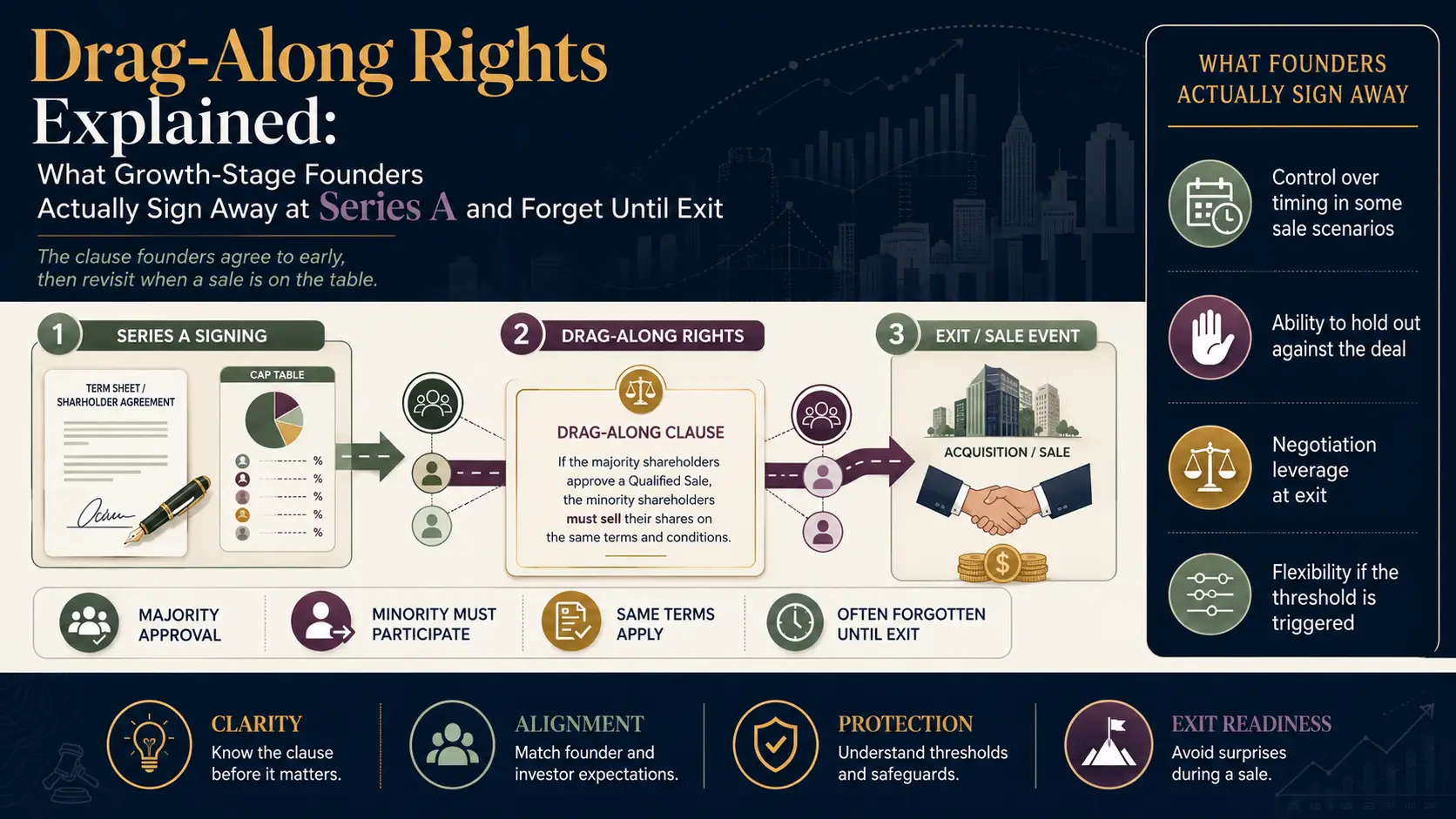
Drag-Along Rights Explained: What Growth-Stage Founders Actually Sign Away at Series A and Forget Until Exit

What Reporting Cadence and Financial Disclosures Do Family Offices Expect After Investing in a Real Estate Development?

Private Placement Memorandum vs. Data Room: When You Need Both and How They Work Together
Disclosure
Nothing on this site constitutes an offer to sell, or a solicitation of an offer to purchase, any security under the Securities Act of 1933, as amended, or any applicable state securities laws. Any offering of securities is made only by means of a formal private placement memorandum or other authorized offering documents delivered to qualified investors.
IRC Partners is a capital advisory firm. IRC Partners is not a registered investment adviser under the Investment Advisers Act of 1940 and does not provide investment advice as defined thereunder.
Certain statements in this article may constitute forward-looking statements, including statements regarding market conditions, capital availability, investor demand, and transaction outcomes. Such statements reflect current assumptions and expectations only. Actual results may differ materially due to market conditions, regulatory developments, company-specific factors, and other variables. IRC Partners makes no representation that any outcome, return, or result described herein will be achieved.
References to prior mandates, transaction volume, network credentials, or capital raised are provided for illustrative purposes only and do not constitute a guarantee or prediction of future results. Past performance is not indicative of future outcomes. Individual results will vary. Network credentials and transaction statistics referenced on this site reflect the aggregate experience of IRC Partners' principals and affiliated advisors and are not a representation of assets managed or transactions closed solely by IRC Partners.
Certain data, statistics, and information presented in this article have been obtained from third-party sources. IRC Partners has not independently verified such information and expressly disclaims responsibility for its accuracy, completeness, or timeliness. Readers should independently verify any third-party data before relying on it.
Readers are strongly encouraged to consult qualified legal, financial, and tax professionals before making any investment, capital raising, or business decision.
Schedule A Meeting
You get one shot to raise the right way. If this raise is worth doing, it’s worth doing with precision, leverage, and control.
This isn’t a practice run. Serious capital. Serious strategy. Let’s raise it right.
We onboard a maximum of seven
new strategic partners each quarter, by application only, to maximize your chances of securing the capital you need.
