.svg "CTA Arrow")


.png "Investor Ready Capital decorative background element")

What Goes Into a Private Placement Memorandum for a Real Estate Closed-End Fund?

TL;DR: A real estate fund PPM is not a longer pitch deck. Here's what every section must contain and what a weak one signals to institutional LP counsel.
- PPM vs Pitch Deck vs LPA: Each Document Has a Different Job: Most sponsors build a pitch deck first, assume the PPM is just a longer version of it, and treat the LPA as something counsel handles separately.
- The Sections Every Institutional-Grade PPM Should Contain: Real estate fund PPMs commonly run over 100 pages and can cost between $25,000 and $250,000 to prepare properly.
- What Institutional LPs and Their Counsel Scrutinize Inside the PPM: Institutional LPs do not read a PPM the way a retail investor might.
A private placement memorandum (PPM) for a real estate closed-end fund is the primary disclosure document that tells institutional LPs what they are investing in, how the fund is structured, what risks they are taking, and what legal framework governs their capital. It is not a marketing document. Every section exists to reduce LP doubt and survive legal scrutiny.
A fund-ready PPM covers eight core areas:
- Offering summary and executive summary - fund name, structure, target raise, minimum commitment, and offering exemption
- Fund overview and investment strategy - asset class, geography, deal sourcing, hold period, and exit thesis
- Risk factors - tailored disclosures covering market, leverage, construction, liquidity, conflicts, and key person exposure
- Management team and track record - GP biography, prior deals, attribution methodology, and decision-making structure
- Fund terms and economics - management fee, carried interest, preferred return, waterfall, and GP co-invest
- Use of proceeds - how capital is deployed, in what sequence, and what expenses are charged to the fund
- Subscription mechanics - minimum investment, closing schedule, capital call procedures, and investor eligibility
- Legal and regulatory disclosures - Regulation D exemption relied upon, Form D filing, blue sky obligations, and ERISA considerations
The PPM is not the pitch deck, and it is not the limited partnership agreement. Each document has a distinct role. Treating them as interchangeable is one of the most common credibility mistakes first-time institutional fund sponsors make.
PPM vs Pitch Deck vs LPA: Each Document Has a Different Job
Most sponsors build a pitch deck first, assume the PPM is just a longer version of it, and treat the LPA as something counsel handles separately. That sequence creates inconsistency that institutional LPs and their counsel will find immediately.
These three documents operate at completely different levels of a fund raise.
Institutional LPs read all three in sequence and expect them to be consistent. A pitch deck that projects 20% IRR with no mention of construction risk, followed by a PPM with thin risk factors and a waterfall that does not match the deck's return math, signals one thing: the sponsor has not coordinated their legal and fundraising teams.
The real risk is not that the PPM is too short. It is that it contradicts the deck or fails to match the LPA. According to the FINRA 2026 Annual Regulatory Oversight Report, reasonable diligence must include an evaluation of the issuer, management, the claims being made, and the intended use of proceeds. A PPM that does not hold up against those four standards is a liability, not a document.
The Sections Every Institutional-Grade PPM Should Contain
Real estate fund PPMs commonly run over 100 pages and can cost between $25,000 and $250,000 to prepare properly. That range reflects the depth of disclosure required. Each section carries a specific institutional function. Here is what LP counsel and investment teams actually look for in each one.
Why risk factors are the section that matters most
The SEC's Investor Bulletin on Private Placements makes clear that PPMs are not reviewed by regulators before distribution. That puts the full burden of balanced disclosure on the sponsor. Generic risk factors copied from a template do not satisfy the anti-fraud provisions of the Securities Act. If something goes wrong and an LP can show the PPM did not warn them about a foreseeable risk, the sponsor is exposed.
Risk factors should name the actual risks of the actual fund: if the strategy involves ground-up construction, the risk section should address entitlement delays, contractor default, and cost overruns. If the GP has a single key decision-maker, that concentration risk belongs in the document. Specificity is not just good practice. It is the legal standard.
{{main-cta}}
What Institutional LPs and Their Counsel Scrutinize Inside the PPM
Institutional LPs do not read a PPM the way a retail investor might. They run a structured review process, and their counsel works through the document against the LPA, the subscription agreement, and any side letter positions simultaneously. The 2026 LP Due Diligence Checklist from Altss documents that 85% of LP rejections in 2025 were tied to operational concerns, and that 87% of private equity funds now receive questionnaires aligned to the ILPA DDQ 2.0 framework. The PPM is where those operational concerns either get resolved or confirmed.
Here is what the review actually targets:
- Document consistency. Counsel checks whether the PPM, LPA, and subscription agreement describe the same economics, the same governance rights, and the same capital call mechanics. Discrepancies between the PPM and LPA are not minor drafting errors. They are red flags that suggest the sponsor has not coordinated their legal and fundraising teams.
- Risk factor specificity. LPs look for risks that match the actual strategy. A PPM for a ground-up multifamily fund that lists only generic market risks and omits construction cost overruns, entitlement timelines, or contractor default tells counsel the sponsor either does not understand their own risk profile or chose not to disclose it.
- Track record attribution. Institutional LPs will verify whether the deals listed in the management section were actually led by this GP or were completed at a prior firm in a different role. Vague attribution language is a diligence trigger, not a protection.
- Conflicts of interest disclosure. Any related-party fees, side vehicles, co-investment allocation policies, or GP-affiliated service providers must be disclosed clearly. Undisclosed conflicts are one of the fastest ways to lose LP trust before an investment committee ever votes.
- Use of proceeds specificity. LPs want to know how capital is deployed, in what order, and what percentage goes to organizational costs and fund expenses. Vague language here signals either poor planning or an intent to preserve optionality at the LP's expense.
- Subscription and capital call mechanics. Lenders and LPs both scrutinize whether the subscription agreement and LPA properly authorize capital calls, define default remedies, and grant the GP enforceable rights to act on uncalled commitments.
What a Weak PPM Signals, and How to Avoid It
A weak PPM is rarely the result of bad intentions. It is usually the result of bad sequencing. The sponsor drafts the PPM before the fund terms are finalized, before the GP entity is properly structured, or before the economic model has been stress-tested. The document then reflects those unresolved decisions, and institutional LPs can see it immediately.
Red flags that kill credibility before diligence begins:
- Risk factors that read like they were copied from a template, with no reference to the actual fund strategy, leverage level, or market
- Use-of-proceeds language that says capital will be used "for general fund purposes" without a deployment breakdown
- Fee disclosures that do not match the fund terms sheet or LPA waterfall
- Track record tables that list deals without specifying the GP's role, the return methodology, or the attribution basis
- Missing or inconsistent Regulation D legends and no mention of Form D filing timing
- Thin team bios that do not address succession, key person risk, or investment committee governance
The fix is upstream, not in the document itself. Before drafting the PPM, sponsors need to finalize the GP entity structure, lock the economic terms, establish the allocation and reporting policy, and confirm the regulatory filing strategy. A PPM drafted on top of a solid formation foundation takes weeks to produce. A PPM drafted to paper over unresolved structural questions takes months to repair after LP counsel returns comments.
For first-time institutional fund sponsors, the sequence matters as much as the content. Structure the fund correctly first, then draft the disclosure.
Where the PPM Fits in the Document Stack
The PPM is a downstream document. It reflects decisions made earlier in the fund formation process. Getting it right depends on getting the upstream inputs right first.
- Before the PPM: Establish the GP entity structure (see how to set up a real estate fund GP entity) and finalize the fund terms sheet (see what is a fund terms sheet). Both feed directly into the PPM's economic disclosures and governance sections.
- Alongside the PPM: The LPA is drafted in parallel. Counsel must reconcile both documents before any LP receives the offering package.
- After the PPM: Subscription agreements, side letters, and regulatory filings follow. The Form D must be filed with the SEC no later than 15 days after the first sale. State blue sky filings vary by jurisdiction. For a full picture of the required SEC filings, see what SEC filings are required for a real estate closed-end fund.
For a complete view of the document stack required for a $100M institutional raise, start with what fund documents do you need to raise $100M from institutional investors in real estate. IRC's advisory model is built around getting structure right before outreach begins, because document quality affects fundraising outcomes, not just legal compliance.
Ready to structure your fund before drafting your PPM? Talk to IRC Partners about institutional fund structuring.
Frequently Asked Questions
What fund documents are required to raise $100M from institutional investors in real estate?
To raise $100M from institutional investors in a real estate fund, you need a minimum of 11 core documents: a fund terms summary, pitch deck, Private Placement Memorandum (PPM), Limited Partnership Agreement (LPA), subscription agreement, DDQ responses, side letter templates, a complete data room, GP and management company entity documents, a Form D filing under Regulation D, and post-close reporting frameworks. Missing any of these is a credibility problem before it is a legal one.
How long does it take to build a full institutional fund document stack?
Building a complete institutional fund document stack takes 2-4 months before active LP outreach should begin. The PPM alone typically requires multiple rounds of review between the sponsor and fund counsel. The LPA negotiation adds additional time once LPs begin engaging. Sponsors who start document preparation after LP interest is confirmed will lose momentum and credibility during live diligence.
What is the difference between a PPM and an LPA in a real estate fund?
The PPM (Private Placement Memorandum) is a legal disclosure document that describes the fund's strategy, risks, fee structure, team, and conflicts of interest. The LPA (Limited Partnership Agreement) is the governing contract that defines the economics and rights between the GP and LPs, including carried interest, distributions, voting rights, and key-person provisions. Both are required, and they must be internally consistent. Institutional LPs read both carefully and cross-reference them against the pitch deck and fund terms summary.
Do first-time real estate fund managers need a DDQ before raising institutional capital?
Yes. Institutional LPs will send their own Due Diligence Questionnaire (DDQ) once serious interest is established, and responding slowly or incompletely signals operational unreadiness. Preparing DDQ responses in advance using ILPA DDQ 2.0 standards gives first-time managers a significant advantage. Approximately 87% of institutional PE and real estate fund managers now reference ILPA DDQ frameworks as the baseline for diligence responses.
When does a real estate fund need to file Form D with the SEC?
A real estate fund raising capital under Regulation D must file a Form D notice with the U.S. Securities and Exchange Commission within 15 days of the first sale of securities in the offering. This is a notice filing, not a registration or approval. Missing the deadline creates compliance exposure. Most state jurisdictions also require separate blue sky notice filings when capital is accepted from investors domiciled in those states.
What are side letters and do institutional LPs always require them?
Side letters are negotiated agreements between the GP and a specific LP that modify or supplement the standard LPA terms for that investor only. Not every LP requires a side letter, but anchor LPs, pension funds, endowments, and sovereign wealth funds typically do. Common provisions include MFN (most favored nation) clauses, enhanced reporting rights, co-investment rights, fee discounts, and ERISA compliance language. GPs should prepare a baseline side letter template before soft-circling institutional LPs.
What is the most common reason institutional LPs reject first-time real estate fund managers?
Industry data suggests an 85% rejection rate for first-time institutional fund managers, with the most common causes being inadequate market analysis, weak governance documentation, inconsistencies across fund documents, and operational immaturity. LPs increasingly weight operational due diligence as heavily as investment due diligence. A fund with strong deal flow but a disorganized data room, missing compliance policies, or vague fee disclosures will not advance past initial screening at most institutional allocators.
Continue reading this series:
- What does a capital advisor charge
- How to hire help to launch a first institutional fund
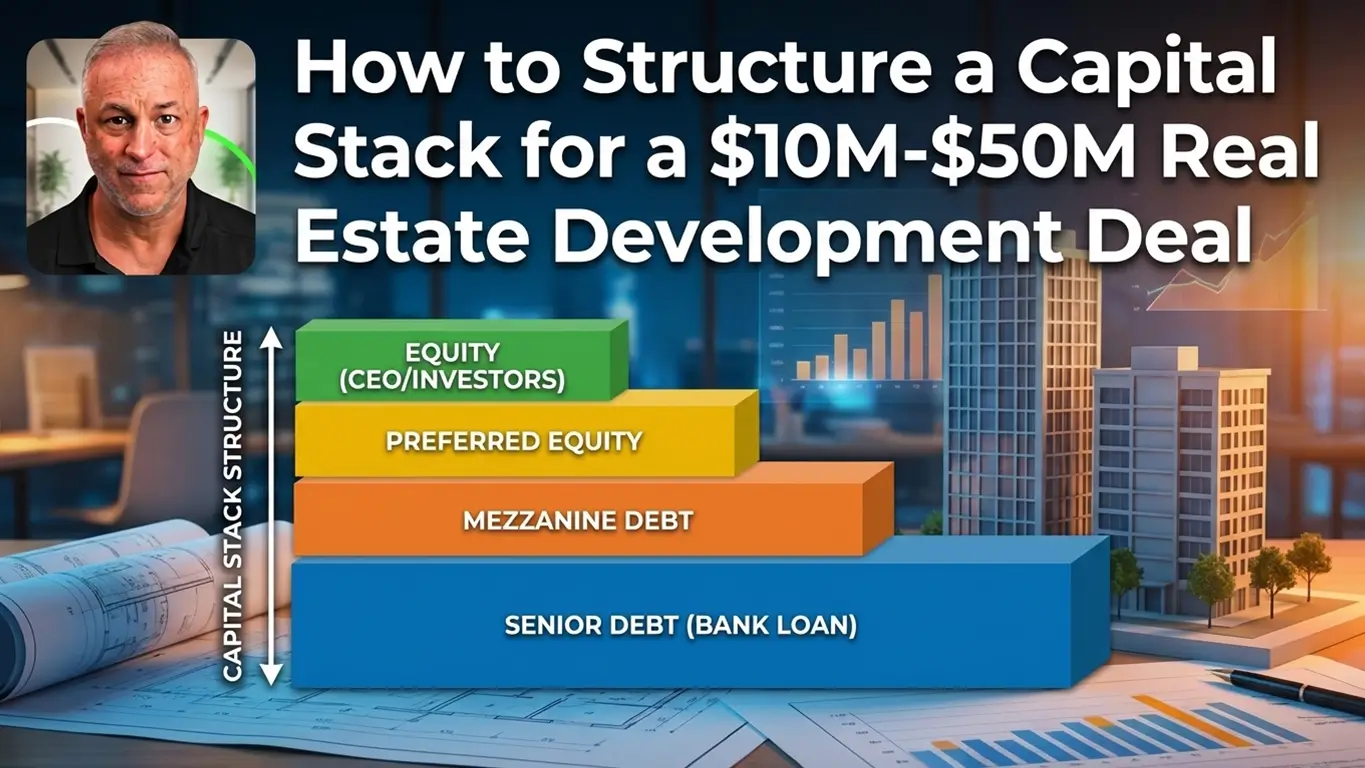
- How to structure a capital stack for a $10M-$50M real estate development deal
Most founders don't lose the raise because of the pitch. They lose it because the structure was wrong before the first investor call. IRC Partners advises founders raising $5M to $250M of institutional capital. 7 strategic partners per quarter. Start here to schedule a call with our team.
Sponsors weighing this decision should first complete a capital raise readiness assessment for sponsors to confirm the raise is investor-ready.
Need guidance on your capital raise?



Best Advisors for Investor Relations Management
How Seasoned Real Estate Developers Access Institutional Allocators: The Warm Introduction Framework for $10M+ Raises

How Should Founders Turn an Operating Plan Into a Capital-Raise Narrative That Institutional Investors Can Underwrite?
Disclosure
Nothing on this site constitutes an offer to sell, or a solicitation of an offer to purchase, any security under the Securities Act of 1933, as amended, or any applicable state securities laws. Any offering of securities is made only by means of a formal private placement memorandum or other authorized offering documents delivered to qualified investors.
IRC Partners is a capital advisory firm. IRC Partners is not a registered investment adviser under the Investment Advisers Act of 1940 and does not provide investment advice as defined thereunder.
Certain statements in this article may constitute forward-looking statements, including statements regarding market conditions, capital availability, investor demand, and transaction outcomes. Such statements reflect current assumptions and expectations only. Actual results may differ materially due to market conditions, regulatory developments, company-specific factors, and other variables. IRC Partners makes no representation that any outcome, return, or result described herein will be achieved.
References to prior mandates, transaction volume, network credentials, or capital raised are provided for illustrative purposes only and do not constitute a guarantee or prediction of future results. Past performance is not indicative of future outcomes. Individual results will vary. Network credentials and transaction statistics referenced on this site reflect the aggregate experience of IRC Partners' principals and affiliated advisors and are not a representation of assets managed or transactions closed solely by IRC Partners.
Certain data, statistics, and information presented in this article have been obtained from third-party sources. IRC Partners has not independently verified such information and expressly disclaims responsibility for its accuracy, completeness, or timeliness. Readers should independently verify any third-party data before relying on it.
Readers are strongly encouraged to consult qualified legal, financial, and tax professionals before making any investment, capital raising, or business decision.
Schedule A Meeting
You get one shot to raise the right way. If this raise is worth doing, it’s worth doing with precision, leverage, and control.
This isn’t a practice run. Serious capital. Serious strategy. Let’s raise it right.
We onboard a maximum of seven
new strategic partners each quarter, by application only, to maximize your chances of securing the capital you need.
