.svg "CTA Arrow")


.png "Investor Ready Capital decorative background element")
Virtual Data Room vs. Physical Data Room: What Institutional Investors Actually Prefer in 2026

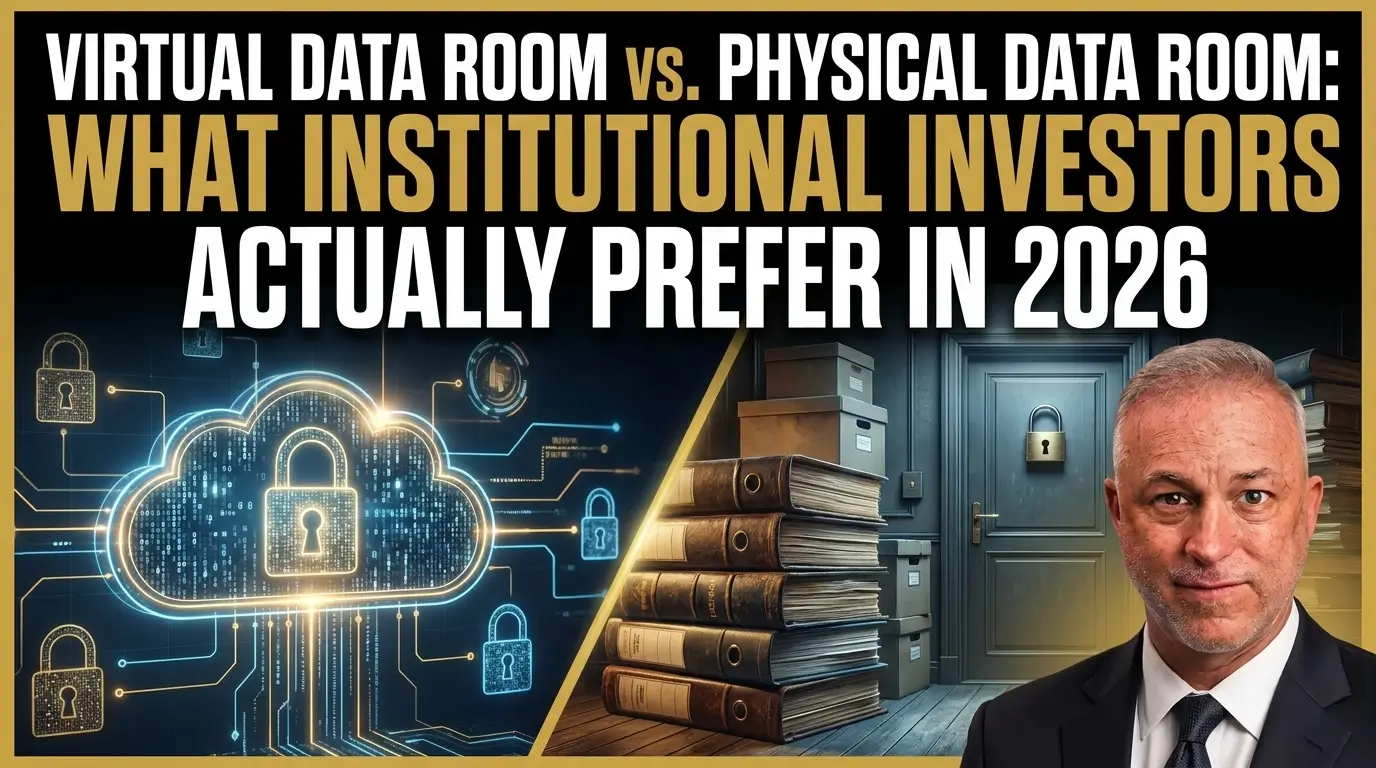
Virtual Data Room vs. Physical Data Room: What Institutional Investors Actually Prefer in 2026
If you are preparing for a $10M+ institutional raise in 2026 and still debating whether to use a physical or virtual data room, the debate is already over. Institutional investors, PE sponsors, family offices, and institutional lenders do not use physical data rooms anymore. They expect a virtual data room. Full stop.
The real risk: According to Altss's 2026 LP Due Diligence Checklist, 85% of institutional LP rejections trace back to operational due diligence failures, not weak investment theses. An incomplete, unstructured, or permission-less data room is one of the fastest ways to trigger that rejection before a single conversation goes deep.
This article is not a software review. It does not rank VDR platforms. What it does is explain what institutional investors actually expect from a virtual data room in 2026, which features separate credible sponsors from first-timers, and what showing up without the right setup signals about your operation before anyone reads a single document.
For the full institutional data room checklist and 30-day speed-to-close framework, see How to Build a Data Room That Closes Institutional Investors in 30 Days Instead of 90.
Why the Physical Data Room Is Functionally Dead
The physical data room had a real purpose. Before secure cloud infrastructure existed, locking sensitive documents in a conference room with a sign-in sheet and a security guard was a reasonable solution for controlling access during M&A diligence.
That era ended. Here is what a physical data room actually costs in a modern $10M+ transaction:
The timeline impact alone kills deals. Traditional diligence using physical or informal methods takes 8–14 weeks for mid-market transactions. Virtual data rooms compress that to 5–9 weeks, a 30–40% reduction that directly lowers advisory fees and keeps institutional capital from going elsewhere while you stall.
The bottom line: Physical data rooms do not just cost more. They signal that you are not operating at institutional speed or scale. That signal lands before a single document is reviewed.
What Institutional Investors Actually Expect From a Virtual Data Room in 2026
The global virtual data room market surpassed $3 billion in 2026, and 61% of enterprises now use VDRs for M&A deals. That adoption rate means institutional investors have seen hundreds of data rooms. They know immediately whether yours was built by someone who understands institutional process or by someone who uploaded a folder to a shared drive and called it a data room.
Here is what a properly configured virtual data room for institutional due diligence includes in 2026:
Role-Based Permissions
Every party in a deal sees only what they are authorized to see. A senior LP reviewing equity terms should not have the same access as a junior analyst running financial model checks. Institutional investors expect tiered access by role, deal stage, and counterparty. No exceptions.
Full Audit Trails
Every login, document view, page-level read, download, and print action should be timestamped and logged. This is not just a security feature. It is intelligence. A sponsor who can see which LP spent 47 minutes in the pro forma model and then submitted three follow-up questions is in a fundamentally different position than one operating blind. Audit trails also protect you legally if a deal collapses and document access becomes disputed.
Dynamic Watermarking
Documents shared in a VDR should carry user-specific watermarks that automatically overlay the viewer's name, email, and timestamp. If a document leaks, you know exactly where it came from. Institutional investors expect this. Lenders require it for sensitive financial packages.
Centralized Q&A
Email-based Q&A is the single biggest source of delay and confusion in diligence. A properly structured virtual data room routes all questions through a built-in Q&A module. Questions are assigned internally, responses are logged and timestamped, and duplicate questions are filtered automatically. This keeps the process clean, traceable, and fast.
Version Control
Documents get updated during diligence. A VDR with version control ensures that every party is always reviewing the current document, not a stale version from two weeks ago. For real estate transactions involving updated rent rolls, revised pro formas, or amended operating agreements, this is not optional.
Key takeaway: These are not premium features. They are baseline expectations. A virtual data room that is missing any of these is not a data room by institutional standards. It is a file-sharing folder with a password.
The Credibility Signal: What Your Data Room Says Before You Say Anything
Institutional investors make fast preliminary judgments. When a data room invite lands in an LP's inbox, the first 60 seconds of their experience tells them something about you as an operator.
Here is how that read actually works:
- Credible sponsor signal: Clean folder taxonomy, named documents with dates, role-based access already configured, NDA gate in place before entry, and a Q&A module ready to receive questions. This says: this team has done this before.
- First-timer signal: A shared Google Drive link, a Dropbox folder with inconsistent file naming, no watermarking, no access controls, no audit trail, and documents that require a follow-up email to request. This says: this team is learning on the job.
The gap between those two experiences is not a software gap. It is a preparation gap. And institutional investors, especially family offices evaluating $10M+ commitments, are evaluating operational discipline at every touchpoint, not just the investment thesis. The data room is one of the 7 non-negotiables institutional investors check before writing a check, and it is the one most sponsors underestimate.
What the data says: M&A workflow studies show that disorganized document processes carry a 40% error rate and require 50+ hours per deal in manual management. A well-structured VDR cuts that administrative load by 50% and eliminates the version confusion that stalls diligence. The sponsor who shows up with a clean, permissioned, auditable VDR is not just more efficient. They are more trustworthy.
This is why the format question matters less than the setup question. A virtual data room with no structure is worse than no data room at all, because it signals that you assembled something quickly rather than built something deliberately.
{{main-cta}}
VDR Due Diligence in Real Estate: What Changes at the $10M+ Level
Real estate transactions carry a document load that generic corporate diligence does not. A $25M multifamily development deal can generate hundreds of files across title, zoning, environmental, lease, financial, and legal categories. A virtual data room for real estate due diligence needs to handle that volume without losing structure.
What Institutional Lenders and LP Equity Providers Look For
Institutional lenders and LP equity providers reviewing a real estate deal expect the VDR to be organized around the deal structure, not the sponsor's internal filing system. That means:
- Title and survey documents in a dedicated folder, not buried under general legal
- Rent rolls and operating statements versioned by date, not overwritten
- Environmental and zoning files separated from entitlement documents
- Capital stack documents, including waterfall mechanics and promote structure, access-restricted to equity parties only
Lenders reviewing debt packages and LP equity investors reviewing promote structures should never be in the same permission tier. Mixing those access levels is an error that experienced institutional investors flag immediately.
The Document Volume Problem
For developers managing $50M–$250M transactions, the document volume alone makes a VDR non-negotiable. A real estate due diligence process at that scale can involve 47 or more document categories across legal, financial, physical, and regulatory workstreams. Attempting to manage that through email or shared drives does not just slow the process. It introduces version errors that can delay closing by weeks.
For a breakdown of what those document categories look like in practice, the Real Estate Due Diligence Checklist for $10M+ Sponsors covers the full 47-document framework that institutional lenders and equity providers request.
The Features That Reveal a First-Timer (And How to Avoid Them)
Most first-time fund managers and developers entering institutional raises for the first time make the same VDR mistakes. They are not about the platform they chose. They are about how the platform was configured.
Common Setup Errors That Institutional Investors Notice
- No NDA gate: Allowing access before a non-disclosure agreement is signed and logged is a basic compliance failure. Institutional investors expect a gated entry process.
- Single permission tier: Giving every reviewer the same access level is the equivalent of handing every guest at a hotel the master key. It signals that access controls were not thought through.
- No Q&A module in use: If questions are still arriving by email, the data room is not functioning as a data room. It is a document repository with a separate communication layer, which defeats the purpose.
- Stale documents without version labels: An undated pro forma or an operating agreement without a version number creates immediate doubt about which document is current.
- Print and download unrestricted: Allowing unrestricted downloading of sensitive financial documents without watermarking is a confidentiality exposure that institutional counterparties will flag.
Understanding the difference between a data room that holds documents and one that actively supports a capital raise also depends on understanding where the VDR fits in your broader document strategy. The relationship between your investment memorandum, pitch deck, and data room determines which materials go into the VDR, in what order, and for which audience. Getting that sequencing wrong is as costly as getting the VDR setup wrong. For a step-by-step folder structure built specifically for first-time fund managers, see how to organize a data room for a first-time real estate fund raising $100M.
The Format Question Is Settled. The Setup Question Is Not.
In 2026, no serious institutional investor expects a physical data room. That question has been answered. What has not been answered for most sponsors is whether their virtual data room is actually built to institutional standard, or whether it is a folder structure that looks like a data room from the outside.
The difference shows up in the first 60 seconds of an LP's access experience. It shows up in whether your Q&A process is clean or chaotic. It shows up in whether your audit trail can answer questions about who saw what and when. And it shows up in whether your permission tiers reflect a sponsor who understands deal process or one who uploaded documents and hoped for the best.
A well-structured VDR does not just organize documents. It demonstrates that you operate at institutional scale. That demonstration happens before a single conversation, before a term sheet, and before any capital moves. It is one of the few signals entirely within your control.
If you are preparing a data room for a $10M–$250M institutional raise and want to make sure the structure, permissions, and document sequencing meet LP-grade standards, IRC Partners works with developers and operators at the pre-market stage to build the diligence infrastructure that institutional capital expects.
Frequently Asked Questions
What is a virtual data room and how does it differ from a shared drive?
A virtual data room is a purpose-built, secure cloud platform designed for high-stakes transactions involving confidential documents and multiple counterparties. Unlike a shared drive, a VDR provides role-based permissions, dynamic watermarking, timestamped audit trails, built-in Q&A workflows, and version control. These features are not add-ons. They are the baseline that separates a diligence-grade environment from a file-sharing tool that happens to have a password.
Do institutional investors still accept physical data rooms for $10M+ transactions in 2026?
No. Physical data rooms are effectively obsolete for institutional transactions at the $10M+ level. Institutional LPs, PE sponsors, and lenders now expect a virtual data room as a standard operating requirement. A physical data room in 2026 signals operational immaturity and adds 30–60% to diligence timelines compared to VDR-based processes. The only context where physical document review still occurs is in highly regulated government or national security transactions where legal requirements mandate physical presence.
What security certifications should a VDR have for institutional LP due diligence?
A VDR used for institutional LP due diligence should carry SOC 2 Type II certification at minimum, which verifies that the platform's security controls have been independently audited over a sustained period. ISO 27001 certification is also a recognized standard for information security management. For real estate transactions involving lender review, platforms with GDPR compliance and multi-factor authentication are expected. Ask your VDR provider for their current certification documentation before inviting institutional counterparties.
How should access permissions be structured in a virtual data room for a real estate capital raise?
Permissions should be tiered by role and deal stage, not by individual. A minimum of three tiers is standard: a restricted tier for early-stage LP review covering the executive summary and investment memorandum only, a standard tier for active diligence covering financials, legal, and operating documents, and a restricted tier for legal and closing documents accessible only to counsel and lead investors. Capital stack documents, including promote structure and waterfall mechanics, should be in a separate permission group accessible only to equity parties, not lenders.
What does an audit trail in a VDR actually track, and why do institutional investors care?
A VDR audit trail logs every user action inside the room: login timestamps, documents opened, pages viewed, time spent per document, downloads, and print actions. Institutional investors care because the audit trail is both a compliance record and a negotiation intelligence tool. A sponsor can see which documents an LP reviewed most closely, identify where questions are likely to come from, and demonstrate post-close that all parties had equal access to disclosed materials. In disputed transactions, audit trails serve as legal evidence of what was shared and when.
Can a virtual data room be used for both the equity raise and the debt financing on the same deal?
Yes, but it requires careful permission architecture. Equity investors and debt providers should never share a permission tier. Lenders reviewing a senior loan package do not need access to LP promote structures or waterfall economics, and LP equity investors do not need access to lender term sheets or loan covenants. A single VDR can serve both audiences simultaneously using separate folder structures with distinct access groups. This approach is more efficient than running two separate rooms and keeps the audit trail consolidated in one place.
What is the minimum lead time to build a properly structured virtual data room before going to market?
A VDR built to institutional standard requires 2–4 weeks of preparation before the first LP invite goes out. That window covers document collection and organization, folder taxonomy design, permission tier configuration, NDA gate setup, and a pre-launch audit to verify that every document is current, correctly named, and in the right access group. Sponsors who launch a VDR the same week they begin LP outreach almost always have incomplete rooms that generate avoidable questions, delay diligence, and signal that the process was not planned in advance.
Continue reading this series:
- How to Build a Data Room That Closes Institutional Investors in 30 Days Instead of 90
- Investment Memorandum vs. Pitch Deck vs. Data Room: Which Document Closes Institutional Investors and When
- Family Office Investment: What $17B Allocators Actually Look for Before They Commit Capital to a Sponsor
This isn't for pre-revenue companies or first-time founders. It's for operators at $1M+ ARR, raising $5M to $250M of institutional capital, who've done this before and want the next round architected right. If that's you, schedule a call to discuss HERE.
Sponsors weighing this decision should first complete a capital raise readiness assessment for sponsors to confirm the raise is investor-ready.
Need guidance on your capital raise?



What Terms Help a Real Estate Sponsor Preserve Decision-Making Authority When a Family Office Writes a $15M Equity Check?

How Do Real Estate Developers Hire Help to Launch Their First Institutional Fund?
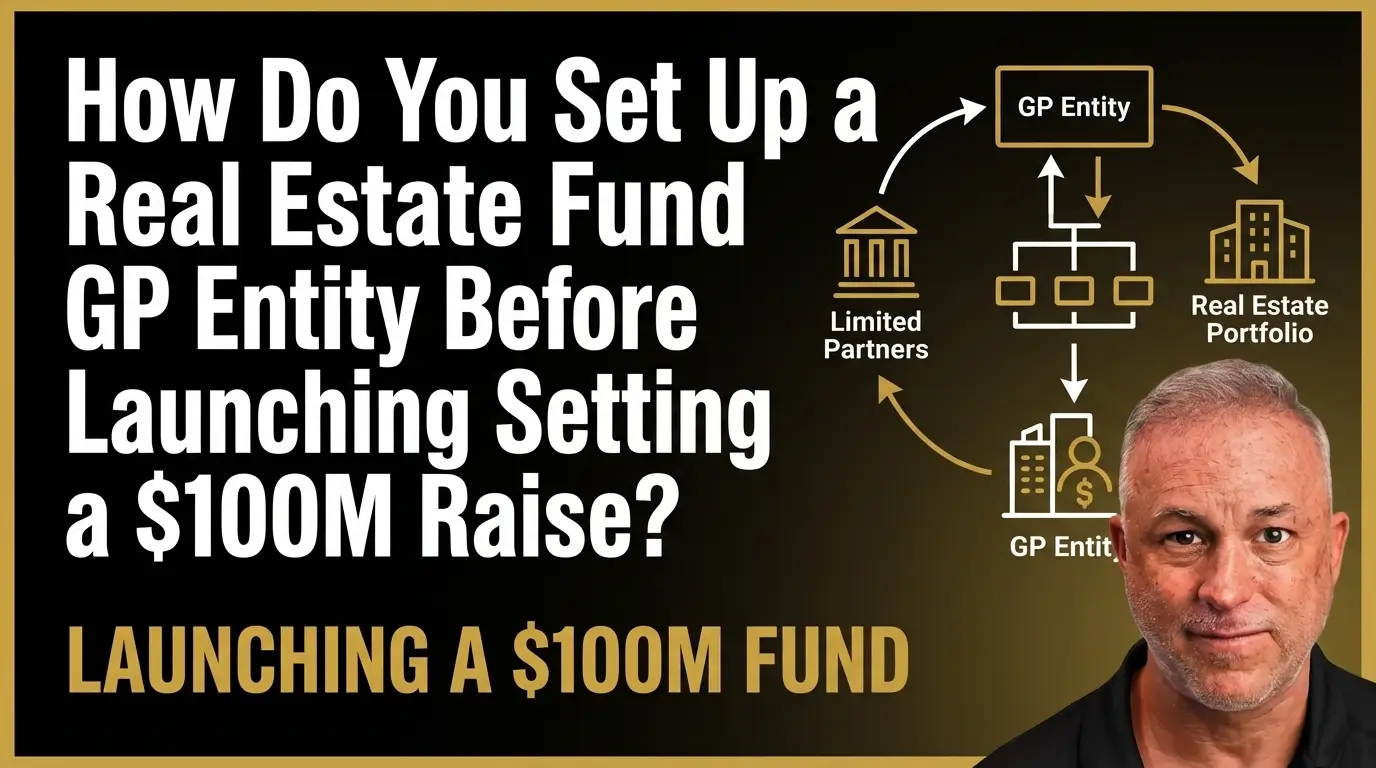
How Do You Set Up a Real Estate Fund GP Entity Before Launching a $100M Raise?
Disclosure
Nothing on this site constitutes an offer to sell, or a solicitation of an offer to purchase, any security under the Securities Act of 1933, as amended, or any applicable state securities laws. Any offering of securities is made only by means of a formal private placement memorandum or other authorized offering documents delivered to qualified investors.
IRC Partners is a capital advisory firm. IRC Partners is not a registered investment adviser under the Investment Advisers Act of 1940 and does not provide investment advice as defined thereunder.
Certain statements in this article may constitute forward-looking statements, including statements regarding market conditions, capital availability, investor demand, and transaction outcomes. Such statements reflect current assumptions and expectations only. Actual results may differ materially due to market conditions, regulatory developments, company-specific factors, and other variables. IRC Partners makes no representation that any outcome, return, or result described herein will be achieved.
References to prior mandates, transaction volume, network credentials, or capital raised are provided for illustrative purposes only and do not constitute a guarantee or prediction of future results. Past performance is not indicative of future outcomes. Individual results will vary. Network credentials and transaction statistics referenced on this site reflect the aggregate experience of IRC Partners' principals and affiliated advisors and are not a representation of assets managed or transactions closed solely by IRC Partners.
Certain data, statistics, and information presented in this article have been obtained from third-party sources. IRC Partners has not independently verified such information and expressly disclaims responsibility for its accuracy, completeness, or timeliness. Readers should independently verify any third-party data before relying on it.
Readers are strongly encouraged to consult qualified legal, financial, and tax professionals before making any investment, capital raising, or business decision.
Schedule A Meeting
You get one shot to raise the right way. If this raise is worth doing, it’s worth doing with precision, leverage, and control.
This isn’t a practice run. Serious capital. Serious strategy. Let’s raise it right.
We onboard a maximum of seven
new strategic partners each quarter, by application only, to maximize your chances of securing the capital you need.
