.svg "CTA Arrow")


.png "Investor Ready Capital decorative background element")

How Should Founders Prepare an Institutional Explanation For a Valuation That Is Higher Than Recent Market Comparables Imply?

How Should Founders Prepare an Institutional Explanation For a Valuation That Is Higher Than Recent Market Comparables Imply?
Founders should support an above-comparable valuation with a documented adjustment schedule, evidence for each premium driver, and sensitivity analysis across entry and exit scenarios. This gives institutional reviewers a way to assess how the premium affects returns if comparable pricing or terminal assumptions change.
An above-comparable valuation creates a specific type of diligence problem. The committee's return model is built on an entry assumption. If that entry assumption is higher than the market supports, the committee evaluates whether the return profile still works under a range of exit scenarios.
Reviewers may approach this analysis through a sequence such as:
- Identify the gap. The reviewer pulls recent comparables for the asset class, geography, and deal size. The gap between the sponsor's entry valuation and the comparable set is documented in basis points, per-unit delta, or percentage premium.
- Determine whether the gap is explained. The reviewer checks whether the sponsor's materials include a written explanation for the premium. If the explanation remains narrative without supporting evidence, the deal may receive additional scrutiny during diligence.
- Stress the return model. The reviewer applies the comparable-implied valuation as an alternative entry assumption and runs the return model under that scenario. If the return profile deteriorates materially at the comparable entry price, the committee may view the valuation gap as an additional execution or pricing risk.
The key signal committees read: A sponsor who presents the stress test results proactively gives reviewers a clearer basis for evaluating whether the premium is understood and supported.
The Capital Raise Pre-Flight is IRC Partners' fixed-fee diagnostic that scores a raise against the same twelve institutional gates a deal must clear before IRC Partners takes it into a strategic partnership.
The Difference Between a Narrative Premium Defense and a Structural Premium Defense
A narrative premium defense describes the asset's advantages in general terms. It relies on the reviewer accepting the sponsor's characterization of quality, location, or demand. Committees generally look for evidence they can verify in the data room.
A structural premium defense does something different. It ties the premium to specific, documentable characteristics, maps each characteristic to a quantifiable impact on the asset's income or exit value, and supports the result with a revised sensitivity analysis.
What a Narrative Defense Looks Like
- "The asset is in a high-demand submarket with strong rent growth fundamentals."
- "The development team has deep local relationships that support faster lease-up."
- "The asset quality is superior to the comparables used in the market analysis."
Each of these statements may be accurate. Committee reviewers look for evidence they can verify and model, and general quality claims require asset-specific documentation before they can support a premium.
What a Structural Defense Looks Like
- A written valuation methodology that names the premium sources and assigns a basis-point or per-unit impact to each.
- A comparable adjustment schedule that identifies the differences between the market comps and the subject asset and shows the warranted adjustment.
- A sensitivity analysis that shows the return profile at the sponsor's entry valuation, at the comparable-implied valuation, and at a midpoint between the two.
The structural defense documents why the asset warrants a premium above the comparables and shows what happens to the return model if the premium is partially or fully compressed at exit.
The financial model red flags that institutional diligence catches in 15 minutes covers how reviewers test whether a return model is built on discipline or optimism, which applies directly to how a premium valuation is stress-tested.
Which Asset Characteristics Institutional Reviewers Accept as Valuation Premium Justification
Institutional reviewers accept premium justification when it is tied to characteristics that produce a verifiable difference in income, risk profile, or exit liquidity.
The following characteristics carry weight with committee reviewers when supported by evidence:
Each of these characteristics should be supported in the data room with documentation that establishes its relevance to the valuation. A differentiator without supporting documentation in the data room may carry less weight during committee review.
How to Present a Sensitivity Analysis That Acknowledges the Comparable Gap
A sensitivity analysis that ignores the comparable gap reads as incomplete. A sensitivity analysis that treats the comparable-implied valuation as the worst-case scenario and shows the deal still works under that assumption is a credibility asset.
Structure the Analysis Around Three Entry Points
Present the return model at three entry valuations:
- The sponsor's entry valuation (current ask) with the full premium intact
- The midpoint between the sponsor's valuation and the comparable-implied valuation
- The comparable-implied entry valuation as the conservative scenario
For each scenario, show the IRR, equity multiple, and preferred return coverage across a 5-year and 7-year hold. If the deal works at the comparable-implied entry valuation, the committee has a floor. If it works at the midpoint, the committee has a range. The sponsor's ask becomes the upside case, grounded by two conservative anchors.
What to Disclose Proactively
Committee reviewers require that comparable selection, adjustment methodology, and the rationale for departing from unadjusted market evidence be disclosed and supportable in the data room.
Include in the disclosure schedule:
- The comparable set used and the date range of the transactions
- The specific adjustments made and the basis for each
- The premium percentage above the unadjusted comparable midpoint
- The assumption under which the premium is recovered at exit
A complete disclosure schedule reduces follow-up questions and shortens the committee's internal review cycle.
How to Frame the Exit Assumption Set When Comparables Suggest a Lower Exit Value
The exit assumption is where an above-comparable entry valuation creates the most pressure on the return model. If the entry price is above market and the exit cap rate is also assumed to be below market, the model is stacking two premium assumptions. This combination can draw additional scrutiny because it places both the entry and exit assumptions above the level supported by market evidence.
The defensible approach separates the entry premium argument from the exit assumption. The exit cap rate should be set at or above the current market rate for the asset class and geography, with a clearly stated basis for any departure. The Counselors of Real Estate have documented how appraisal-based cap rates have consistently trailed transaction cap rates during periods of market stress, which is why committees scrutinize exit cap rate assumptions with particular care when the entry price already carries a premium.
Framing Options for the Exit Assumption
- Market-rate exit: Set the terminal cap rate at the current market rate for comparable assets. This is the most defensible position. The premium at entry is justified by asset-specific characteristics, and the exit is priced at market.
- Conservative exit with a widening buffer: Set the terminal cap rate above the current market rate to reflect rate environment uncertainty, with the selected buffer clearly documented. This shows the return model has been stress-tested against a deteriorating exit environment.
- Tiered exit schedule: Present exit values at three terminal cap rates (current market, market plus 25 basis points, market plus 50 basis points) so the committee can see the return profile across a realistic exit range.
The one-page project capitalization exhibit for LPs covers how to present the capital stack and exit assumptions in a single exhibit that committees can verify without a follow-up request.
{{main-cta}}
What the Revised Return Model Must Show When the Entry Valuation Is Above Market
A revised return model for an above-comparable entry valuation must do one specific thing: show that the return profile is defensible across a range of exit assumptions, including scenarios where the premium at entry is partially or fully compressed at exit.
The model must show four things to pass committee review:
- Preferred return coverage at the comparable-implied entry. If the preferred return fails to cover when the entry is repriced to the comparable-implied value, the committee may treat the preferred return as contingent on the premium being sustained. That is a structural weakness.
- IRR survivability under exit cap widening. The IRR should remain within the committee's acceptable range when the terminal cap rate is widened under a defined stress scenario. Committees set that threshold by mandate, and sponsors should confirm the specific floor with their LP before submitting the model.
- Equity multiple resilience under the stress scenario. The model should show how much downside the equity multiple absorbs before principal impairment. A deal where the equity multiple absorbs significant downside under a realistic stress case signals principal impairment risk that may affect pricing or deal terms.
- Attribution of a meaningful portion of return to operating cash flow, with the balance supported by the terminal event. When a large share of total return depends on the exit event alone, the model is exit-dependent. Committees require that a meaningful portion of the return is generated by in-place cash flow, which reduces sensitivity to exit timing and cap rate assumptions.
The LP distribution output formatting guide covers how to present the return model outputs in a format that committees can verify without a separate reconciliation request.
Frequently Asked Questions
How much above market comparables can a valuation be before an institutional committee requires a formal written defense?
The appropriate level of scrutiny depends on the size of the gap, the asset, the transaction structure, and the quality of the supporting evidence. Committees apply judgment based on the size of the gap relative to the asset class, deal size, and the sponsor's documentation. A premium supported by a written methodology and a comparable adjustment schedule is reviewable regardless of size. A premium presented with assertion alone is more likely to prompt additional questions during diligence.
What is a comparable adjustment schedule and how does it differ from a standard appraisal?
A comparable adjustment schedule is a sponsor-prepared exhibit that documents the specific differences between the subject asset and each comparable transaction, assigns a quantified adjustment to each difference, and produces an adjusted comparable value that supports the sponsor's entry price. A standard appraisal is a licensed third-party document prepared under USPAP. A comparable adjustment schedule prepared by the sponsor supplements the appraisal and gives the committee a direct line of sight into the premium justification without requiring a full appraisal revision.
How does an LP committee treat a valuation premium when the sponsor has no prior institutional raise history?
A sponsor entering institutional diligence for the first time with an above-comparable valuation faces a compounded credibility challenge. The committee reviews the premium claim with the documentation alone as the basis, so the committee may place greater emphasis on supporting documentation. The written valuation methodology, comparable adjustment schedule, and three-scenario sensitivity analysis must each stand independently. Committees in this situation apply closer scrutiny to the exit assumption set and may request a third-party appraisal or an independent market study before advancing the deal to a term sheet.
What return threshold do institutional LP committees typically require before accepting an above-market entry price?
Committees evaluate the return profile relative to the risk premium required for the asset class and entry structure. Each LP sets its own minimum IRR and equity multiple thresholds by mandate, and those floors vary across fund type, vintage, and strategy. The consistent expectation is that the base-case return survives a moderate stress scenario and that the equity multiple stays above 1.0x under the committee's defined stress case. Sponsors should confirm the specific return floor with each LP before submitting the model, because a deal that falls below a committee's mandate threshold under stress will face structural repricing requests before a term sheet is issued.
How does an above-comparable valuation affect the waterfall structure in LP negotiations?
An above-comparable entry valuation can lead LP negotiators to revisit preferred return hurdles, promote economics, or downside protections. The specific adjustments depend on the investment structure and the LP's mandate. Presenting a comparable adjustment schedule and a three-scenario sensitivity analysis before negotiations begin can give the sponsor a stronger basis for defending the waterfall structure proposed. Arriving without that documentation increases the likelihood of accepting modified waterfall terms as a condition of closing.
What is the difference between a going-in cap rate adjustment and a terminal cap rate adjustment in a valuation premium defense?
The going-in cap rate adjustment documents why the subject asset's income characteristics support a lower cap rate than the comparable set implies. Asset-specific differentiators such as credit tenancy, below-market rents, or supply constraints are applied here. The terminal cap rate adjustment documents the cap rate at which the asset is expected to trade at the end of the hold period. Committees give terminal cap rate assumptions closer scrutiny because they drive the majority of total return in most models. Stacking a below-market going-in cap rate with a below-market terminal cap rate in the same model requires explicit, separate justification for each.
How does a committee document its internal decision when it approves a deal with an above-comparable entry valuation?
When a committee approves a deal with an above-comparable entry price, the internal investment memo records the specific premium percentage, the asset characteristics cited as justification, the comparable adjustment methodology reviewed, and the scenario under which the return profile was accepted. That memo becomes a reference document if the deal is later reviewed by a compliance team, an auditor, or a successor committee. Sponsors who understand this dynamic present their valuation defense in a format that maps directly to the categories a committee memo must address, which shortens the internal approval drafting process and reduces the chance of a committee request for additional written clarification.
Continue reading this series:
- How Should a Company Sequence Readiness Work, Materials Preparation, Deal Structuring, and Diligence Before Launching an Institutional Raise?
- How Should a Real Estate Sponsor Organize a Data Room Before Institutional Outreach
- How Should a Sponsor Model Fee Income, Promote Economics, and GP Participation for Investors
The structure you carry into your first investor meeting sets the terms for every round that follows it. Founders who get it wrong spend the next three rounds negotiating from behind. The Capital Raise Pre-Flight is IRC Partners’ fixed-fee diagnostic that scores a raise against the same twelve institutional gates a deal must clear before IRC Partners takes it into a strategic partnership. IRC Partners advises operators raising $5M to $250M of institutional capital. Book your Capital Raise Pre-Flight here.
Need guidance on your capital raise?


Real Estate Loan to Value: How $10M+ Sponsors Structure the Capital Stack Around LTV Constraints to Close Institutional Lenders Faster

What Downside-Case Assumptions Do Family Offices Expect In a Multifamily Development Underwriting Model?
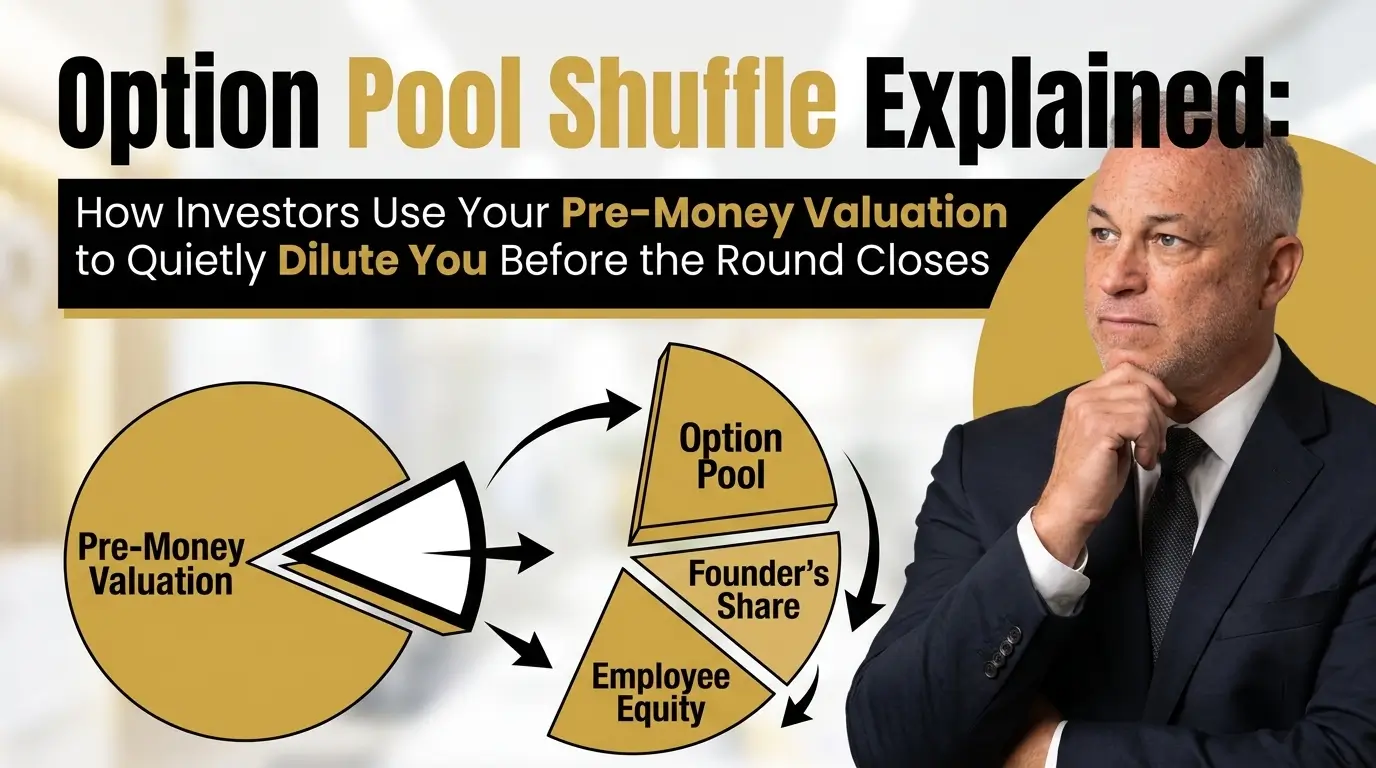
Option Pool Shuffle Explained: How Investors Use Your Pre-Money Valuation to Quietly Dilute You Before the Round Closes
Disclosure
Nothing on this site constitutes an offer to sell, or a solicitation of an offer to purchase, any security under the Securities Act of 1933, as amended, or any applicable state securities laws. Any offering of securities is made only by means of a formal private placement memorandum or other authorized offering documents delivered to qualified investors.
IRC Partners is a capital advisory firm. IRC Partners is not a registered investment adviser under the Investment Advisers Act of 1940 and does not provide investment advice as defined thereunder.
Certain statements in this article may constitute forward-looking statements, including statements regarding market conditions, capital availability, investor demand, and transaction outcomes. Such statements reflect current assumptions and expectations only. Actual results may differ materially due to market conditions, regulatory developments, company-specific factors, and other variables. IRC Partners makes no representation that any outcome, return, or result described herein will be achieved.
References to prior mandates, transaction volume, network credentials, or capital raised are provided for illustrative purposes only and do not constitute a guarantee or prediction of future results. Past performance is not indicative of future outcomes. Individual results will vary. Network credentials and transaction statistics referenced on this site reflect the aggregate experience of IRC Partners' principals and affiliated advisors and are not a representation of assets managed or transactions closed solely by IRC Partners.
Certain data, statistics, and information presented in this article have been obtained from third-party sources. IRC Partners has not independently verified such information and expressly disclaims responsibility for its accuracy, completeness, or timeliness. Readers should independently verify any third-party data before relying on it.
Readers are strongly encouraged to consult qualified legal, financial, and tax professionals before making any investment, capital raising, or business decision.
Schedule A Meeting
You get one shot to raise the right way. If this raise is worth doing, it’s worth doing with precision, leverage, and control.
This isn’t a practice run. Serious capital. Serious strategy. Let’s raise it right.
We onboard a maximum of seven
new strategic partners each quarter, by application only, to maximize your chances of securing the capital you need.
