.svg "CTA Arrow")


.png "Investor Ready Capital decorative background element")

How Should Founders Explain Non-Recurring Revenue Without Weakening a Growth-Capital Investment Thesis?

How Should Founders Explain Non-Recurring Revenue Without Weakening a Growth-Capital Investment Thesis?
Founders should present the business model first, revenue composition second, and growth trajectory third. This sequence gives institutional allocators the context to assess project-based, milestone-driven, and one-time revenue on its own terms. It matters because leading with a revenue figure can invite assumptions that do not fit the underlying model.
Institutional allocators form a revenue thesis within the first few minutes of reviewing a raise package, and that thesis is shaped by whatever context arrives first. When a founder leads with a revenue figure before establishing what kind of business generates it, the allocator fills the context gap using their default assumptions for the raise category. Those defaults reflect the most common model in that raise category, typically a recurring-revenue structure. A project-based or milestone-driven business measured against that default looks like it has a revenue quality problem, even when the underlying business is sound. Founders who sequence the explanation correctly, establishing the business model first, then the revenue composition, then the growth trajectory, keep the allocator working inside the thesis from the start.
Non-recurring revenue is a structural feature of project-based development, milestone-driven services, licensing arrangements, and many other legitimate business models. Presentation order determines how allocators evaluate these structural features. Operators raising $5M to $250M with project-based or one-time revenue components frame these elements upfront so allocators evaluate them within the proper context.
This article covers the sequencing logic, the specific framing for the three most common non-recurring revenue categories, and how to run a pre-launch review that confirms the revenue narrative holds up under institutional scrutiny.
The core principle: allocators make thesis decisions in the first few minutes. The sequence of information you present determines the thesis they form.
Why Presentation Sequence Determines How Allocators Read Revenue
Growth-capital allocators use the revenue section of a raise package to answer one question: does this business generate revenue in a way that supports the capital deployment thesis? A business that generates recurring software subscription revenue supports a different thesis than a business that generates project fees upon development completion. Both are legitimate. Friction arises when allocators evaluate revenue numbers without first understanding the underlying model.
Why Leading With the Revenue Figure Breaks the Thesis
When a founder opens with "we generated $4.2M last year," the allocator immediately begins categorizing that number. Is it recurring? Is it growing? Is it concentrated in one client? Without a model context established first, the allocator answers those questions using their default assumptions for the raise type. Those defaults are built for the most common model in that raise category, which is often a recurring-revenue SaaS or a stabilized cash-flowing asset. A project-based business measured against that default looks like it has a revenue quality problem.
The allocator has filled the context gap with the wrong frame.
The Three-Step Sequence That Keeps the Allocator Inside the Thesis
The correct presentation order is:
- Model type first. Describe the business model before presenting any revenue figure. Establish that the company generates revenue through completed development projects, milestone-based service agreements, or one-time licensing events. Give the allocator the frame before the number.
- Revenue composition second. Present the revenue figure within the established model context. Identify what portion is project-based, what portion is recurring retainer or management fee, and what portion is one-time. Show the full composition.
- Growth trajectory third. Present the trajectory in terms that are native to the model type. For project-based businesses, that means pipeline size, project count, average project value, and repeat client rate. For milestone-based models, it means contracted backlog and milestone schedule. For one-time licensing, it means licensee count and renewal patterns.
This sequence prevents the allocator from applying the wrong frame because the frame is established before the number appears.
Why the order matters: once an allocator has formed an initial impression of a revenue figure, that impression is difficult to revise. Presenting the model context afterward requires the allocator to consciously override a conclusion they have already started forming. The sequence determines which conclusion they reach.
Founders preparing for an institutional raise should also review how financial model red flags surface in the first fifteen minutes of institutional diligence, because the same sequencing logic that applies to the verbal pitch applies to the written model package.
The Pre-Flight Diagnostic and Revenue Framing
Before taking a raise with non-recurring revenue components to market, the revenue narrative needs to be tested against the same standard an institutional committee will apply. A verbal explanation that makes sense in a conversation does not automatically translate into a written raise package that holds up under scrutiny.
The Capital Raise Pre-Flight is IRC Partners' fixed-fee diagnostic that scores a raise against the same twelve institutional gates a deal must clear before IRC Partners takes it into a strategic partnership.
The revenue framing gate is one of those twelve categories. A raise package that leads with a revenue figure before establishing the model context will flag at this gate, regardless of how strong the underlying business is. The diagnostic identifies the gap in writing, with specific guidance on what to resequence and how to present each revenue component in the materials that go to allocators.
Founders who want to understand how the revenue framing gate interacts with the rest of the institutional review process can review why one failed diligence category can zero out an otherwise strong deal. Revenue framing becomes a critical-gate failure when it causes an allocator to form a thesis-level misread that carries into subsequent diligence conversations.
Framing the Three Most Common Non-Recurring Revenue Categories
The sequencing principle applies across all non-recurring revenue types. The specific language and evidence used to support each category differs. The following framing applies to the three categories most common in $5M to $250M institutional raises.
Project-Based Revenue
Project-based revenue is generated when a development, construction, or service project reaches completion or a defined milestone. For real estate developers, this includes development fees, construction management fees, and promoted interest distributions that arrive upon project sale or refinance.
How to frame it:
Establish the project pipeline as the revenue engine before presenting any completed-project revenue. The allocator needs to see that the business does not depend on one project completing to generate the next dollar. Present the number of active projects, the contracted project value, and the average time from project start to revenue recognition. Then present the completed-project revenue as confirmation that the pipeline converts.
The metric allocators use to assess project-based revenue quality is repeat client rate and pipeline replacement speed. A business that consistently replaces completed projects with new contracted work demonstrates a repeating revenue generation system. Under ASC 606, project-based revenue recognized over time or at completion is a defined accounting treatment with a clear presentation standard that allocators already understand. The SEC's published guidance on ASC Topic 606 on revenue from contracts with customers confirms that milestone-based and project-completion revenue recognition both fall within this framework, giving allocators a familiar reference point when reviewing project-based financials.
Milestone-Based Revenue
Milestone-based revenue arrives when a defined contractual condition is met: a regulatory approval, a product delivery, a performance threshold, or a closing event. This category is common in advisory services, life sciences, technology licensing, and development management agreements.
How to frame it:
Present the contracted milestone schedule before presenting any revenue recognized. The allocator needs to see that the revenue is contractually committed, that the milestones are defined and measurable, and that the schedule is realistic given the business's execution history. Show the total contracted backlog, the milestone dates, and the revenue expected at each milestone.
The metric allocators use here is backlog coverage: how many months of projected revenue are already contracted and defined by milestone? A business with 18 months of backlog carries a measurably lower revenue risk than a business with two months of contracted work. Present the backlog number first, then the schedule, then the revenue already recognized under that structure.
One-Time Revenue
One-time revenue includes licensing fees, settlement payments, asset sales, and other non-repeating events. This is the category that creates the most allocator concern because, by definition, the event occurs once. The framing challenge is to present one-time revenue as evidence of value creation capacity.
How to frame it:
Establish what the one-time event represents about the business before presenting the dollar amount. A licensing fee paid by a strategic partner is evidence of intellectual property value. An asset sale at a premium to book value is evidence of development execution quality. A settlement payment can reflect the resolution of a legacy issue that is now closed.
Present the strategic context first, then the dollar amount, then explicitly confirm that the raise thesis does not depend on that event repeating. Allocators accept one-time revenue when it is presented as a defined, disclosed component of a business that generates value through other means. One-time revenue presented as the primary growth story creates a thesis-level problem that the allocator will surface in diligence.
A note on revenue composition tables: the clearest way to present mixed revenue for institutional review is a simple table showing each revenue category, the dollar amount, the percentage of total revenue, and whether the category is expected to grow, hold, or decline over the projection period. This gives the allocator a single reference point that confirms the composition before they read the narrative.
{{main-cta}}
Founders preparing investment committee materials should also review what financial exhibits belong behind a real estate development pitch deck for LP follow-up, as the revenue composition table belongs in the exhibit package and the data room.
Frequently Asked Questions
What is the difference between non-recurring revenue and irregular revenue in an institutional raise?
Non-recurring revenue encompasses one-time or project-completion events, such as a development fee or a licensing payment. Irregular revenue is recurring revenue that arrives on an unpredictable schedule, such as a retainer that pays quarterly on an inconsistent basis. Allocators treat these differently. Non-recurring revenue requires a pipeline or backlog narrative. Irregular revenue requires a collection and timing explanation. Conflating the two in a raise package creates a framing problem that the allocator will surface in diligence.
How should a founder present a year where non-recurring revenue was the largest component of total revenue?
Present the composition explicitly before the total. Identify the specific events that generated the non-recurring portion, the contractual basis for each, and whether those events were planned or opportunistic. Then present the recurring and project-pipeline revenue separately to show the underlying run rate the business carries into the next period. An allocator reviewing a year with high non-recurring concentration needs to see the run rate to evaluate the forward thesis.
Does non-recurring revenue affect the Institutional Readiness Score on the Capital Raise Pre-Flight?
The Institutional Readiness Score runs on a 0 to 100 scale across 12 categories. Revenue quality and composition is one of those categories. A raise package that presents non-recurring revenue without a model-type context, a pipeline narrative, or a composition table will score lower in that category. A score below 85 across all 12 categories indicates that at least one structural gap exists that an allocator's diligence team is likely to surface. Revenue framing is one of the more common gaps identified in pre-launch diagnostics for project-based and milestone-driven businesses.
What metrics should a project-based business present alongside non-recurring revenue to support the growth thesis?
The four metrics that carry the most weight in institutional review are: active project count with contracted value, average project duration from engagement to revenue recognition, pipeline replacement rate measured as new projects contracted per quarter, and repeat client rate as a percentage of total project volume. These metrics reframe the revenue conversation from a single historical figure to a system that generates project-based revenue on a repeating basis.
How does milestone-based revenue affect the raise timeline for a $5M to $250M institutional raise?
Milestone-based revenue can extend the raise timeline when allocators require documentation of the milestone schedule before advancing to term sheet. The standard raise timeline for a $5M to $250M institutional raise runs 4 to 9 months from first LP outreach through close. Raises with milestone-based revenue components often require an additional documentation round covering the contracted backlog, the milestone definitions, and the revenue recognition schedule. Preparing that documentation before first outreach reduces the likelihood of a diligence delay extending the timeline.
Can a founder disclose non-recurring revenue in the executive summary without weakening the opening thesis?
Yes, with sequencing. The executive summary should open with the business model type and the primary value creation mechanism. Revenue composition, including the non-recurring components, belongs in the second or third paragraph after the model context is established. A one-sentence disclosure that identifies the non-recurring category, its percentage of total revenue, and the forward expectation is sufficient at the executive summary level. The detailed composition table belongs in the financial exhibits or the data room.
What should a founder say when an allocator asks directly whether the business has recurring revenue?
Answer with the model type first. Describe how the business generates revenue structurally: through completed projects, contracted milestones, or defined events. Then confirm what portion of revenue is recurring in nature, such as management fees, retainers, or subscription components. Then describe the pipeline or backlog that supports the forward revenue thesis. A direct answer confirming full revenue composition provides the transparency allocators expect.
Continue reading this series:
- Does My Investment Committee Deck Need Financial Projections?
- How to Structure a Capital Stack for a $10M to $50M Real Estate Development Deal
- How Should a Company Sequence Readiness Work, Materials Preparation, Deal Structuring, and Diligence Before Launching an Institutional Raise?
The structure you carry into your first investor meeting sets the terms for every round that follows it. Founders who get it wrong spend the next three rounds negotiating from behind. The Capital Raise Pre-Flight is IRC Partners’ fixed-fee diagnostic that scores a raise against the same twelve institutional gates a deal must clear before IRC Partners takes it into a strategic partnership. IRC Partners advises operators raising $5M to $250M of institutional capital. Book your Capital Raise Pre-Flight here.
Need guidance on your capital raise?


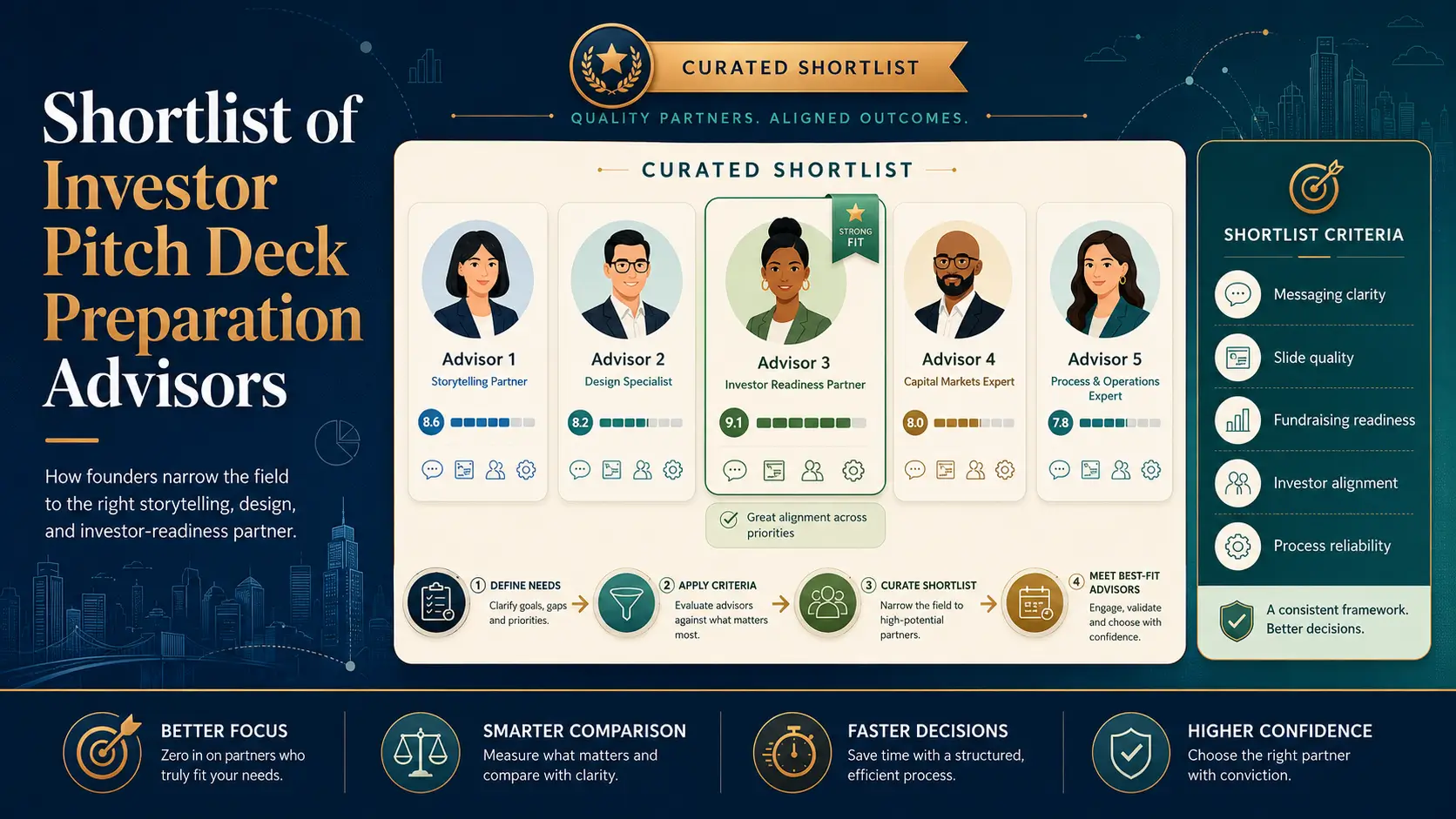
Shortlist of Investor Pitch Deck Preparation Advisors
What Should Founders Negotiate If Bridge Financing Investors Request Board-Observer Rights?

Which Capital Stack Layers Are Best for Minimizing Risk?
Disclosure
Nothing on this site constitutes an offer to sell, or a solicitation of an offer to purchase, any security under the Securities Act of 1933, as amended, or any applicable state securities laws. Any offering of securities is made only by means of a formal private placement memorandum or other authorized offering documents delivered to qualified investors.
IRC Partners is a capital advisory firm. IRC Partners is not a registered investment adviser under the Investment Advisers Act of 1940 and does not provide investment advice as defined thereunder.
Certain statements in this article may constitute forward-looking statements, including statements regarding market conditions, capital availability, investor demand, and transaction outcomes. Such statements reflect current assumptions and expectations only. Actual results may differ materially due to market conditions, regulatory developments, company-specific factors, and other variables. IRC Partners makes no representation that any outcome, return, or result described herein will be achieved.
References to prior mandates, transaction volume, network credentials, or capital raised are provided for illustrative purposes only and do not constitute a guarantee or prediction of future results. Past performance is not indicative of future outcomes. Individual results will vary. Network credentials and transaction statistics referenced on this site reflect the aggregate experience of IRC Partners' principals and affiliated advisors and are not a representation of assets managed or transactions closed solely by IRC Partners.
Certain data, statistics, and information presented in this article have been obtained from third-party sources. IRC Partners has not independently verified such information and expressly disclaims responsibility for its accuracy, completeness, or timeliness. Readers should independently verify any third-party data before relying on it.
Readers are strongly encouraged to consult qualified legal, financial, and tax professionals before making any investment, capital raising, or business decision.
Schedule A Meeting
You get one shot to raise the right way. If this raise is worth doing, it’s worth doing with precision, leverage, and control.
This isn’t a practice run. Serious capital. Serious strategy. Let’s raise it right.
We onboard a maximum of seven
new strategic partners each quarter, by application only, to maximize your chances of securing the capital you need.
