.svg "CTA Arrow")


.png "Investor Ready Capital decorative background element")

How Should a Startup Structure a Pay-To-Play Bridge Financing When Some Preferred Investors Decline to Participate?
How Should a Startup Structure a Pay-To-Play Bridge Financing When Some Preferred Investors Decline to Participate?
A pay-to-play bridge financing requires existing preferred stockholders to invest their required share of a new round or lose the rights attached to their preferred stock. When an investor declines to participate, the most common consequence is conversion to common stock, eliminating its liquidation preference, anti-dilution protection, and preferred voting rights. The bridge must clearly define the participation threshold, conversion mechanism, investor notice process, and resulting cap table treatment before closing. Done correctly, it raises the needed capital while clearing inactive preferred holders from the stack and making the company more fundable for its next institutional round.
This guide covers the full structure of a pay-to-play bridge, from the mechanics of the conversion penalty to the negotiation points that matter most when your investor group is split. It also covers what founders need to document before the round closes, and what happens downstream to the investors who sit it out. If the bridge is already tied to heavier reporting or access rights, review how to negotiate information rights in $10M+ VC term sheets before you finalize the package.
For founders already thinking through how deal terms in prior rounds affect bridge dynamics, this guide is the operational companion to that analysis. And if your preferred stock terms include drag-along provisions, review how drag-along rights interact with new financing rounds before you finalize the bridge structure.
Why a Pay-to-Play Bridge Is a Different Problem Than a Standard Bridge
A standard bridge round is a short-term loan or convertible note that buys time before the next priced round. It is relatively simple. A pay-to-play bridge does two things at once. It raises capital and restructures the cap table by penalizing investors who decline.
That dual purpose creates complexity most founders underestimate. You are negotiating what happens to existing equity holders who choose not to participate, on top of the loan terms themselves. That requires charter amendments, stockholder votes, and careful sequencing of legal documents.
The Core Problem Pay-to-Play Solves
When a company needs bridge capital and some preferred investors decline, the company faces a structural problem. The investors who do participate are writing new checks into a company where non-participants still hold senior preferred stock with liquidation preferences. That means the new money is buried under the old money in the payment waterfall.
Pay-to-play solves this by collapsing the stack. Non-participants lose their preferred status. Their liquidation preference disappears. The new money moves up in priority. The round becomes fundable because participating investors know their capital is no longer subordinated to investors who refused to show up.
Key insight: Pay-to-play provisions counterintuitively benefit founders. They force the cap table cleanup that makes the next institutional raise possible.
When Pay-to-Play Is the Right Tool
Pay-to-play is appropriate in three scenarios:
- The company needs bridge capital and multiple existing investors are uncertain about participating
- The company is heading into a down round and needs to reset the liquidation stack before a new lead investor will commit
- The board wants to create a clear incentive structure that rewards investors who continue to support the company
When only one or two investors are declining and the company can raise the bridge from others without changing the cap table structure, a standard convertible note with participation rights for existing investors is simpler and creates less friction.
The Three Structural Variants and How to Choose
Pay-to-play is not a single mechanism. There are three main variants, and the one you choose has lasting consequences for your cap table and your relationship with non-participating investors.
Variant 1: Punitive Conversion (Cram-Down)
This is the most common form. Non-participating preferred stockholders have their shares automatically converted to common stock, usually on a 1-for-1 basis. They lose their liquidation preference, anti-dilution protection, and any preferred voting rights. The conversion ratio is negotiable. Some deals use a 10-for-1 cram-down, where 10 preferred shares convert into a single common share, though this is aggressive and typically reserved for distressed situations.
The mechanism is implemented through charter provisions. If the existing charter already contains a pay-to-play provision, the conversion can be triggered without a separate charter amendment. If it does not, you need a stockholder vote to amend the charter before the bridge closes.
When to use it: When the company needs a clean reset and non-participating investors have small enough positions that the relationship damage is acceptable.
Variant 2: Pull-Through (Incentive Model)
The pull-through flips the logic. All preferred stock is first converted to common stock under the charter. Then, investors who participate in the new financing at the required level are contractually allowed to "pull" their shares back up into a new preferred series with the same rights they previously held.
Non-participants stay as common stockholders. Participants regain their preferred status. The result is the same as the punitive model, but the framing is different. Investors are being offered a path back to preferred status, rather than being threatened with conversion.
When to use it: When you want to preserve investor relationships and frame participation as an opportunity rather than a penalty.
Variant 3: Pull-Up (Enhanced Incentive Model)
The pull-up goes further. Participating investors do not just get their old preferred status back. They receive a new preferred series with enhanced terms: a senior liquidation preference, a higher multiple, or warrant coverage on top of their new investment. Non-participants are still converted to common.
This variant is most effective when you need to attract participation from reluctant investors who are on the fence. The enhanced economics tip the decision toward participation.
When to use it: When you need maximum participation and have room to offer better terms to investors who step up.
Academic research on pay-to-play provisions in venture capital financing shows significant variation in how penalty conversion is applied, including whether the conversion covers the investor's entire holding or only a proportionate share tied to their participation shortfall.
How to Set the Participation Threshold
The participation threshold is the minimum investment required to avoid conversion. Getting this number right is one of the most consequential decisions in the bridge structure.
Pro Rata as the Baseline
The market standard is full pro rata participation. Each investor must invest an amount proportional to their current ownership of the company's outstanding preferred stock. If an investor holds 10% of the preferred, they must invest 10% of the bridge round to avoid the penalty.
Full pro rata is the cleanest standard. It is easy to calculate and easy to communicate. But it creates a binary outcome: investors who can invest exactly their pro rata amount keep their preferred status, and investors who fall short lose it entirely.
Formulaic Thresholds
A formulaic threshold allows partial credit. If an investor participates at 50% of their pro rata, they preserve 50% of their preferred shares. The other 50% converts to common. This approach is more investor-friendly and reduces the risk that investors decline entirely because they cannot meet the full threshold.
The tradeoff is complexity. Formulaic thresholds require more precise tracking of each investor's participation level and more detailed documentation in the financing documents.
Setting the Floor
Some founders set a minimum dollar threshold below the pro rata calculation. This is useful when the company has many small investors whose pro rata amounts are too small to matter operationally. A minimum floor of $25,000 or $50,000 prevents the company from having to track dozens of tiny participation decisions.
Key structural point: The participation threshold, the measurement date for pro rata calculations, and the timing of the conversion trigger must all be defined precisely in the financing documents. Ambiguity in any of these creates grounds for investor disputes after the round closes.
The Legal Documents You Need Before the Round Closes
A pay-to-play bridge requires more legal infrastructure than a standard convertible note. The sequence of documents matters as much as the content of each one.
Step 1: Audit the Existing Charter
Before drafting any new documents, pull the current certificate of incorporation and read the preferred stock terms carefully. Look for two things: whether a pay-to-play provision already exists, and what vote is required to amend the charter if it does not.
If the charter already contains a pay-to-play provision, confirm that its mechanics match the structure you intend to use. Many charter pay-to-play provisions were drafted years ago and may reference outdated participation thresholds or conversion mechanics that do not align with the current round.
If the charter does not contain a pay-to-play provision, you need a charter amendment. That amendment requires a stockholder vote. The required vote threshold depends on your charter, but it typically requires approval from a majority of outstanding preferred stock voting as a separate class. This means you need buy-in from your preferred investors before the round closes.
Step 2: Prepare the Bridge Financing Documents
The core documents for a pay-to-play bridge are:
- Note Purchase Agreement or Stock Purchase Agreement: Defines the amount, terms, and closing conditions of the bridge round
- Convertible Notes or Bridge Preferred Stock Certificates: The actual instruments issued to participating investors
- Amended and Restated Certificate of Incorporation: Implements the pay-to-play provision and any new preferred series (for pull-through or pull-up structures)
- Investor Rights Agreement Amendment: Updates information rights, registration rights, and any other rights that change as a result of the bridge
Step 3: Prepare the Conversion Notice
The conversion notice is the document that formally triggers the preferred-to-common conversion for non-participating investors. It must be delivered within the timeframe specified in the charter or financing documents. Late delivery or incomplete delivery can create grounds for investors to challenge the conversion.
For rounds with multiple closes, document the participation status of each investor at each close. Investors who participate in a later close may have a different conversion outcome than investors who declined the first close entirely. The article on how a startup should document investor default remedies in a multi-close bridge financing covers the documentation requirements for multi-close structures.
Step 4: Board Approval
The board must formally approve the bridge financing before any documents are signed. Board minutes should reflect the specific terms of the round, the rationale for the pay-to-play structure, the participation threshold, and the conversion mechanics for non-participating investors. If any board members represent investors who are declining to participate, those directors should recuse themselves from the vote to avoid conflict-of-interest issues.
What Happens to Non-Participating Preferred Investors
The consequences for non-participating investors are significant. Understanding them helps founders communicate clearly with investors before the round closes and reduces the risk of disputes afterward.
Loss of Liquidation Preference
This is the most economically damaging consequence. A preferred investor who holds a 1x non-participating liquidation preference is entitled to receive their invested capital back before common stockholders receive anything in a sale or liquidation. Once converted to common, that priority disappears. They participate in proceeds on the same basis as founders and employees.
For investors who put in meaningful capital in earlier rounds, this is a real economic loss. A $2M Series A investment with a 1x liquidation preference becomes common stock with no guaranteed return floor.
Loss of Anti-Dilution Protection
Preferred investors typically hold weighted-average anti-dilution protection. This adjusts their conversion price downward if the company later issues stock at a lower price. Common stockholders have no such protection. Non-participating investors who convert to common lose this protection entirely and become fully exposed to future dilution events.
Loss of Protective Voting Rights
Many preferred stock series carry blocking rights or protective provisions that require preferred holder approval for certain company actions, such as issuing new stock above a certain amount, incurring significant debt, or selling the company. These rights are attached to the preferred series, not to the investor individually. Once converted to common, non-participating investors lose these rights.
What Stays the Same
Non-participating investors do not lose their shares. They still own equity in the company. Their ownership percentage on a fully diluted basis does not change as a direct result of the conversion. What changes is the quality and priority of that equity.
They also retain any contractual rights that are not tied to preferred stock status, such as registration rights or information rights that were granted to them as stockholders rather than as preferred holders. Review the specific language in the investor rights agreement to confirm which rights survive conversion.
Negotiating the Bridge Terms When Investor Participation Is Split
When some investors are in and some are out, the negotiation dynamic shifts. Participating investors have leverage. Non-participating investors may resist the conversion. Founders need a clear strategy before any conversation starts.
Lead with the Participating Investors
Identify which investors will participate before you approach the broader group. Get soft commitments from your lead participants first. Once you have a credible set of participating investors who represent a meaningful portion of the round, you can approach the remaining investors from a position of strength.
Investors who are uncertain about participating are more likely to commit when they see that the round is already substantially subscribed. The social proof of other investors participating reduces the perceived risk.
Set a Hard Deadline for Participation Decisions
Give investors a specific date by which they must confirm their participation. A 10-to-14-day window is standard. After that date, the company will proceed with the investors who have committed, and the pay-to-play mechanism will apply to investors who have not responded or have declined.
A hard deadline prevents the round from dragging on indefinitely while investors evaluate their options. It also creates urgency that encourages fence-sitters to commit.
Communicate the Consequences Directly
Do not soften the message about what happens to investors who decline. They deserve to understand clearly that their preferred stock will convert to common stock and that they will lose their liquidation preference, anti-dilution protection, and protective voting rights.
This is not a threat. It is a structural fact that investors need to make an informed decision. Founders who communicate this clearly avoid disputes later from investors who claim they did not understand the consequences.
Handle Requests for Side Deals Carefully
Some investors who are on the fence will ask for side deals: better conversion terms, enhanced information rights, or a side letter that modifies their specific terms. Be cautious about these requests.
Side letters that give one investor better terms than others can create legal complications and may require disclosure to all other investors in the round. If you accommodate one investor's request for enhanced terms, you may need to offer the same terms to all investors who participate at the same level.
For founders dealing with investors who want board-observer rights as a condition of participation, the article on what founders should negotiate if bridge financing investors request board-observer rights covers how to handle those requests without giving away permanent governance concessions.
{{main-cta}}
Allocation When Demand Exceeds the Target
If the round is oversubscribed because more investors want to participate than the company needs to raise, you need a clear allocation policy. The cleanest approach is to allocate pro rata based on each investor's current ownership. Investors who want to participate above their pro rata can be accommodated in a second allocation tier if the company wants to allow it. That kind of cap table cleanup becomes even more important if the company is carrying convertible note overhangs from a prior seed round into the next financing.
For a detailed framework on how to allocate bridge financing when demand exceeds the target raise, the article on how a company should allocate bridge financing among investors when demand exceeds the target raise covers the mechanics and the policy decisions involved.
How the Bridge Affects the Next Equity Round
The pay-to-play bridge does not exist in isolation. Every structural decision you make in the bridge affects what the next priced equity round looks like and how new investors will evaluate the company.
The Cap Table After the Bridge
After the bridge closes, the cap table will show a mix of investors. Participating investors will hold their preferred stock plus the new bridge instruments. Non-participating investors will hold common stock. New investors considering the next priced round will see this structure and ask questions.
Institutional investors and lead VCs will want to understand why some investors converted. They will ask whether the conversion was voluntary or forced. They will look at whether the non-participating investors are still actively engaged with the company or have effectively checked out.
A clean pay-to-play conversion where the company communicated clearly and followed the proper legal process is a positive signal. It shows the company has the discipline to enforce structural terms and that the cap table reflects active, committed investors.
Anti-Dilution Implications
The bridge round itself may trigger anti-dilution adjustments for preferred investors who participated, depending on whether the bridge is priced below the previous round's price per share. If the bridge is structured as a convertible note rather than a priced preferred round, anti-dilution protections on existing preferred stock are typically not triggered. This is one reason many pay-to-play bridges use convertible notes rather than priced preferred stock.
If the bridge is structured as a priced round at a lower valuation, weighted-average anti-dilution provisions on existing preferred stock will adjust the conversion prices of those shares. Model this carefully before choosing the bridge instrument.
Preserving Flexibility for New Investors
One of the goals of a pay-to-play bridge is to make the company attractive to new investors. The bridge should be structured so that new investors can come in after the initial close without being burdened by the existing preferred stack. If the pay-to-play conversion has cleaned up the liquidation waterfall, new investors can take a senior position in the next priced round without competing with a large block of legacy preferred.
The Proof Point: What Disciplined Bridge Structuring Produces
IRC Partners has advised on capital raises across multiple growth-stage companies where a split investor group required a pay-to-play bridge to reset the cap table before the next institutional round. In one case involving a software company with over $1M in ARR and a fragmented preferred investor base, the company used a pull-through structure to convert non-participating investors to common while preserving the preferred status of investors who stepped up. The cleaned-up cap table allowed the company to close a new institutional lead in the subsequent priced round within 90 days of the bridge close, at terms that would not have been achievable with the prior stack intact.
The lesson is not that pay-to-play bridges are always the right tool. It is that when the investor group is split and the cap table needs to reflect that split, a well-structured bridge with clear documentation and a defined conversion mechanism produces better outcomes than a bridge that avoids the hard conversation.
What Founders Should Do Before Launching the Bridge
The work that happens before the bridge launches determines whether the round closes cleanly or drags into disputes. Here is the sequence that produces the best outcomes.
1. Map your investor base. Before any conversations start, know exactly which investors hold preferred stock, how much they hold, and what their pro rata participation amount would be at your target raise size. This map is the foundation of every conversation you will have.
2. Assess your charter. Confirm whether a pay-to-play provision already exists. If it does, read it carefully. If it does not, assess the vote required to add one and identify which investors you need to get on board before the charter amendment can pass.
3. Model the cap table outcomes. Run three scenarios: all investors participate, a subset participates, and no investors participate. Understand what the cap table looks like in each scenario and how each outcome affects the next priced round.
4. Choose your structural variant. Based on your investor relationships, your capital needs, and your downstream goals, choose between the punitive conversion, pull-through, or pull-up structure before you approach any investors.
5. Get board approval before investor conversations. The board should approve the bridge structure before the company begins investor outreach. This ensures that the terms are final and that individual investors cannot negotiate the board into changing the structure mid-process.
6. Engage qualified legal counsel. Pay-to-play bridges involve charter amendments, stockholder votes, and conversion mechanics that require experienced securities counsel. This is the wrong place to cut legal costs.
7. Communicate clearly and in writing. Send a written notice to all preferred stockholders explaining the bridge terms, the participation threshold, the deadline, and the consequences of non-participation. Document that each investor received this notice. This documentation protects the company if any investor later claims they were not informed.
IRC Partners works with growth-stage founders on capital structure decisions before and during bridge rounds, supporting raises from $5M to $250M. If your investor group is split and you are trying to determine whether a pay-to-play structure is the right approach, the decision requires a clear view of your current cap table, your preferred stock terms, and your goals for the next institutional raise. That analysis is where the right structure becomes clear.
Frequently Asked Questions
What is a pay-to-play provision in a bridge financing?
A pay-to-play provision requires existing preferred stockholders to invest their pro rata share of a new financing round or face a penalty. The most common penalty is automatic conversion of their preferred stock into common stock, which removes their liquidation preference, anti-dilution rights, and protective voting rights. The provision is implemented through the company's certificate of incorporation and requires a stockholder vote to add if it does not already exist.
Does a pay-to-play bridge require a charter amendment?
It depends on whether the existing charter already contains a pay-to-play provision. If it does, the company can trigger the conversion mechanism without a separate amendment, provided the existing provision covers the current round structure. If the charter does not contain a pay-to-play provision, the company must amend the charter before the bridge closes, which requires a stockholder vote. The required vote threshold is defined in the charter but typically requires majority approval from preferred stockholders voting as a separate class.
What is the difference between a punitive conversion and a pull-through in a pay-to-play bridge?
In a punitive conversion, non-participating preferred investors have their shares automatically converted to common stock as a penalty for not investing. In a pull-through, all preferred stock is first converted to common stock, and then investors who participate in the new financing are contractually allowed to pull their shares back up into a new preferred series. The economic outcome for non-participants is similar in both structures, but the pull-through is framed as an opportunity for participants rather than a punishment for abstainers.
Can a company use a convertible note instead of priced preferred stock for a pay-to-play bridge?
Yes, and many companies do. A convertible note structure avoids triggering anti-dilution adjustments on existing preferred stock because no new shares are priced at a lower valuation. The pay-to-play mechanism can still apply: investors who participate receive notes that convert into the next priced round, while non-participating investors have their preferred shares converted to common under the charter. The convertible note approach requires careful drafting to ensure the participation threshold and conversion trigger are clearly tied to each investor's note commitment.
How long should founders give investors to decide whether to participate in a pay-to-play bridge?
A 10-to-14-day decision window is standard. Shorter windows create legal risk if investors claim they were not given adequate time to evaluate the terms. Longer windows allow the round to drag and give uncertain investors more time to negotiate. The deadline should be communicated in writing to all preferred stockholders at the same time, and the notice should clearly state the participation threshold, the consequences of non-participation, and the date by which the decision must be made.
What happens to an investor's board seat if they decline to participate in a pay-to-play bridge?
Board seats tied to preferred stock series are typically lost when the preferred stock converts to common. Most charter provisions that grant a preferred series the right to elect a board director require that the investor hold a minimum number of shares of that preferred series. Once converted to common, the investor no longer holds preferred stock and the board seat right expires. Founders should confirm the specific language in their charter and voting agreement before the bridge closes to understand exactly when and how board seat rights are affected.
What should a founder do if a non-participating investor disputes the conversion after the bridge closes?
Document everything before the bridge closes. Send written notice of the bridge terms and the participation deadline to all preferred stockholders. Keep records showing that each investor received the notice and had the opportunity to participate. If the charter provision is clearly written and the legal process was followed correctly, a non-participating investor has limited grounds to dispute the conversion. Founders should engage qualified securities counsel to review the conversion process before triggering it, specifically to reduce the risk of post-closing disputes.
Continue reading this series:
- What happens to non-participating preferred stockholders in a pay-to-play bridge round
- How founders negotiate bridge financing when an existing investor requests enhanced pro rata rights
- What information a board should review before approving an insider-led bridge financing round
By the time most founders are rehearsing the pitch, the outcome of the raise has already been set by the structure underneath it. IRC Partners advises operators raising $5M to $250M of institutional capital and accepts seven strategic partners per quarter. If you are going to market this year, have the structure reviewed before investors do. Schedule a call with our team here.
Need guidance on your capital raise?


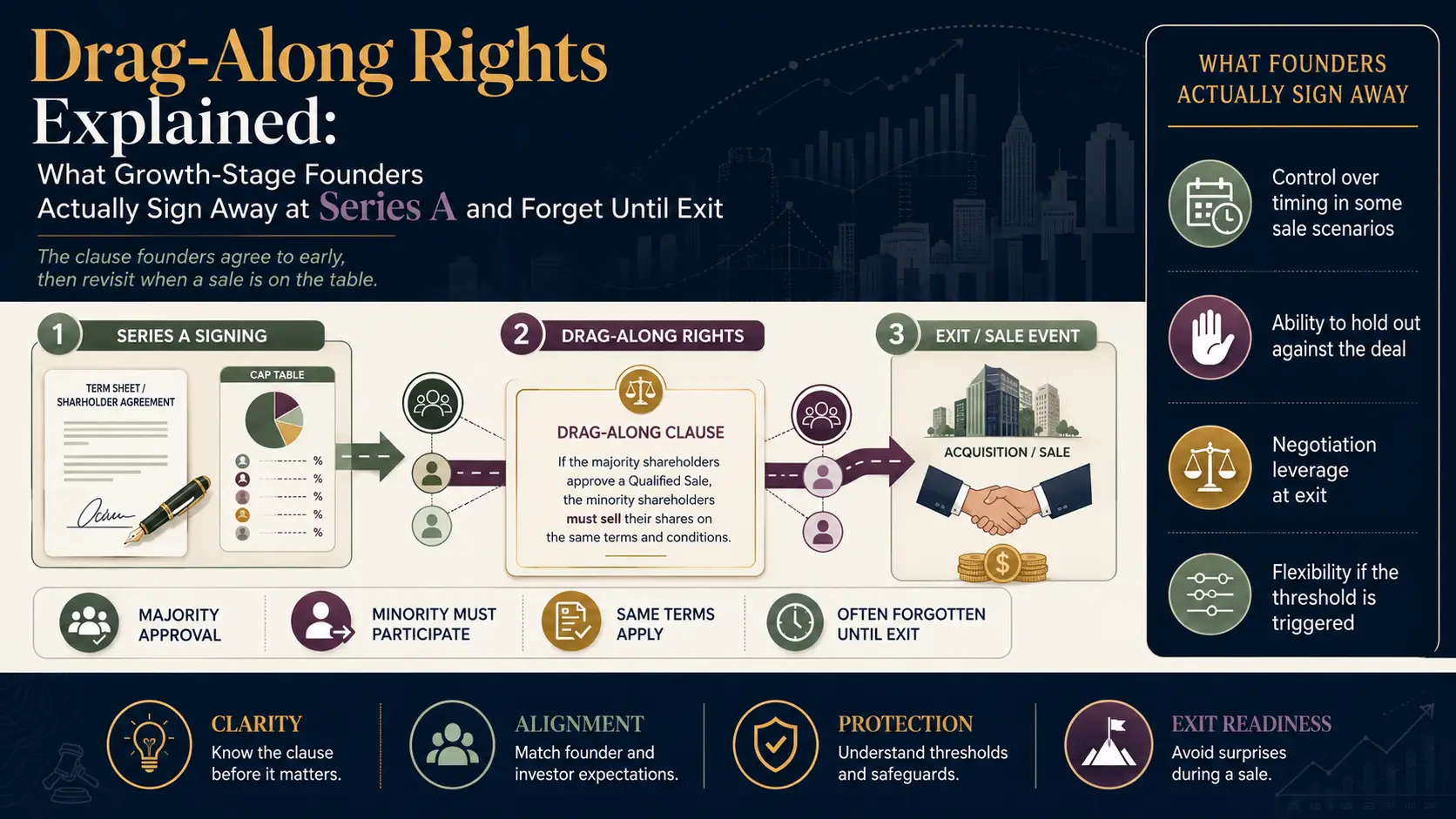
Drag-Along Rights Explained: What Growth-Stage Founders Actually Sign Away at Series A and Forget Until Exit

How Do You Find Advisors Who Specialize in First-Time Real Estate Fund Formation?

What Blue Sky Laws Apply to a Real Estate Fund Raising Capital From Pension Funds Across Multiple States?
Disclosure
Nothing on this site constitutes an offer to sell, or a solicitation of an offer to purchase, any security under the Securities Act of 1933, as amended, or any applicable state securities laws. Any offering of securities is made only by means of a formal private placement memorandum or other authorized offering documents delivered to qualified investors.
IRC Partners is a capital advisory firm. IRC Partners is not a registered investment adviser under the Investment Advisers Act of 1940 and does not provide investment advice as defined thereunder.
Certain statements in this article may constitute forward-looking statements, including statements regarding market conditions, capital availability, investor demand, and transaction outcomes. Such statements reflect current assumptions and expectations only. Actual results may differ materially due to market conditions, regulatory developments, company-specific factors, and other variables. IRC Partners makes no representation that any outcome, return, or result described herein will be achieved.
References to prior mandates, transaction volume, network credentials, or capital raised are provided for illustrative purposes only and do not constitute a guarantee or prediction of future results. Past performance is not indicative of future outcomes. Individual results will vary. Network credentials and transaction statistics referenced on this site reflect the aggregate experience of IRC Partners' principals and affiliated advisors and are not a representation of assets managed or transactions closed solely by IRC Partners.
Certain data, statistics, and information presented in this article have been obtained from third-party sources. IRC Partners has not independently verified such information and expressly disclaims responsibility for its accuracy, completeness, or timeliness. Readers should independently verify any third-party data before relying on it.
Readers are strongly encouraged to consult qualified legal, financial, and tax professionals before making any investment, capital raising, or business decision.
Schedule A Meeting
You get one shot to raise the right way. If this raise is worth doing, it’s worth doing with precision, leverage, and control.
This isn’t a practice run. Serious capital. Serious strategy. Let’s raise it right.
We onboard a maximum of seven
new strategic partners each quarter, by application only, to maximize your chances of securing the capital you need.
