.svg "CTA Arrow")


.png "Investor Ready Capital decorative background element")

What Happens to Non-Participating Preferred Stockholders in a Pay-to-Play Bridge Round?
What Happens to Non-Participating Preferred Stockholders in a Pay-to-Play Bridge Round?
A preferred stockholder who declines to participate in a pay-to-play bridge round will typically have their preferred shares automatically converted to common stock. That conversion removes the liquidation preference, eliminates anti-dilution protection, and strips any voting or blocking rights tied to the preferred series. The change is a legal event built into the company's charter or financing documents, triggered the moment participation falls below the required threshold. Understanding which rights are lost, and in what sequence, is the work founders need to do before the round closes.
This article is the companion piece to how to structure a pay-to-play bridge financing when some preferred investors decline to participate. That article covers the structural variants and document sequence. This one focuses on the rights-by-right consequences for the investor who sits out.
For founders already managing a fragmented preferred stack, the same governance risks that complicate a bridge can also surface during your next institutional raise. The cap table issues that kill a Series B before the lead investor reads your deck often trace back to exactly this kind of unresolved preferred structure.
What Pay-to-Play Means for Preferred Stockholders
A pay-to-play provision is a clause in the company's charter or financing documents that requires existing preferred stockholders to invest their required share of a new financing round. The consequence for declining is structural, not discretionary.
The trigger mechanics work like this:
- The company defines a participation threshold, usually full pro rata based on each investor's current preferred ownership.
- Each preferred stockholder receives written notice of the bridge terms, the required investment amount, and the deadline.
- Investors who meet the threshold keep their preferred status. Investors who fall short, or decline entirely, have their shares converted under the terms of the provision.
The key point: the conversion is typically automatic once the deadline passes. The company does not need to negotiate it. The charter does the work.
Where the Provision Lives
Pay-to-play provisions appear in two places. The first is the certificate of incorporation, which is the most common location for the conversion mechanics. The second is the investors' rights agreement or a standalone bridge financing document, which may set the participation threshold and the deadline even if the conversion mechanics live in the charter.
If the charter does not already contain a pay-to-play provision, the company must amend it before the bridge closes. Under Delaware law, an amendment that alters the rights of a preferred class generally requires approval from the holders of that class voting separately. This means the company needs buy-in from preferred investors before it can impose the conversion penalty on any of them. Founders who discover this requirement mid-process face a harder negotiation than those who map it out in advance.
What Counts as Participation
The participation threshold is defined in the financing documents. The most common standard is full pro rata: each investor must invest an amount proportional to their current preferred ownership. Some structures use a partial threshold, where investors who contribute a minimum percentage of their pro rata amount preserve a corresponding portion of their preferred shares. The threshold definition has direct consequences for which investors are affected and by how much.
Which Preferred Rights Are Affected and How
Non-participation does not end the investor's ownership. It changes the legal and economic quality of that ownership. The table below maps each major preferred right to what happens when the shares convert.
Anti-Dilution: The Quiet Economic Loss
Anti-dilution protection is the right that founders most often underestimate when explaining non-participation consequences to investors. A weighted-average anti-dilution clause adjusts an investor's conversion price when the company issues new shares at a price below the investor's original purchase price. That adjustment protects the investor from dilution in a down round.
Once converted to common, the investor has no conversion price to adjust. They hold common stock. Any future down round dilutes them on exactly the same basis as founders and employees. For investors who entered at a high valuation in a prior round, this is a meaningful long-term economic change.
Pro Rata Rights: The Access Question
Pro rata rights allow an investor to participate in future rounds at their current ownership percentage. These rights are typically granted in the investors' rights agreement and tied to holding a minimum number of shares of a specific preferred series.
When that series converts to common, the investor may lose their pro rata rights entirely, depending on how the investors' rights agreement is drafted. Some agreements grant pro rata rights to named holders regardless of share class. Others tie them to preferred status. Founders should review the exact language before the bridge closes, because losing pro rata rights affects how participating investors view the fairness of the structure.
Information Rights: The One That Survives Most Often
Information rights are the most likely to survive conversion, because they are frequently granted to named investors in the investors' rights agreement rather than attached to the preferred series. If the agreement says "Investor X shall receive quarterly financials," that obligation may continue even after Investor X's preferred shares convert to common.
The practical implication: a non-participating investor may retain the right to receive financial information even after losing economic and governance protections. Founders should confirm whether this is the case before assuming all rights terminate together.
Protective Provisions and Board Rights: The Governance Shift
Protective provisions are veto rights over specific company actions. They require preferred class approval before the company can issue new stock above a certain amount, take on significant debt, sell the company, or make other major decisions. As the consent rights governance analysis explains, these provisions are tied to the preferred class, not to individual investors.
When a preferred series converts to common, the class vote disappears. If enough investors convert out of a series, the remaining holders may no longer constitute a majority of that series and may lose their ability to exercise class-level protective provisions on their own.
Board seat rights follow similar logic. Most charter provisions granting a preferred series the right to elect a director require that the investor hold a minimum number of shares of that series. Once converted, that threshold is no longer met and the board seat right expires.
How Conversion from Preferred to Common Works in Practice
The mechanics of conversion depend on which structural variant the company uses. There are three common approaches, and each produces a different experience for the non-participating investor.
Punitive Conversion
The most common form. Non-participating preferred shares are automatically converted to common stock, usually on a 1-for-1 basis. The investor keeps the same number of shares but they are now common shares with no preferred protections. Some distressed structures use a punitive ratio, where 10 preferred shares convert into a single common share, though this is rare outside of severe down-round situations.
{{main-cta}}
Pull-Through Structure
All preferred shares, from every holder, are first converted to common stock. Then, investors who participate in the bridge at the required level are contractually permitted to exchange their common shares back into a new preferred series with equivalent rights. Non-participants stay as common stockholders. The economic outcome for non-participants is the same as punitive conversion, but the framing is different: participants are being offered a path back to preferred status rather than being penalized for declining.
Shadow Preferred
Some structures convert non-participating investors into a new, junior preferred series rather than common stock. This series, sometimes called shadow preferred, carries reduced or eliminated economic protections but preserves some nominal preferred designation. The practical effect is similar to common conversion: the investor loses liquidation preference priority, anti-dilution protection, and class voting rights relative to the new participating series.
What Conversion Does to the Cap Table
After conversion, the cap table shows two distinct investor groups. Participating investors hold their original preferred series plus any new bridge instruments. Non-participating investors hold common stock. When the next institutional lead reviews the cap table, they will see this split and ask about it.
A clean conversion process is a positive signal. It tells the incoming lead that the company enforces structural terms, that the cap table reflects active investors, and that the governance stack is not burdened by legacy holders who have effectively checked out. A messy or disputed conversion tells the opposite story. The cap table documentation standards that institutional leads expect apply directly to how a post-bridge cap table should be organized before the next round opens.
What This Looks Like in Practice
Consider a company with three preferred investors from a prior round. The company structures a bridge with a pay-to-play provision. Two investors participate at full pro rata. One investor declines.
Under the terms of the bridge, the declining investor's preferred shares automatically convert to common stock at closing. They lose their liquidation preference. Their anti-dilution protection is gone. Their protective provisions, which previously required their class approval before the company could issue new preferred stock above a certain threshold, no longer apply because they no longer hold preferred shares.
The investor still owns the same number of shares. Those shares still represent an ownership interest in the company. But the economic and governance quality of that interest has changed materially.
Six months later, when the company approaches a Series A lead, the cap table shows two preferred investors and one common stockholder who was previously preferred. The lead's counsel asks about the conversion. The company explains the bridge structure and the pay-to-play mechanics. The lead sees a clean process, enforced terms, and a cap table that distinguishes active investors from passive ones.
The outcome for the company is a cleaner governance stack going into the institutional raise. The outcome for the non-participating investor is a permanent change in their economic position. Both outcomes were determined at the moment the bridge closed, not afterward.
What Founders Should Do Before the Round Closes
The rights-by-right mapping above is the foundation. But understanding the consequences is only useful if it happens before the bridge closes, not after.
Here is the sequence that matters:
- Pull the governing documents. Review the certificate of incorporation, the investors' rights agreement, the voting agreement, and any side letters. Confirm whether a pay-to-play provision already exists or whether an amendment is required.
- Map each investor's rights individually. Anti-dilution, pro rata, information rights, board seats, and protective provisions may be governed by different documents with different holder definitions. Do not assume all rights terminate together.
- Model the post-conversion cap table. Before circulating bridge documents, build a model that shows what the cap table looks like if specific investors decline. Know the answer before anyone asks.
- Communicate the consequences clearly. Send written notice to all preferred investors that explains the participation requirement, the threshold, the deadline, and the specific rights that will be affected by non-participation. Investors who later claim they did not understand the consequences create legal risk for the company.
- Confirm the amendment process if needed. If the charter does not already contain the pay-to-play mechanics, work with counsel to determine whether a class vote is required and which investors must approve the amendment.
Founders raising between $5M and $250M in institutional capital often find that bridge structure and governance risk are the issues that require the most preparation before the next institutional round opens. IRC Partners works with founders to review financing structure and identify governance risks before they become diligence problems. If your bridge is closing or your next round is approaching, that review should happen now.
Frequently Asked Questions
Does a preferred investor lose all their rights the moment they decline to participate?
Rights are lost at closing, not at the moment of refusal. The conversion takes effect when the bridge round closes and the pay-to-play mechanics are triggered under the charter or financing documents. An investor who declines but then changes their mind before closing may still be able to participate, depending on the terms of the notice period and whether the round is still open. After closing, the conversion is final.
Can a pay-to-play provision be added to an existing charter without preferred investor approval?
Adding a pay-to-play provision to a Delaware certificate of incorporation requires amending the charter. Under Delaware General Corporation Law Section 242, an amendment that adversely affects the rights of a preferred class generally requires a separate class vote by the holders of that class. This means the company cannot impose a pay-to-play conversion penalty on investors without first obtaining their approval to add the provision.
What happens to an investor's board seat if they do not participate?
Board seat rights are typically tied to holding a minimum number of shares of a specific preferred series. If the charter or voting agreement requires an investor to hold at least a defined number of Series A preferred shares to retain the right to elect a director, and those shares convert to common, the board seat right expires. The investor or their designee can be removed from the board through the standard process for directors elected by a class that no longer holds that class.
Does non-participation affect the investor's right to receive financial reports?
Information rights depend on how they are granted. Rights tied to preferred share status expire when the shares convert. Rights granted to named investors in the investors' rights agreement, regardless of share class, may survive. Founders should read the specific language in their investors' rights agreement rather than assuming all information rights terminate together. Some agreements include a minimum ownership threshold for information rights that applies to all share classes.
Can a non-participating investor challenge the conversion as unfair?
Delaware courts have examined fairness in cram-down and pay-to-play financing structures. The key factors courts look at include whether all existing preferred holders were given equal notice and an equal opportunity to participate, whether the terms were set at arm's length, and whether the board followed its fiduciary duties in approving the structure. Equal access to the round does not automatically insulate the company from challenge, but it is the strongest procedural protection available. Founders should work with counsel to document the process before closing.
What is a shadow preferred series and how does it differ from common conversion?
Shadow preferred is a junior preferred series that non-participating investors are converted into rather than common stock. It preserves some nominal preferred designation but typically carries no liquidation preference priority over common, no anti-dilution protection, and no class voting rights relative to the participating series. The practical economic outcome for the investor is similar to common conversion. The structural difference is that shadow preferred may be easier to explain to the investor and may preserve certain contractual rights that are tied to preferred status rather than to a specific series.
How does a non-participating investor's position affect the next institutional round?
Institutional leads and their counsel will review the cap table and ask about any common stockholders who were previously preferred. A clean, documented conversion process is a positive signal. It shows that the company enforces structural terms and that the cap table reflects active investors. A conversion that was disputed, undocumented, or not reflected in the legal records creates a diligence problem. The drag-along provisions and governance structure review that advisors conduct before a new round specifically looks for these kinds of post-bridge structural gaps.
Continue reading this series:
- How to structure a pay-to-play bridge financing when some preferred investors decline to participate
- How investor consent rights turn your cap table into a governance hostage situation before Series B
- Cap table litigation and ownership disputes at Series B
IRC Partners advises operators raising $5M to $250M of institutional capital on structure, positioning, and round architecture. We take seven strategic partners per quarter. No placement agent model. No success-only theater. Capital is raised on the strength of how the deal is built. If you want your current raise reviewed before it reaches the market and silently fails, apply here.
Need guidance on your capital raise?



Co-Sale Rights and Tag-Along Provisions: The Cap Table Clauses That Force Institutional Investors to Share Their Deal With Your Seed Angels
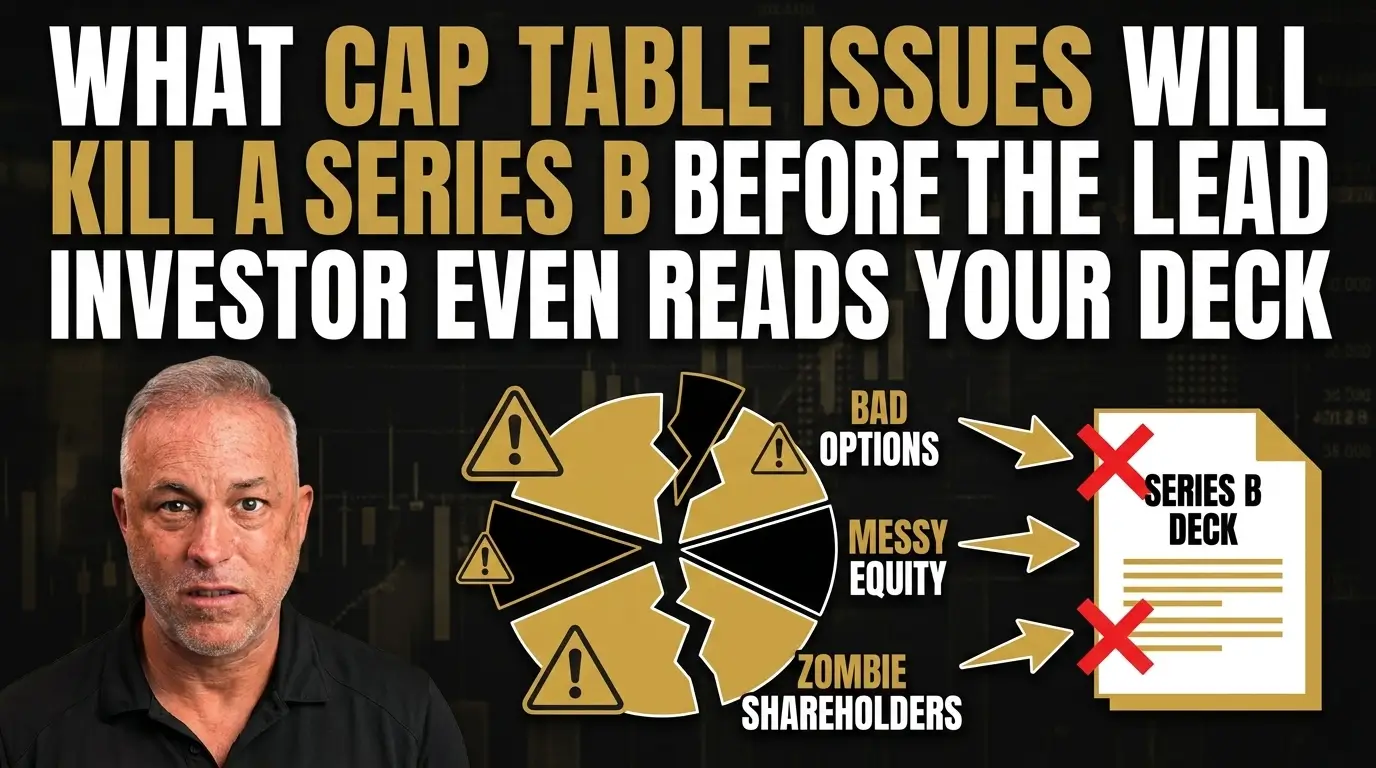
What Cap Table Issues Will Kill a Series B Before the Lead Investor Even Reads Your Deck

Engagement Model for Real Estate Capital Raising
Disclosure
Nothing on this site constitutes an offer to sell, or a solicitation of an offer to purchase, any security under the Securities Act of 1933, as amended, or any applicable state securities laws. Any offering of securities is made only by means of a formal private placement memorandum or other authorized offering documents delivered to qualified investors.
IRC Partners is a capital advisory firm. IRC Partners is not a registered investment adviser under the Investment Advisers Act of 1940 and does not provide investment advice as defined thereunder.
Certain statements in this article may constitute forward-looking statements, including statements regarding market conditions, capital availability, investor demand, and transaction outcomes. Such statements reflect current assumptions and expectations only. Actual results may differ materially due to market conditions, regulatory developments, company-specific factors, and other variables. IRC Partners makes no representation that any outcome, return, or result described herein will be achieved.
References to prior mandates, transaction volume, network credentials, or capital raised are provided for illustrative purposes only and do not constitute a guarantee or prediction of future results. Past performance is not indicative of future outcomes. Individual results will vary. Network credentials and transaction statistics referenced on this site reflect the aggregate experience of IRC Partners' principals and affiliated advisors and are not a representation of assets managed or transactions closed solely by IRC Partners.
Certain data, statistics, and information presented in this article have been obtained from third-party sources. IRC Partners has not independently verified such information and expressly disclaims responsibility for its accuracy, completeness, or timeliness. Readers should independently verify any third-party data before relying on it.
Readers are strongly encouraged to consult qualified legal, financial, and tax professionals before making any investment, capital raising, or business decision.
Schedule A Meeting
You get one shot to raise the right way. If this raise is worth doing, it’s worth doing with precision, leverage, and control.
This isn’t a practice run. Serious capital. Serious strategy. Let’s raise it right.
We onboard a maximum of seven
new strategic partners each quarter, by application only, to maximize your chances of securing the capital you need.
