.svg "CTA Arrow")


.png "Investor Ready Capital decorative background element")

How Do You Find Advisors Who Specialize in First-Time Real Estate Fund Formation?
To find advisors who specialize in first-time real estate fund formation, skip open web search and attorney referrals. The most qualified advisors are found through institutional LP introductions, fund administrators, alternatives-focused auditors, and GPs who have already cleared institutional diligence. These channels surface advisors who have operated under LP scrutiny, not just ones who market well.
Most developers search the wrong way. They Google "real estate fund advisor," ask their attorney for a referral, or hire whoever shows up at a conference. That process surfaces familiar names, not qualified ones.
The advisor you attach to your first fund is not a back-office decision. Institutional LPs evaluate the full ecosystem around a manager, including the team, the service providers, and the professionals guiding the raise. A weak advisory relationship signals disorganization before the first meeting even happens. A strong one signals that the manager understands what institutional capital actually requires.
If you are working through how to get your first institutional LP anchor commitment, the advisor you choose will shape every part of that process, from how you position the fund to how you survive a 250-question due diligence questionnaire.
Before you start your search, three things are true:
- The right advisor is not primarily a referral source. They are a credibility filter for the raise itself.
- Most of the wrong advisors look credible on the surface. The difference shows up in the questions they ask, the references they can provide, and the standards they actually understand.
- The search process matters as much as the selection. Where you find candidates tells you a lot about whether they operate inside institutional channels or outside them.
Why Most Advisor Searches Fail Before They Start
The typical search process for a fund formation advisor produces the wrong candidates because it is built around visibility, not institutional fit. Here is what most developers do and what they usually get.
The deeper problem is a category confusion. Many developers are searching for one thing while actually needing three different things: legal counsel to document the structure, a placement agent to make LP introductions, and a strategic advisor to design and position the platform.
These are not the same role. Conflating them leads to hiring one person who does none of the three well. It also leads to paying placement-agent fees for work that is actually advisory, or expecting attorneys to own the fundraising narrative.
The search process should be built around who has operated inside institutional diligence channels, not who has the most polished website or the warmest introduction.
What a First-Time Real Estate Fund Formation Advisor Actually Does
A qualified fund formation advisor does not just open doors. They help build the platform that makes doors worth opening.
The scope of a real advisor engagement covers fund positioning, economics design, investor narrative, diligence readiness, and service-provider coordination. That is a fundamentally different mandate from what attorneys, placement agents, and general consultants are built to do.
The ILPA DDQ 2.0 covers fifteen major topic areas, from investment strategy and team governance to operational infrastructure, reporting standards, and compliance. A strategic advisor should be able to map your fund to every one of those categories before an LP ever asks.
The PREA Investor Toolkit, which guides institutional real estate LP due diligence, adds further requirements around GP commitment levels, reference quality, reporting processes, and alignment of interests. These are not legal questions. They are positioning and operational questions, and they are exactly what a strategic advisor should be solving.
A placement agent who promises introductions without addressing any of this is not a fund formation advisor. They are a distribution channel. That distinction matters enormously for a first-time manager.
Where Qualified Advisors Actually Come From
The best fund formation advisors are rarely found through open web search. They are visible inside institutional diligence ecosystems because that is where they do their work.
Here are the sourcing channels that produce better candidates.
- Institutional LP introductions. If you have a relationship with a family office, pension consultant, or fund-of-funds that has allocated to first-time managers, ask who they have seen advise a raise well. LPs observe advisory quality directly during diligence.
- Fund administrators. Third-party administrators work with dozens of emerging managers and see which advisors prepare their clients for LP scrutiny versus which ones create problems. They are a credible, low-conflict referral source.
- Real estate fund counsel with strong emerging-manager practices. Attorneys who specialize in fund formation, not just deal documentation, often have direct visibility into which advisors their clients are working with and how those engagements play out.
- Big Four or alternatives-specialized auditors. Auditors who serve real estate funds see the operational and reporting quality of managers across their book. They know which advisors help managers build institutional-grade infrastructure.
- GPs who have already closed an institutional round. A developer who cleared LP diligence on a first fund can tell you which advisors actually helped and which ones were not equipped for the process.
The rule of thumb: a credible referral source is one that has seen the advisor work under LP pressure, not one that simply knows them professionally.
The 6 Criteria That Actually Matter When You Evaluate Candidates
Once you have candidates, the evaluation should be structured. Institutional LPs use standardized frameworks to assess managers. You should use a similar approach to assess advisors.
According to industry synthesis, an estimated 87% of private equity and real estate funds now receive due diligence questionnaires aligned to the ILPA DDQ framework. The advisors you hire should understand this landscape in detail, not just in general terms.
Use these six criteria as your screening framework.
1. Proven experience with first-time institutional real estate raises
Ask directly: how many Fund I or Fund II institutional real estate managers have you advised? What was the target size? Did they close? Who were the LPs? A credible advisor will answer these questions without hesitation.
Screening question: Can you name three first-time real estate fund managers you have advised through an institutional raise, and provide references from each?
2. Ability to map your fund to LP diligence standards
A qualified advisor should be able to walk you through the ILPA DDQ categories, explain what ILPA's 2026 reporting template requires, and identify where your current infrastructure falls short. If they cannot do this, they are not prepared for institutional LP scrutiny.
Screening question: Walk me through how you would prepare a first-time manager for a full ILPA-aligned DDQ response.
3. Documented scope of work
The engagement should cover strategy, materials, economics, process design, and LP preparation. If the scope is vague, the value will be vague. Ask for a written scope before any conversation about fees.
Screening question: What does your engagement cover from day one through first close?
4. Reference quality
References should include current or former LPs, fund administrators, and legal counsel who have worked alongside the advisor. Testimonials from other developers are useful but not sufficient.
Screening question: Can you provide references from an LP who allocated to a manager you advised, and from the fund administrator on that engagement?
5. Alignment model
Compensation structure tells you what behavior the advisor is optimizing for. A success-fee-only model rewards closing introductions. An equity-aligned or long-term retainer model rewards building a durable platform. Understanding how institutional LPs evaluate key-person risk and team continuity is part of this conversation.
Screening question: How is your compensation structured, and what does that structure reward?
6. Communication discipline
The advisor should challenge your assumptions, simplify complex decisions, and keep the process moving. If early conversations are vague, evasive, or heavily focused on their own credentials rather than your situation, that pattern will continue.
Screening question: What is the biggest mistake you have seen a first-time manager make in the first 90 days of a raise, and how did you address it?
Red Flags That Should Disqualify an Advisor Fast
Some advisors look qualified until you ask the right questions. These patterns should end the conversation.
- They lead with investor introductions. If the first thing they offer is a list of LPs they know, before asking about your strategy, structure, or readiness, they are a contact database, not an advisor.
- They cannot explain LP diligence beyond track record and returns. Institutional LPs evaluate operations, governance, reporting, fund economics, and team continuity. An advisor who reduces diligence to "they want to see your IRRs" has not worked at this level.
- They blur roles without clear boundaries. If they describe themselves as part attorney, part placement agent, part advisor, and part consultant, ask for specific examples of each. Generalists who claim all roles usually master none of them.
- They avoid references, documented scope, or precise fee language. Vague engagement terms protect the advisor, not the manager. Any hesitation around written scope or verifiable references is a hard stop.
- They promise speed or access without discussing operational setup. First-time managers are evaluated on infrastructure quality, not just deal quality. An advisor who focuses entirely on meeting access while ignoring reporting, fund administration, or DDQ readiness is setting you up for an LP rejection that has nothing to do with your assets.
Weak advisor selection also compounds how institutional LPs evaluate key-person risk in a first-time fund. A manager who cannot explain why they chose their advisor signals poor judgment about the team they are building around themselves.
{{main-cta}}
What You Should Expect to Pay, and How Alignment Changes the Outcome
Fee structure is not just a cost question. It is an alignment question. The model you agree to shapes what your advisor prioritizes throughout the engagement.
For a first-time manager raising a $75 million fund, a placement agent charging 2% on the full raise generates $1.5 million in fees. That can exceed year-one management fee revenue before accounting for fund expenses and GP commitment. The economics deserve serious scrutiny.
Two terms in any placement or advisory agreement require particular attention.
Tail provisions. Standard tails run 12 to 24 months and entitle the advisor to fees on LP commitments from investors they introduced, even after the engagement ends. Broad tail definitions can capture LPs the manager would have reached independently.
Fee calculation basis. Whether fees apply to total commitments or only advisor-sourced commitments is a meaningful economic distinction. Define it precisely in writing before signing anything.
The right fee structure rewards the behavior you need. For a first-time manager, that means diligence readiness and platform design, not just introductions.
A Simple Decision Framework for Choosing Between Advisor Types
Most first-time managers do not need one advisor. They need a sequence of providers, each with a clear mandate.
Start here:
- Primary gap is legal documentation → Hire specialized fund formation counsel. Not a generalist transactional attorney.
- Primary gap is LP access, and the fund is already institutionally ready → A placement agent may fit. Read whether you actually need a placement agent to raise a $100M real estate fund before signing anything.
- Primary gap is full institutional positioning, fund design, and diligence readiness → A strategic advisor is the right starting point. Counsel, administration, and targeted capital outreach come after the platform is built.
- Unsure which gap is primary → That uncertainty is itself the answer. A strategic advisor's first job is to diagnose the gaps, sequence the providers, and build the roadmap. Start there.
The sequence matters. Hiring a placement agent before your fund is institutionally ready wastes their relationships and your credibility.
Choose the Advisor Who Makes the Raise More Credible
The wrong advisor makes the process noisier, slower, and more expensive. The right advisor makes you more credible before you ever sit across from an institutional LP.
Evaluate advisors the way LPs evaluate managers: through alignment, operating discipline, and proof. Ask for references. Demand documented scope. Understand what the fee structure rewards.
IRC Partners works with seasoned real estate developers raising their first institutional fund, helping them design the capital stack, position the platform, and prepare for the level of diligence institutional LPs actually run. If you are building toward a Fund I or Fund II raise, apply to work with IRC Partners and find out whether you are ready to start.
Frequently Asked Questions
What does a first-time real estate fund formation advisor actually do?
A fund formation advisor is a strategic partner who helps a manager design the fund platform, structure the economics such as profit splits and waterfalls and sharpen the investor narrative. While legal counsel handles the paperwork and placement agents handle the outreach, the advisor ensures the platform is diligence-ready for institutional eyes. They essentially act as the architect for the fund before the builders or sales team arrive.
How much does a real estate fund formation advisor cost?
Pricing models vary. Some advisors charge upfront retainers ranging from 25,000 dollars to 100,000 dollars, while others use equity-aligned models involving 1 percent to 5 percent of advisory equity or carry. Success fees typically range from 1.5 percent to 2.5 percent of capital raised. The structure is key; equity alignment ensures the advisor is focused on long-term outcomes rather than just a quick closing.
How do I know if an advisor has real institutional experience?
Do not just look at names; ask for triangulated references. A credible advisor should be able to provide contacts from a partner who allocated to a previous manager they advised, the fund administrator who oversaw the reporting, and the legal counsel who drafted the documents. This verifies they actually understand the plumbing of a real estate fund and how institutional capital flows through it.
Do I need a placement agent if I already have an advisor?
Not always. A placement agent is a distribution channel. If your fund is structurally ready but you lack investor relationships, an agent helps. However, introducing an underprepared manager to partners can permanently burn bridges. Sequence is critical. You should build the institutional platform with an advisor before hitting the market with a placement agent.
What do institutional partners think when they see an advisor?
Allocators view your choice of advisor as a reflection of your professional judgment. A known, credible advisor signals that you take governance and reporting seriously. Conversely, an advisor with no real estate experience can signal that the manager has not properly vetted the infrastructure required to manage institutional capital, which can be a significant red flag during the initial review.
What is the biggest mistake managers make when hiring an advisor?
The biggest mistake is hiring for access instead of fit. Many managers chase an advisor's Rolodex without verifying if the advisor can help them pass the rigorous diligence that follows an introduction. Warm leads are useless if your attribution data, key-person risk, or operational controls do not meet institutional standards once the deep dive begins.
Are there industry standards that govern advisory engagements?
While there is no single license, advisors should align with Institutional Limited Partners Association frameworks and PREA Investor Toolkits. Furthermore, under the SEC’s Marketing Rule, placement agents for registered advisors have strict disclosure and oversight obligations. Any credible advisor must be prepared to navigate these regulatory requirements to protect the developer.
Continue reading this series:
- How do emerging real estate fund managers get their first institutional LP anchor commitment?
- Do you need a placement agent to raise a $100M real estate fund?
- How do institutional LPs evaluate key-person risk of a first-time real estate fund manager?
Most founders don't lose the raise because of the pitch. They lose it because the structure was wrong before the first investor call. IRC Partners advises founders raising $5M to $250M of institutional capital. 7 strategic partners per quarter. Start here to schedule a call with our team.
Need guidance on your capital raise?


Why Your Drag-Along Threshold From Your Seed Round No Longer Protects You at Series A
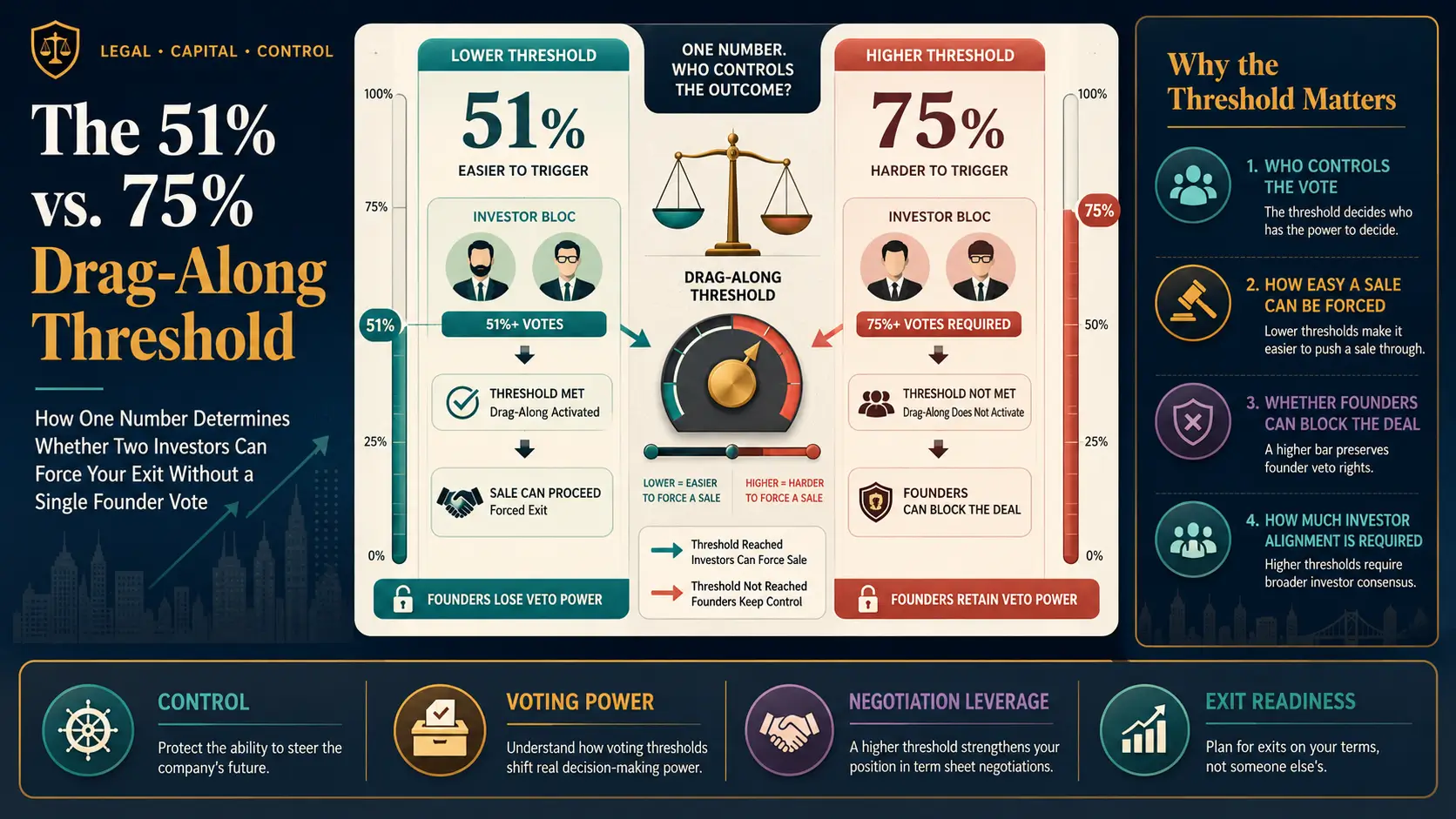
The 51% vs. 75% Drag-Along Threshold: How One Number Determines Whether Two Investors Can Force Your Exit Without a Single Founder Vote

Shortlist of Investor Relations Management Advisors
Disclosure
Nothing on this site constitutes an offer to sell, or a solicitation of an offer to purchase, any security under the Securities Act of 1933, as amended, or any applicable state securities laws. Any offering of securities is made only by means of a formal private placement memorandum or other authorized offering documents delivered to qualified investors.
IRC Partners is a capital advisory firm. IRC Partners is not a registered investment adviser under the Investment Advisers Act of 1940 and does not provide investment advice as defined thereunder.
Certain statements in this article may constitute forward-looking statements, including statements regarding market conditions, capital availability, investor demand, and transaction outcomes. Such statements reflect current assumptions and expectations only. Actual results may differ materially due to market conditions, regulatory developments, company-specific factors, and other variables. IRC Partners makes no representation that any outcome, return, or result described herein will be achieved.
References to prior mandates, transaction volume, network credentials, or capital raised are provided for illustrative purposes only and do not constitute a guarantee or prediction of future results. Past performance is not indicative of future outcomes. Individual results will vary. Network credentials and transaction statistics referenced on this site reflect the aggregate experience of IRC Partners' principals and affiliated advisors and are not a representation of assets managed or transactions closed solely by IRC Partners.
Certain data, statistics, and information presented in this article have been obtained from third-party sources. IRC Partners has not independently verified such information and expressly disclaims responsibility for its accuracy, completeness, or timeliness. Readers should independently verify any third-party data before relying on it.
Readers are strongly encouraged to consult qualified legal, financial, and tax professionals before making any investment, capital raising, or business decision.
Schedule A Meeting
You get one shot to raise the right way. If this raise is worth doing, it’s worth doing with precision, leverage, and control.
This isn’t a practice run. Serious capital. Serious strategy. Let’s raise it right.
We onboard a maximum of seven
new strategic partners each quarter, by application only, to maximize your chances of securing the capital you need.
