.svg "CTA Arrow")


.png "Investor Ready Capital decorative background element")

How Can a Startup Obtain Consent From Dispersed Convertible Noteholders Without Delaying a Financing?
How Can a Startup Obtain Consent From Dispersed Convertible Noteholders Without Delaying a Financing?
TL;DR: Dispersed noteholders slow closings. Map consent thresholds, verify signature authority, and run simultaneous outreach before diligence opens.
- Why Dispersed Noteholder Consent Becomes a Closing Risk: A single note with one institutional holder is easy to manage.
- What to Confirm Before Contacting Holders: The document review comes before the first outreach call.
- How Consent Thresholds Work in Typical Note Documents: Most convertible notes allow amendments and waivers with the written consent of a majority of holders, measured by outstanding principal amount .
Collecting consent from dispersed convertible noteholders delays a financing when the threshold is unclear, outreach is inconsistent, or documents are incomplete. The fix is preparation before the first holder contact: confirm the consent threshold in the actual note agreements, identify which holders are essential to meet it, verify current signature authority for each, and send simultaneous written requests with a defined deadline. A consent process run as a coordinated sequence closes faster and leaves a clean record for diligence.
When a financing or acquisition requires noteholder consent, the process risk is real. Founders with dispersed note stacks face slow response times, unclear amendment thresholds, missing documents, and inconsistent outreach that can delay closing. The fix is preparation before the first holder contact. Map every holder, confirm the consent threshold in the actual note documents, build a clean contact list with verified signature authority, sequence outreach consistently, and collect approvals in a documented, trackable format. Consent collection managed as a process closes faster and creates fewer diligence problems downstream.
The core risk: A single unresponsive or holdout noteholder can stall a financing when the consent threshold is unclear or the outreach process is inconsistent.
Noteholder consent is a closing risk. When notes were issued across multiple seed tranches, different instruments, and different investors, the consent mechanics are rarely uniform. Cap table issues that surface late in a financing are almost always traceable to document gaps that existed before outreach began. Reviewing those gaps early, before any holder contact, is the difference between a clean close and a delayed one.
Why Dispersed Noteholder Consent Becomes a Closing Risk
A single note with one institutional holder is easy to manage. A stack of notes issued in small tranches to angel investors, friends-and-family participants, and early funds is a coordination problem.
Each holder may have different contact information, different legal representatives, and different levels of responsiveness. Some may have transferred their notes. Others may have changed entities. A few may simply be unreachable.
The closing risk compounds when:
- The consent threshold is ambiguous or buried in a side letter
- Prior amendments were not formally documented
- The company cannot confirm who holds what principal amount today
- Outreach to one holder signals urgency to others before the company is ready
For a wider diligence lens on what buyers and lenders request, see M&A Due Diligence Checklist: 47 Documents Buyers Request.
Holdout risk is real. When a minority holder learns that the company needs consent to close a financing, that holder gains leverage. Inconsistent outreach, where some holders are contacted before others, can accelerate that dynamic. A holder who feels left out of the process may slow-walk their response or condition consent on better terms.
Diligence creates a second layer of risk. Incoming investors and acquirer counsel will request every note, purchase agreement, side letter, and amendment. If the consent record is incomplete, the company faces cleanup pressure at the worst possible moment, during active negotiations with a new capital source.
What to Confirm Before Contacting Holders
The document review comes before the first outreach call. Skipping this step is the most common source of consent delay.
Pull Every Relevant Document
Collect the original note for each holder, the note purchase agreement, any side letters, and every amendment or waiver that was signed after issuance. Founders managing multi-state note stacks should also confirm that state-level filing and notice requirements are current before outreach begins, a step covered in detail in this convertible note closing checklist for multi-state financings. Side letters sometimes modify consent thresholds or add approval rights that are not visible in the note itself. Prior amendments can change the principal amount, maturity date, or conversion terms in ways that affect how consent is calculated.
If any of these documents are missing, locate them before contacting holders. A holder who is asked to consent to something the company cannot fully document is a holder with a reason to pause.
When unresolved note paper has been sitting around for too long, the cleanup problem often shows up later in diligence. Convertible Note Overhangs: Series B Capital Planning is the kind of issue buyers and investors notice fast.
Confirm the Current Holder of Record
Notes can be transferred. The entity that signed the original purchase agreement may have assigned its interest to a fund, a trust, or an individual. Check the transfer provisions in each note and confirm the current holder of record before building the contact list.
Verify Signature Authority
Confirm who is authorized to sign on behalf of each holder. An individual investor signs personally. A fund requires an authorized signatory, usually a managing partner or general partner. Sending a consent request to the wrong person restarts the clock.
Before any outreach begins, the company should have: a complete document set for each holder, a confirmed current holder list with principal amounts, and verified signature authority for each signatory.
How Consent Thresholds Work in Typical Note Documents
Most convertible notes allow amendments and waivers with the written consent of a majority of holders, measured by outstanding principal amount. This means the company does not need every holder to agree. It needs holders representing more than half of the total outstanding principal to sign.
That majority standard is the default. The actual threshold in any given note stack depends on the documents.
Majority vs. Unanimous Consent
Some provisions require unanimous consent. Changes to the principal amount, the interest rate, or the maturity date often fall into this category. If the financing requires any of those terms to change, the company needs every holder to sign, regardless of how much principal they hold.
The conversion mechanics in a qualified financing are typically majority-amendable. A side letter that granted a specific holder individual approval rights over conversion terms gives that holder the power to block the amendment even when the majority has already consented.
What Raises the Threshold
- Super-majority provisions (two-thirds or 75%) in the note or purchase agreement
- Individual consent rights granted in side letters
- Prior amendments that modified the threshold itself
- Notes issued under different purchase agreements with different amendment mechanics
Calculate the consent math before outreach. Add up the principal held by each holder. Identify which holders represent the majority. Know exactly how many signatures are required and which holders are essential before the first call is made.
How to Run the Outreach Process Without Creating Delay
Consent outreach fails when it is informal, inconsistent, or uncoordinated with board approvals and financing timing. A structured process prevents holdout risk and keeps the closing timeline intact.
Sequence the Outreach Correctly
Contact all holders at the same time, or in a tightly controlled sequence. Reaching some holders days before others gives early recipients time to compare notes, share information, and organize around leverage. Simultaneous outreach reduces that window.
Start with the holders who represent the largest principal amounts. Their signatures may satisfy the majority threshold before smaller holders respond. Knowing that the threshold is met reduces pressure on the remaining holders and removes their ability to extract concessions.
Coordinate with Board Approvals
Board approval of the financing and the related note amendment should be in place before holder outreach begins. If the board has not yet approved the transaction, a holder who asks about board status may use the gap as a reason to delay their own response. Sequence the board written consent or meeting approval first.
Use Consistent Written Communications
Send the same written summary to every holder at the same time. Include the proposed amendment or consent, the reason for the request, the signature deadline, and the contact for questions. Inconsistent messaging creates confusion and gives holders a basis to claim they did not have full information.
Track Status in Real Time
Maintain a live consent tracker with each holder's name, principal amount, contact, signature authority, outreach date, and current status. Update it daily. Know at every point which signatures are in, which are pending, and whether the threshold is met.
What Documents and Approvals Must Be Collected and Stored
Every consent collected must be documented in a form that survives diligence. Every consent must be in executed written form. Incoming investors and acquirer counsel will ask for executed written consents, and gaps in the record create cleanup work after the financing closes.
The Required Document Set
- Executed amendment or written consent signed by each required holder
- Board written consent or board meeting minutes approving the financing and the related amendment
- Updated cap table reflecting any changes to principal, conversion terms, or maturity
- Copies of all side letters reviewed during the process, with a note confirming no modifications were made
How Missing Signatures Surface in Diligence
If a consent was obtained informally, or if a holder signed a version of the amendment that differs from the final executed form, diligence will flag it. Counsel will compare signature pages against the final document. They will check that the signatories had authority to bind their entities. They will confirm that the consent threshold was actually met based on principal amounts at the time of signing.
Undocumented amendments are a separate problem. If the company previously extended a maturity date or changed a conversion cap through informal agreement, that change may be unenforceable. It will also raise questions about what other informal agreements exist. Founders managing a convertible note overhang into a new financing should treat document completeness as a closing condition that must be resolved before the financing closes.
What Happened When One Holder Went Silent
A growth-stage software company entered a bridge financing with notes held across several early investors. The company's counsel identified that the amendment threshold required majority consent by principal amount. The company had enough principal in the hands of responsive holders to clear that threshold.
One smaller holder went silent. The company had been managing outreach informally, with different team members contacting different holders at different times. By the time the silent holder was escalated, two other holders had already exchanged messages with each other about the terms.
The consent process stalled for several weeks. The delay pushed the closing past the lead investor's preferred timeline and required a brief extension of the bridge term sheet.
After the close, the company rebuilt its consent process from scratch. They standardized their holder contact list, confirmed signature authority for each entity, and created a written consent tracker before the next financing. The following round closed without a consent-related delay.
The lesson: consent collection managed as a coordination process, with a complete document set and simultaneous outreach, removes the conditions that allow a single unresponsive holder to control the timeline. For founders navigating consent rights that already exist in the cap table, the same preparation principle applies.
How IRC Partners Helps Founders Manage Capital Stack Complexity Before a Financing
Consent process failures are a symptom of a broader problem: a capital stack that was built incrementally without a coordinated structure. When notes were issued across multiple tranches, with different terms, different holders, and inconsistent documentation, the consent process reveals those gaps under time pressure.
IRC Partners works with founders and CFOs to identify structural issues in the capital stack before a financing or sale process begins. That includes reviewing note documents for consent mechanics, flagging amendment threshold gaps, and helping operators prepare the document set that diligence will require.
If your note stack has multiple holders and a financing is on the horizon, the time to review the documents is before outreach starts. Understanding when a company needs capital stack advisory is the first step toward closing on schedule.
Frequently Asked Questions
What is the standard consent threshold for amending a convertible note?
Most convertible notes allow amendments with written consent from holders representing a majority of the outstanding principal amount. That means the company needs signatures from holders who together hold more than half of the total principal, measured by principal amount, not by the number of holders. Some notes set a higher threshold of two-thirds or 75% for specific provisions. The actual threshold is in the note and the purchase agreement, and it may have been modified by a prior amendment.
Can a single small noteholder block a financing?
Majority consent by principal amount proceeds without the small holder's signature, as long as the threshold is met by the remaining holders. The risk is different when a side letter granted that holder individual consent rights over specific terms, or when the financing requires a unanimous consent provision to be satisfied. Review every side letter before assuming majority consent is sufficient.
What happens if a noteholder is unreachable during the consent process?
If the majority threshold can be met without the unreachable holder, the amendment proceeds and binds all holders including those who did not sign. If that holder's signature is required to meet the threshold, the company must locate them or explore whether the note documents allow for a different resolution. Document all outreach attempts in writing. Diligence will ask how the threshold was confirmed.
Do drag-along provisions in equity documents affect convertible note consent?
Drag-along provisions apply to equity holders, not to noteholders as creditors. Convertible notes have their own amendment and consent mechanics in the note documents. However, if notes are close to conversion and the financing triggers conversion, the resulting equity holders may then be subject to drag-along provisions. Founders should review how convertible notes interact with drag-along thresholds before a transaction closes.
What documents does incoming diligence counsel request related to noteholder consent?
Counsel typically requests every original note, the note purchase agreement, all side letters, every amendment or waiver signed after issuance, the board approval for the financing, and the executed written consents from holders. They will verify that the signatories had authority to bind their entities and that the principal amounts used to calculate the consent threshold are accurate as of the consent date.
How should board approval be coordinated with noteholder outreach?
Board approval of the financing and the related amendment should be in place before holder outreach begins. If the board has not yet approved the transaction when holders are contacted, a holder who asks about board status may use the gap to delay their response. Prepare the board written consent or schedule the board meeting before the first holder communication goes out.
What makes an undocumented prior amendment a diligence problem?
An undocumented amendment, such as an informal maturity extension or a verbal change to conversion terms, may be unenforceable. Even if the company and the holder both intended the change, incoming counsel will flag it as a gap. It raises questions about what other informal agreements exist and whether the note terms are accurately reflected in the documents. Every prior change to a note must be in a signed written amendment.
Continue reading this series:
- Cap Table Issues That Kill a Series B Before Your Deck
- How Consent Rights Create Series B Governance Blockers
- When Does a Company Need Capital Stack Advisory?
By the time most founders are rehearsing the pitch, the outcome of the raise has already been set by the structure underneath it. IRC Partners advises operators raising $5M to $250M of institutional capital and accepts seven strategic partners per quarter. If you are going to market this year, have the structure reviewed before investors do. Schedule a call with our team here.
Need guidance on your capital raise?


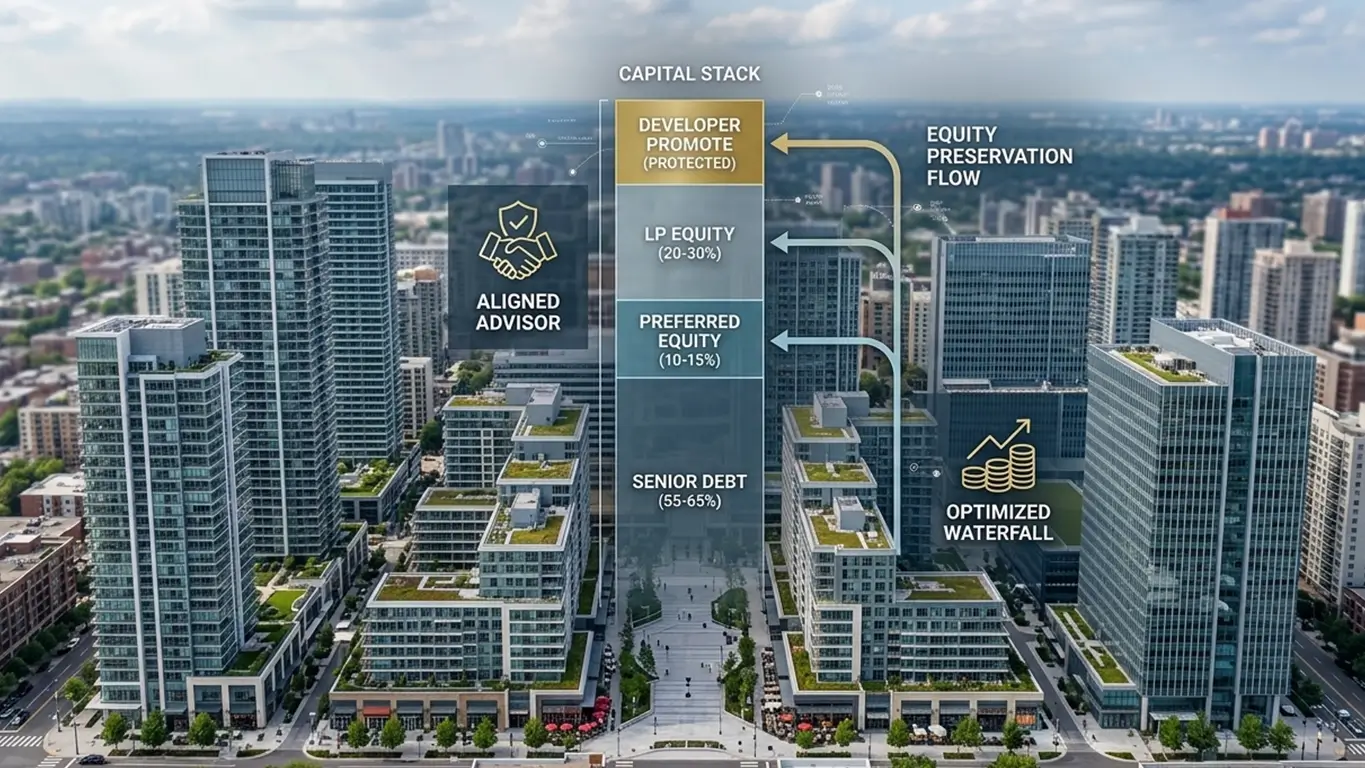
Top Firms for Real Estate Capital Raising Without Losing Equity

Common Mistakes Companies Make in Capital Raising Advisory
Phantom Equity and SARs: How Non-Standard Equity Instruments Create Series B Valuation and Governance Confusion
Disclosure
Nothing on this site constitutes an offer to sell, or a solicitation of an offer to purchase, any security under the Securities Act of 1933, as amended, or any applicable state securities laws. Any offering of securities is made only by means of a formal private placement memorandum or other authorized offering documents delivered to qualified investors.
IRC Partners is a capital advisory firm. IRC Partners is not a registered investment adviser under the Investment Advisers Act of 1940 and does not provide investment advice as defined thereunder.
Certain statements in this article may constitute forward-looking statements, including statements regarding market conditions, capital availability, investor demand, and transaction outcomes. Such statements reflect current assumptions and expectations only. Actual results may differ materially due to market conditions, regulatory developments, company-specific factors, and other variables. IRC Partners makes no representation that any outcome, return, or result described herein will be achieved.
References to prior mandates, transaction volume, network credentials, or capital raised are provided for illustrative purposes only and do not constitute a guarantee or prediction of future results. Past performance is not indicative of future outcomes. Individual results will vary. Network credentials and transaction statistics referenced on this site reflect the aggregate experience of IRC Partners' principals and affiliated advisors and are not a representation of assets managed or transactions closed solely by IRC Partners.
Certain data, statistics, and information presented in this article have been obtained from third-party sources. IRC Partners has not independently verified such information and expressly disclaims responsibility for its accuracy, completeness, or timeliness. Readers should independently verify any third-party data before relying on it.
Readers are strongly encouraged to consult qualified legal, financial, and tax professionals before making any investment, capital raising, or business decision.
Schedule A Meeting
You get one shot to raise the right way. If this raise is worth doing, it’s worth doing with precision, leverage, and control.
This isn’t a practice run. Serious capital. Serious strategy. Let’s raise it right.
We onboard a maximum of seven
new strategic partners each quarter, by application only, to maximize your chances of securing the capital you need.
