.svg "CTA Arrow")


.png "Investor Ready Capital decorative background element")

How to Use a Competing Offer Window to Protect Shareholder Value When a Drag-Along Is Triggered
How to Use a Competing Offer Window to Protect Shareholder Value When a Drag-Along Is Triggered
A competing-offer window is a contractual period built into a drag-along clause that gives affected shareholders a defined amount of time to surface a better bid before they are required to support the first approved sale. It works alongside the drag-along mechanics, not against them. When a qualifying offer arrives and the drag threshold is met, notice goes out, a short clock starts, and if the deal falls below a pre-agreed value threshold, the company gets a limited window to test whether a higher offer exists. If nothing better appears, the original deal proceeds. If a superior offer surfaces, shareholders are not locked into the first one.
Most drag-along coverage focuses on who can force a sale and how many votes it takes. That matters, but it misses the process problem. A drag-along can be procedurally valid and still deliver a weak outcome if the first approved deal never faces real competitive pressure.
Key takeaways:
- A competing-offer window is a process protection, not an economic floor. It creates competitive pressure that a price floor cannot create on its own.
- The strongest founder position is a hybrid structure: a short notice period paired with a limited re-solicitation right that activates only if the deal falls below a defined value threshold.
- Founders who want this protection need to negotiate it before the voting agreement is signed, because leverage disappears once the round closes.
Why a Drag-Along Without a Market-Check Can Destroy Shareholder Value
A drag-along is designed to solve an execution problem: it prevents a small group of minority holders from blocking a sale that the majority already supports. That is a legitimate function. The problem is that drag-along mechanics say nothing about whether the approved deal is actually a good one. They only require that it cleared the approval threshold.
Understanding how a deal can be procedurally clean and economically weak requires following the sequence step by step.
- One investor group backs an offer. A lead investor or control bloc decides the timing is right and supports a bid. That bid may reflect their preferred liquidity timeline, their portfolio return targets, or their read on market conditions, not necessarily the company's highest achievable value.
- The drag-along threshold is satisfied. Once the required approval percentage is met under the voting agreement, the drag-along is triggered. Minority holders, including founders with reduced voting power, are required to support the transaction.
- Minority holders have no procedural recourse. Without a competing-offer window written into the agreement, there is no contractual mechanism that forces a pause. No window opens. No notice period creates a structured moment for a higher bid to surface.
- The market never gets a chance to respond. The first approved offer becomes the final offer by default, not because it was the best price available, but because the process never tested whether a better buyer existed.
The real danger here is not coercion in isolation. It is process compression. Speed and approval mechanics combine to eliminate price discovery before anyone with a competing view has time to act. A static price floor in a drag-along clause sets a minimum but does not create competitive pressure. It tells you what the floor is. It does not tell you whether the ceiling was ever tested.
How a Competing Offer Window Works in Practice
The mechanics are straightforward. A competing-offer window does not restart the sale process or give minority holders a veto. It inserts a short, structured pause between "deal approved" and "deal closed" so the market has a defined chance to respond.
Here is how the timeline works in a standard hybrid design:
A few practical notes on how this plays out:
- The notice period is not optional. It is the mechanism that starts the clock and creates a documented record of when holders were informed and on what terms.
- The threshold check is the gate. If the deal clears the pre-agreed value benchmark, the re-solicitation window never opens and the deal moves forward on the original timeline.
- The re-solicitation window is limited, not open-ended. Ten business days is a reasonable default. It is long enough for a serious buyer to signal interest, short enough to preserve deal certainty for the original bidder.
- If no superior offer surfaces during the window, the original deal proceeds. The competing-offer window does not give anyone a permanent right to delay or block.
The NVCA Model Legal Documents provide a baseline framework for drag-along cooperation obligations and notice mechanics that parties can use as a starting point when drafting these provisions.
Why the Hybrid Structure Is Stronger Than Notice-Only and More Negotiable Than a Full Auction Right
Founders negotiating drag-along process terms typically encounter three options. Understanding why the middle option is the right target matters before the term sheet is signed.
The notice-only clause is the most common outcome when founders do not push for more. It feels like a protection because it creates transparency. It is not a protection in any meaningful sense because it does not create any contractual moment where a better bid can emerge. Knowing a deal is happening at a price you cannot change is not the same as having a right to test whether the market would pay more.
The open-ended market-check is the theoretically ideal protection but the practically hardest to win. Investors and acquirers both resist it because it introduces indefinite timeline risk. A buyer who signs a deal and then faces an unlimited re-marketing process has little incentive to stay at the table. Most sophisticated investors will reject this framing outright.
The hybrid threshold-triggered window is the right target because it solves the actual problem without creating the timeline problem. It limits re-solicitation to deals that are genuinely under-testing the market, which is the only situation where a competing-offer window actually matters. Deals that clear the threshold close on schedule. Only deals that fall below the floor trigger the window.
This is the position founders should take into the negotiation of drag-along consent structures before the round closes, because it is defensible on both sides of the table.
{{main-cta}}
How to Define the Value Threshold That Triggers the Re-Solicitation Right
The threshold is the most important design decision in the entire competing-offer window. If it is set too high, the window triggers on almost every deal and the protection becomes an obstacle. If it is set too low, the window never activates and founders have a clause that looks protective but does nothing.
The trigger should rely on objective, measurable benchmarks, not vague fairness language. "Fair market value" and "reasonably equivalent consideration" create interpretive fights that slow deals and invite litigation. A clean number or formula does not.
Common threshold options:
- Percentage of last preferred post-money valuation. Example: the deal must represent at least 80% of the last round's post-money to avoid triggering the window. Simple to calculate, widely understood, but can be disconnected from actual invested capital if the last round was a down round.
- Multiple of invested capital (MOIC). Example: the window activates if aggregate deal proceeds fall below 1.0x total invested capital. This is a founder-friendly benchmark because it ties the trigger directly to what investors put in, not to a negotiated valuation number.
- Premium to liquidation preference stack. Example: the window activates if the deal does not deliver at least a defined percentage above the total liquidation preference stack. This is useful when the preference stack is large relative to expected deal value.
- Fixed negotiated floor. A specific dollar amount negotiated at the time of the financing. Clear and hard to dispute, but requires the parties to agree on a number that may feel speculative at the time of drafting.
Recommended position: Tie the trigger to an invested-capital multiple or a fixed negotiated floor. Both are objective, measurable, and harder to manipulate than valuation-based benchmarks that depend on how the last round was priced. Avoid fairness language in the threshold definition entirely.
The threshold design also connects to how Delaware merger approval mechanics under Section 251 interact with the drag-along framework, particularly where the sale requires a stockholder vote in addition to the contractual drag-along consent.
How This Protection Interacts With Price Floors, Thresholds, and Founder Exit Timing
A competing-offer window is one layer of a protection stack. It works best when it is combined with the right voting mechanics and economic floors, not treated as a standalone solution.
- It does not replace a price floor. A price floor sets the minimum economics for a deal to proceed. A competing-offer window creates a process right that tests whether a better deal exists. They solve different problems. A company can have a price floor that is met and still benefit from a competing-offer window if the floor was set conservatively.
- It does not replace threshold protection. Threshold design in a drag-along clause determines who can force a sale in the first place. A high threshold means more holders must agree before the drag-along activates. A competing-offer window does not change who controls that vote.
- It is a process right, not a veto. The window creates a structured opportunity for price discovery. It does not give minority holders the power to block a deal that clears both the voting threshold and the value benchmark.
- Founder exit timing matters here. Compressed sale timelines almost always benefit the party controlling approvals and buyer access. When a deal moves fast, founders with limited information rights and reduced voting power are the last to know and the least positioned to respond. A competing-offer window is one of the few structural tools that forces a brief pause before that dynamic fully closes off.
The strongest founder protection stack combines voting mechanics that limit who can force a sale, economic floors that set a minimum price, and process rights that test whether the market would have paid more.
What Founders Should Ask to Include Before the Next Round Closes
Leverage to negotiate drag-along process terms is highest before the voting agreement is signed. Once the round closes, these provisions are locked. Founders who want a competing-offer window need to ask for it at the term sheet stage, not after a sale process has already started.
Before signing, ask for these five things in writing:
- An exact notice period. The agreement should specify how many business days of notice must be given to affected holders before a drag-along sale can proceed. Five business days is a reasonable minimum.
- An exact threshold that activates the re-solicitation right. The trigger should be a specific, objective benchmark, such as a defined MOIC or a fixed dollar floor, not a vague reference to fair value or board discretion.
- A definition of who may solicit or receive competing bids during the window. The agreement should specify whether the board, a special committee, or a designated advisor is authorized to run the re-solicitation process, and whether unsolicited offers must also be considered.
- A good-faith obligation for the board to consider superior offers. If a competing offer surfaces during the window, the agreement should require the board to evaluate it in good faith before the original deal is allowed to proceed.
- A definition of any original-buyer match right. If the original buyer has a right to match a superior offer, the agreement should specify how long that right lasts and what constitutes a valid match.
IRC Partners works with founders at the pre-round stage to identify structural gaps in drag-along and exit-process terms before those terms are locked into the voting agreement. The time to address process protections is before the round closes, not after a sale is already underway.
This is not legal advice. Founders should work with qualified legal counsel to draft and review any drag-along provisions.
Frequently Asked Questions
What is a competing-offer window in a drag-along clause?
A competing-offer window is a contractual provision that gives affected shareholders a defined period, typically 10 to 15 business days, to surface a superior bid after a drag-along sale has been approved but before shareholders are required to support it. It does not block the original deal. It creates a short, structured opportunity for price discovery before the process closes. If no better offer appears within the window, the original transaction proceeds on its approved terms.
Why is notice alone not enough when a drag-along sale is triggered?
A notice-only provision tells shareholders what is happening but does not give them any contractual mechanism to change the outcome. Notice creates transparency, not leverage. Without a re-solicitation right attached to the notice period, shareholders learn the deal terms, have no ability to surface a competing bid, and are still required to support the first approved transaction. The competing-offer window is what converts a notice period from an information right into an actual process protection.
How long should a competing-offer window last?
Ten business days is a reasonable default for the re-solicitation period. It is long enough for a serious buyer to signal interest and submit an indicative offer, but short enough to preserve deal certainty for the original bidder. Notice periods of 5 business days are standard before the threshold check occurs. The total window from notice to window close should generally stay under 20 business days to avoid creating material deal uncertainty.
What should trigger a re-solicitation right?
The re-solicitation right should activate only when the approved deal falls below an objective, pre-agreed value benchmark. Good trigger options include a defined multiple of invested capital, such as 1.0x or 1.25x total capital deployed, or a fixed negotiated floor set at the time of the financing. Vague triggers based on "fair value" or "board discretion" invite disputes and should be avoided. The threshold should be strict enough to let most deals proceed without triggering the window, but low enough to activate when the first bid is clearly under-testing the market.
Can investors push back on a competing-offer window?
Yes, and they often will. The most common objection is that a re-solicitation right introduces timeline uncertainty that can cause the original buyer to walk away or reprice. Founders can counter this by proposing a threshold-triggered design rather than an open-ended market-check. A window that only activates on deals below a defined floor is a much easier negotiation than a blanket re-marketing right on every approved transaction. Most institutional investors can accept a narrow, threshold-triggered window when the threshold is set at a level that protects genuine downside rather than giving founders an indefinite delay right.
How does a competing-offer window differ from a price floor?
A price floor is an economic protection that sets the minimum per-share or aggregate deal value required for a drag-along to be enforceable. A competing-offer window is a process protection that creates a structured period for a better bid to emerge. They solve different problems. A price floor tells you whether a deal is allowed to proceed. A competing-offer window tests whether a better deal exists before the first one is locked in. A company can have a price floor that is satisfied and still be sold below its maximum achievable value if the process never created real competitive pressure.
What happens if a better offer appears during the window?
If a superior offer surfaces during the competing-offer window, the agreement should require the board to evaluate it in good faith before allowing the original deal to proceed. Whether the original buyer has a match right, and how long that right lasts, will depend on how the clause is drafted. If the original buyer matches the superior offer, the deal proceeds at the higher price. If the buyer declines to match and the superior offer is genuine and financeable, the board should have the ability to pursue it. The exact mechanics depend on the specific language in the voting agreement.
Continue reading this series:
- How Drag-Along Rights Work for Growth-Stage Founders
- How Time-Based Restrictions Limit Drag-Along Enforcement
- Drag-Along Provisions and Founder Exit Timing: Who Actually Controls When You Sell
The Capital Raise Pre-Flight is IRC Partners’ fixed-fee diagnostic that scores a raise against the same twelve institutional gates a deal must clear before IRC Partners takes it into a strategic partnership. It is where every engagement begins, whether you are pre-revenue building toward a first institutional round or scaling a company that has raised before. For deals that clear, the full strategic partnership follows. IRC Partners advises operators raising $5M to $250M of institutional capital. If you are taking a raise to market, start here.
Sponsors weighing this decision should first complete a capital raise readiness assessment for sponsors to confirm the raise is investor-ready.
Need guidance on your capital raise?


Avoid Broad Audit Rights Before Signing $10M+ Sponsor Investment Deals

How Unperfected Security Interests on Your Cap Table Assets Create a Series B Lender Consent Nightmare
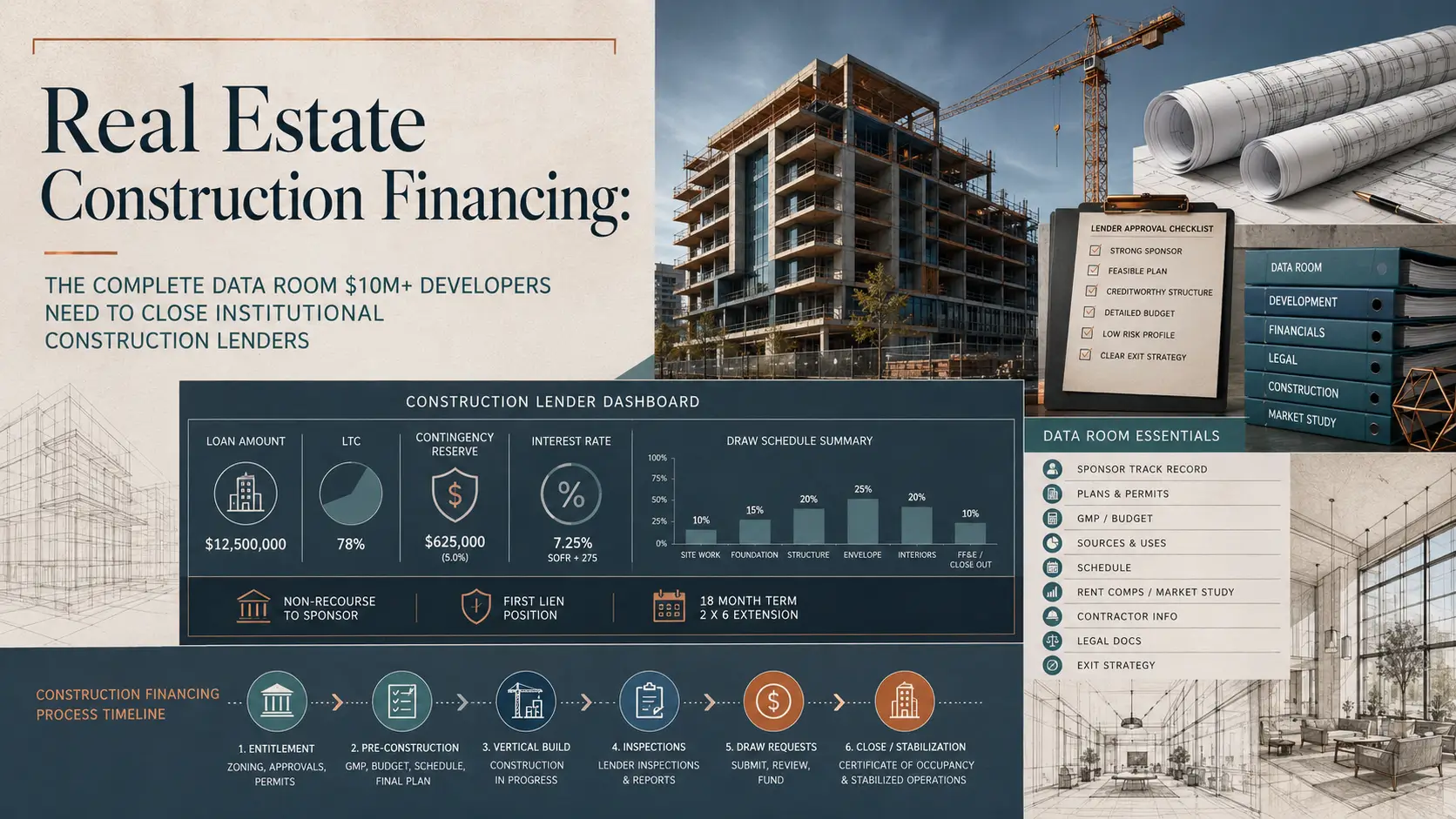
Real Estate Construction Financing: The Complete Data Room $10M+ Developers Need to Close Institutional Construction Lenders
Disclosure
Nothing on this site constitutes an offer to sell, or a solicitation of an offer to purchase, any security under the Securities Act of 1933, as amended, or any applicable state securities laws. Any offering of securities is made only by means of a formal private placement memorandum or other authorized offering documents delivered to qualified investors.
IRC Partners is a capital advisory firm. IRC Partners is not a registered investment adviser under the Investment Advisers Act of 1940 and does not provide investment advice as defined thereunder.
Certain statements in this article may constitute forward-looking statements, including statements regarding market conditions, capital availability, investor demand, and transaction outcomes. Such statements reflect current assumptions and expectations only. Actual results may differ materially due to market conditions, regulatory developments, company-specific factors, and other variables. IRC Partners makes no representation that any outcome, return, or result described herein will be achieved.
References to prior mandates, transaction volume, network credentials, or capital raised are provided for illustrative purposes only and do not constitute a guarantee or prediction of future results. Past performance is not indicative of future outcomes. Individual results will vary. Network credentials and transaction statistics referenced on this site reflect the aggregate experience of IRC Partners' principals and affiliated advisors and are not a representation of assets managed or transactions closed solely by IRC Partners.
Certain data, statistics, and information presented in this article have been obtained from third-party sources. IRC Partners has not independently verified such information and expressly disclaims responsibility for its accuracy, completeness, or timeliness. Readers should independently verify any third-party data before relying on it.
Readers are strongly encouraged to consult qualified legal, financial, and tax professionals before making any investment, capital raising, or business decision.
Schedule A Meeting
You get one shot to raise the right way. If this raise is worth doing, it’s worth doing with precision, leverage, and control.
This isn’t a practice run. Serious capital. Serious strategy. Let’s raise it right.
We onboard a maximum of seven
new strategic partners each quarter, by application only, to maximize your chances of securing the capital you need.
