.svg "CTA Arrow")


.png "Investor Ready Capital decorative background element")

How to Hire an Advisor for Capital Stack Strategy

Hiring an Advisor Means Moving from Diligence to Deployment
Hiring a capital stack advisor involves three sequential steps: confirming engagement terms align with your raise objectives, executing the engagement letter with defined scope and milestones, and completing a structured onboarding handoff so advisory work begins without delay.
Most advisory mandates stall not during evaluation but in the window between verbal agreement and a productive kickoff. Developers who treat the signed engagement letter as the finish line typically spend the first four to six weeks in back-and-forth instead of execution. This article covers what happens after you have selected your advisor: the final confirmation conversation, engagement letter turnaround, onboarding handoff, and the first-30-day milestones that separate a well-run mandate from a drifting one.
What this article covers:
- What to confirm in the final pre-signature conversation
- How to move from verbal agreement to signed engagement letter without delay
- What a structured onboarding handoff looks like
- What the first 30 days of a productive advisory engagement should produce
- How to handle a slow start, legal boundaries, and transition red flags
For context on capital stack advisory as a discipline and what the full advisory process involves, Hub 30 covers that ground in detail.
What to Confirm in the Final Conversation Before Signing
This meeting is not a renegotiation. Both parties have already agreed on structure and fees. The purpose is to confirm that every party has the same operational understanding of what the engagement actually covers before anyone signs anything.
Run through the following confirmations in sequence:
Misalignment found in this conversation is far cheaper to resolve than misalignment discovered at month three of a stalled raise. If either party cannot answer any of the above clearly, that is the signal to pause, not to proceed and hope the engagement letter fills the gap.
How to Execute the Engagement Letter Efficiently
A verbal agreement is not a mandate. The engagement letter is the document that creates accountability, and getting it signed quickly is itself a performance signal.
Follow these steps in order:
- Request the draft within 3 to 5 business days of verbal agreement. A well-structured advisor will have a clean, complete engagement letter ready in that window. Delays beyond 7 business days without explanation are a red flag, not a scheduling issue.
- Route the letter to your counsel before you read it yourself. Your attorney should review tail language, for-cause termination definitions, and the success fee calculation base. These are the three areas most likely to create disputes later. The principal's job is to confirm scope and economics, not to parse indemnification clauses.
- Set a 5 to 10 business day review window and hold it. A standard engagement letter is not a complex transaction document. If counsel needs more than 10 business days, the issue is usually scope, not complexity, and that warrants a direct conversation.
- Do not let the letter sit unsigned past 30 days. Developers who allow a 30-day or longer gap between verbal agreement and signature almost always lose execution momentum and sometimes lose the advisor's prioritized attention to a mandate that moved faster.
- Tie the retainer payment to signing, not to the verbal agreement. The retainer clock starts at execution, not at the handshake. Any advisor who invoices a retainer before the letter is signed is operating outside standard practice.
If counsel raises reasonable edits and the advisor resists addressing them, treat that resistance as a signal about how the advisor will handle accountability throughout the engagement, not just a legal negotiation point. The engagement model terms you reviewed before this stage should have already flagged any structural concerns.
What a Structured Onboarding Handoff Looks Like
Onboarding is where most advisory mandates lose their first 30 days. A kickoff meeting without a defined agenda is not an onboarding. It is a relationship call, and relationship calls do not produce LP introductions.
A structured onboarding handoff covers four components:
- Kickoff meeting with a defined agenda. The agenda should cover raise objectives, LP target profile, capital stack structure, materials status, and decision cadence. If the advisor does not send an agenda before the call, send one yourself.
- Document transfer at or before kickoff. The sponsor transfers the financial model, existing LP materials, cap table, diligence files, and relevant project data. Knowing which fund documents institutional LPs require before outreach begins ensures nothing critical is missing from that transfer. The advisor cannot run a gap assessment without a complete package. Waiting until week two to share materials pushes every downstream milestone back by the same amount.
- Advisor-led gap assessment before the first LP introduction. The advisor identifies what needs to be built or revised before outreach begins. Sponsors who push for LP introductions before the gap assessment is complete typically spend the next 60 days rebuilding credibility with LPs who saw incomplete materials first.
- Written pre-marketing plan for weeks 1 to 6. Named deliverables, responsible parties, and due dates. ILPA Principles 3.0 reinforces that institutional LPs expect sponsors to arrive in the raise cycle with transparent, organized governance and materials. A pre-marketing plan is how the advisor ensures that standard is met before the first conversation happens.
Developers who hand off without a structured agenda typically spend the first four to six weeks in back-and-forth clarification instead of execution. The cost of an unstructured kickoff is not just time. It is LP credibility that is difficult to rebuild once lost.
The First 30 Days: What Good Advisory Execution Looks Like
The first 30 days are the clearest signal of whether the advisor is operating as an embedded partner or a passive relationship. A well-run engagement produces measurable outputs on a defined schedule.
If the developer has not received a qualified LP target list and a draft materials package by day 30, the engagement is already behind schedule. That is not a minor variance. In a selective institutional capital environment, a 30-day delay at the start of a raise compounds throughout the process.
Developers who have already worked through structuring a capital stack for a $10M-$50M real estate deal before kickoff will move through the gap assessment faster, since the advisor is refining an existing structure rather than building one from scratch. Understanding how IRC's retainer model creates milestone accountability in practice helps clarify why retainer-linked deliverables are a more reliable accountability structure than success-fee-only arrangements, where the advisor has no financial incentive to produce outputs until a close is in sight.
How to Handle a Slow Start, Legal Boundaries, and Transition Red Flags
If the Engagement Starts Slowly
Document the gap in writing against the agreed deliverable list. Do not rely on a phone call or a relationship conversation to resolve a milestone failure. Request a written remediation plan from the advisor with revised dates and named outputs. Use the escalation path defined in the engagement letter. Developers who let a slow start go undocumented lose the contractual leverage they negotiated before signing. A well-structured advisor will respond to a documented milestone gap with a remediation plan. Resistance to written accountability at this stage is a strong signal the engagement will not recover.
Where Legal Counsel Belongs and Where It Does Not
Counsel belongs in the document review stage, specifically reviewing tail language, for-cause termination definitions, and the success fee calculation base. Developers who have already mapped their state-level compliance obligations, including any applicable blue sky laws across multiple states, will move through this review faster and with fewer open questions. Counsel does not need to attend the kickoff meeting or participate in routine onboarding unless a dispute has already emerged. Most engagement letter disputes arise from terms that were not reviewed by counsel before signing, not from terms that were reviewed and accepted. Keep legal involvement focused on the document, not the relationship.
{{main-cta}}
Transition Red Flags
Red flags in the transition phase are more predictive of advisory performance than red flags during evaluation. The advisor is no longer competing for the mandate. How they behave in the first two weeks of execution is how they will behave throughout the raise.
Execute the Mandate, Not Just the Decision
Schedule the final confirmation conversation now. Set a 5 to 10 business day legal review window. Execute the engagement letter. Confirm the kickoff agenda before the retainer starts.
The engagement letter is the accountability document. The relationship is secondary to what is in writing. Developers who treat the signed letter as the start of execution, not the end of evaluation, consistently run tighter raise timelines with fewer stalled mandates.
For readers who want to understand what the full advisory and raise process looks like after the advisor is hired, how long capital stack strategy takes covers the complete post-hire timeline in detail.
Frequently Asked Questions
How long does it take to execute a capital stack advisory engagement letter after verbal agreement?
A well-structured advisor should deliver a clean draft engagement letter within 3 to 5 business days of verbal agreement. Developer's counsel should complete review within 5 to 10 business days. The total window from verbal agreement to signed letter should not exceed 15 business days under normal circumstances. Engagements where the letter sits unsigned for 30 or more days almost always lose execution momentum and risk losing the advisor's prioritized attention to faster-moving mandates.
What should a developer confirm in the final meeting before signing with a capital stack advisor?
The final pre-signature meeting should confirm six items: scope alignment against the actual raise size and capital stack layers, milestone schedule and phase timing for weeks 1 through 4, specific retainer deliverables tied to each period, the success fee calculation base (whether it applies to gross commitments, funded equity, or total capitalization), tail period duration (typically 12 to 24 months), and the escalation path if milestones slip. This meeting is a confirmation, not a renegotiation.
What does a structured onboarding handoff look like for a capital stack advisory engagement?
A structured onboarding handoff includes four components: a kickoff meeting with a defined agenda covering raise objectives, LP target profile, capital stack structure, and materials status; a document transfer of the financial model, cap table, LP materials, and diligence files at or before kickoff; an advisor-led gap assessment identifying what needs to be built before the first LP introduction; and a written pre-marketing plan for weeks 1 to 6 with named deliverables, owners, and due dates. Onboarding without all four components typically costs 4 to 6 weeks of execution time.
What should the first 30 days of a capital stack advisory engagement produce?
By day 10, the advisor should deliver a completed LP materials gap assessment. By day 14, a standing call or biweekly reporting cadence should be active. By day 20, the developer should receive a qualified LP target list of 50 to 150 names. By days 21 to 25, a draft investment memo or revised LP deck and a shared diligence tracker should be delivered. If neither the LP target list nor the materials package exists by day 30, the engagement is behind schedule and the developer should request a written remediation plan.
When should a developer bring in legal counsel to review a capital stack advisory engagement letter?
Counsel should review the engagement letter before signing, specifically focusing on tail language, for-cause termination definitions, and the success fee calculation base. These three areas account for the majority of post-engagement disputes. Counsel does not need to be involved in the final confirmation conversation, the kickoff meeting, or routine onboarding unless a dispute has already emerged. Legal review should be completed within 5 to 10 business days. Delays beyond 10 business days are typically a scope issue, not a document complexity issue.
What are the red flags in the transition from advisor selection to onboarding?
Five red flags are most predictive of advisory underperformance: engagement letter delivered more than 7 business days after verbal agreement without explanation; retainer invoiced before the engagement letter is signed; no written pre-marketing plan by the end of week one; resistance to a structured kickoff agenda; and failure to produce a qualified LP target list within 20 days of kickoff. Red flags in the transition phase are more reliable performance predictors than red flags during the evaluation phase because the advisor is no longer competing for the mandate.
What should a developer do if the advisory engagement starts slowly against the milestone schedule?
Document the gap in writing against the agreed deliverable list within 5 business days of the missed milestone. Request a written remediation plan from the advisor with revised dates and named outputs. Use the escalation path defined in the engagement letter rather than relying on informal calls. Developers who let a slow start go undocumented typically lose the contractual leverage they negotiated before signing. An advisor who responds to a documented milestone gap with defensiveness rather than a remediation plan is unlikely to recover the engagement trajectory.
Continue reading this series:
- Engagement Model for Capital Stack Strategy
- How Long Does Capital Stack Strategy Take
- What Is Capital Stack Advisory
IRC Partners advises founders raising $5M to $250M in institutional capital on structure, positioning, and round architecture. We work with 7 strategic partners per quarter - no placement agent model, no success-only theater. If you want a structural review of your current raise, apply HERE.
Sponsors weighing this decision should first complete a capital raise readiness assessment for sponsors to confirm the raise is investor-ready.
Need guidance on your capital raise?



What Are The Most Common Family Office Objections To a Preferred-Equity Layer In a Real Estate Capital Stack?
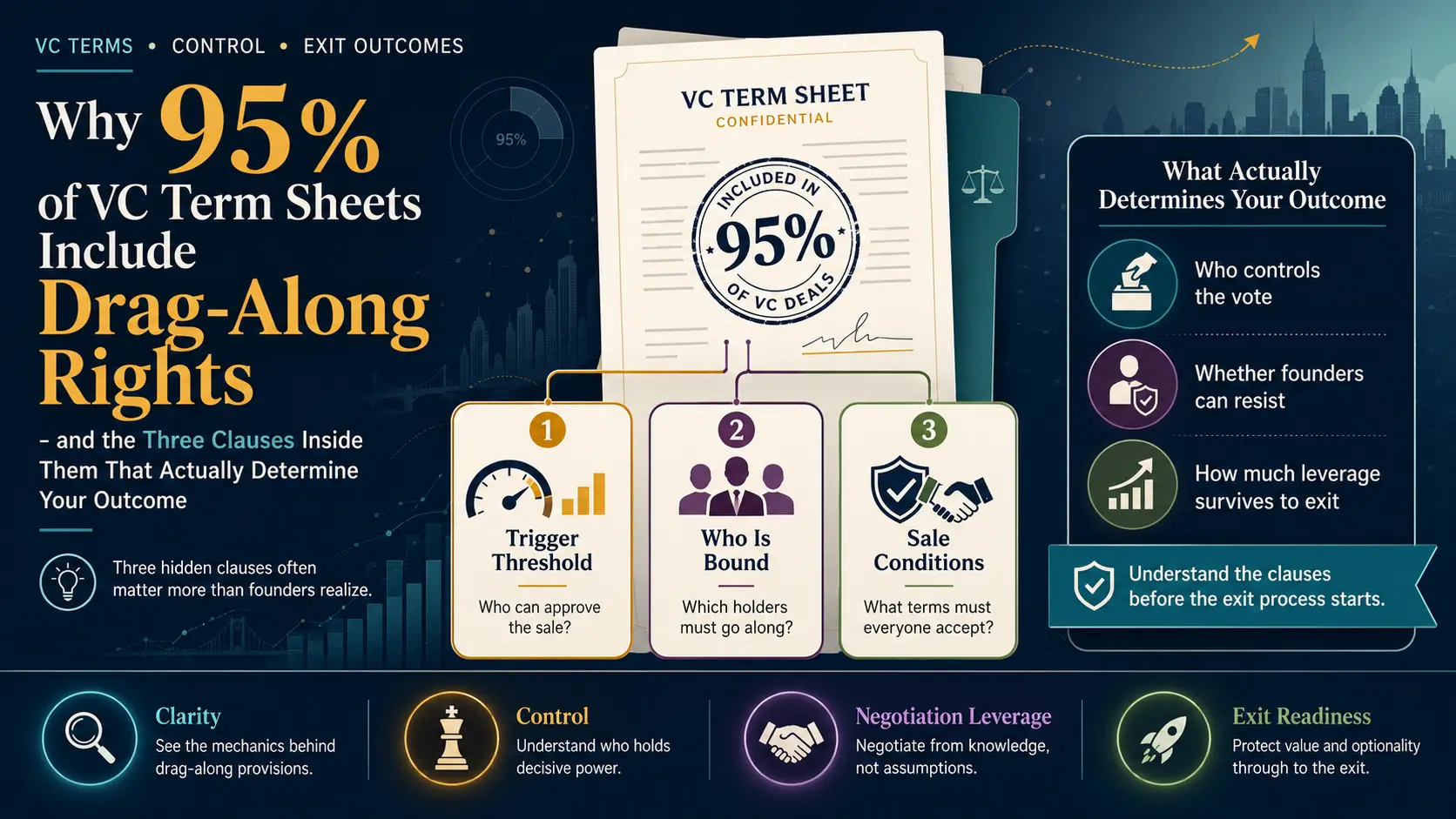
Why 95% of VC Term Sheets Include Drag-Along Rights - and the Three Clauses Inside Them That Actually Determine Your Outcome

Commercial Real Estate Financing Rates: What $10M+ Sponsors Need to Know Before Approaching Institutional Lenders
Disclosure
Nothing on this site constitutes an offer to sell, or a solicitation of an offer to purchase, any security under the Securities Act of 1933, as amended, or any applicable state securities laws. Any offering of securities is made only by means of a formal private placement memorandum or other authorized offering documents delivered to qualified investors.
IRC Partners is a capital advisory firm. IRC Partners is not a registered investment adviser under the Investment Advisers Act of 1940 and does not provide investment advice as defined thereunder.
Certain statements in this article may constitute forward-looking statements, including statements regarding market conditions, capital availability, investor demand, and transaction outcomes. Such statements reflect current assumptions and expectations only. Actual results may differ materially due to market conditions, regulatory developments, company-specific factors, and other variables. IRC Partners makes no representation that any outcome, return, or result described herein will be achieved.
References to prior mandates, transaction volume, network credentials, or capital raised are provided for illustrative purposes only and do not constitute a guarantee or prediction of future results. Past performance is not indicative of future outcomes. Individual results will vary. Network credentials and transaction statistics referenced on this site reflect the aggregate experience of IRC Partners' principals and affiliated advisors and are not a representation of assets managed or transactions closed solely by IRC Partners.
Certain data, statistics, and information presented in this article have been obtained from third-party sources. IRC Partners has not independently verified such information and expressly disclaims responsibility for its accuracy, completeness, or timeliness. Readers should independently verify any third-party data before relying on it.
Readers are strongly encouraged to consult qualified legal, financial, and tax professionals before making any investment, capital raising, or business decision.
Schedule A Meeting
You get one shot to raise the right way. If this raise is worth doing, it’s worth doing with precision, leverage, and control.
This isn’t a practice run. Serious capital. Serious strategy. Let’s raise it right.
We onboard a maximum of seven
new strategic partners each quarter, by application only, to maximize your chances of securing the capital you need.
