



Your Form D Is Public on EDGAR: What Do Investors Check Before They Take the Call?

TL;DR: Before an investor takes your call, they pull your Form D on EDGAR. They check that its numbers match your deck, look up the people named in the related persons section, and read what your 506(b) or 506(c) choice says about the raise. Make sure your filing and your materials agree before outreach.
Before an investor takes your call, they search your name on EDGAR. Your Form D filing comes up in seconds. It is public, permanent, and tells them more than you might expect.
Investors look at six things: the exemption you claimed, the offering size, the amount already sold, the names of related persons, the filing date, and whether the numbers match your other materials. If anything looks off, the call may never happen.
This is your silent first impression. You filed to comply with the law. Investors use the filing to screen you before they respond to your email.
Key takeaway: Your Form D is a due diligence document. Treat it that way before you start outreach.
What does an investor see when they pull my Form D on EDGAR?
The SEC requires every issuer using a Regulation D exemption to file a Form D no later than 15 days after the first sale, according to SEC guidance on Regulation D. That filing is public the moment it is accepted.
When an investor searches EDGAR for your company, here is what they see:
- Item 3: Related persons. Names of executive officers, directors, and promoters. Anyone paid sales compensation for the offering appears in Item 12.
- Item 6: Federal exemption claimed. For a 506(c) offering, this confirms you are allowed to generally solicit, but that every investor must be accredited and you must take reasonable steps to verify that status.
- Item 9: Type of securities offered. Equity, debt, pooled investment fund interests, or other. This tells investors the structure at a glance.
- Item 13: Offering and sales amounts. The total amount you are trying to raise and how much you have closed so far.
- Item 14: Investors. The number of investors who have already participated.
- Filing date and any amendments. Investors pull all versions in sequence to see how the offering has changed over time.
What the filing date signals
A Form D filed more than 15 days after the first sale is technically late, per SEC Regulation D rules. Investors can see the exact date. Some document it in their diligence file and ask about it directly.
A filing dated the same day as the first sale, or within a few days, signals that someone on the team is paying attention to compliance.
"Some issuers may not comply with this requirement to file a Form D, which may be a red flag." Source: SEC Office of Investor Education and Advocacy, Investor Bulletin on Regulation D.
Why do investors check if my Form D numbers match my pitch materials?
Experienced investors treat the Form D as an anchor document. Every other document you hand them gets reconciled back to it. The issuer name, offering size, securities type, and related persons should all agree across your deck, your PPM, and your filing.
The three mismatches that kill calls
1. Offering size discrepancy. Your deck says you are raising $5 million. Your Form D shows a $10 million offering size. Investors want to know why.
2. Paid helpers not disclosed. If someone is being paid to help sell the offering and their name is missing from Item 12 of the Form D, that is a compliance gap. Investors who catch it will ask about it directly.
3. Securities type mismatch. Your pitch says equity. The Form D says debt. These are different instruments with different investor protections. A mismatch here signals either a documentation error or a structural change mid-raise that was not communicated.
The rule investors follow: If the Form D and the deck tell different stories, one of them is wrong. The investor will assume the problem runs deeper.
The fix is straightforward. Before outreach begins, compare your Form D line by line against your pitch deck, your financial model, and any PPM. Every number and name should match exactly.
What do investors look for in the related persons section of a Form D?
The related persons section (Item 3) lists every executive officer, director, and promoter. Item 12 lists anyone paid sales compensation tied to the offering. Investors use these names for two things.
Background checks on named individuals
Once they have the names, investors run them through FINRA BrokerCheck and the SEC's Investment Adviser Public Disclosure database. They search for enforcement actions, prior fraud findings, bankruptcies, and dissolved entities.
This is standard practice for institutional allocators. According to the SEC's Investor Bulletin on private placements, checking the background of anyone involved in an offering is a basic step every investor should take.
If your name or a co-founder's name comes up in a prior enforcement action, that conversation will happen on the call. It is better to get ahead of it than to be caught off guard.
Rule 506(d) bad actor screening
Rule 506(d) of Regulation D disqualifies certain issuers from using the 506 exemption if a covered person has a disqualifying event on their record. Covered persons include the issuer, its officers, directors, beneficial owners of 20% or more of the voting equity, promoters, and compensated solicitors.
If a disqualifying event exists and was not disclosed, the offering may lose its exemption. Sophisticated investors screen for this before they engage.
What does a 506(c) filing tell investors that a 506(b) does not?
The exemption you chose carries specific meaning. Investors know exactly what each one permits and prohibits.
According to SEC data, there were 3,989 Rule 506(c) offerings in 2025, versus 30,315 Rule 506(b) offerings.
The 506(c) signal
A 506(c) filing tells investors three things at once:
- You are allowed to advertise and generally solicit the offering.
- Every investor must be accredited, and you are required to take reasonable steps to verify that status.
- There is no limit on the offering size.
The 506(c) path is the right choice when you plan to use social media, email campaigns, conferences, or any public outreach to attract investors. According to the SEC's Investor Bulletin on private placements, within Rule 506, general solicitation is permitted only under 506(c), and the issuer must verify accredited status with documents; self-certification alone does not meet the standard.
What investors verify after seeing 506(c)
After confirming the exemption, investors check whether your actual behavior is consistent with it. If you filed under 506(c) but closed a subscription from an investor whose accredited status you did not verify, that is a compliance problem. If you filed under 506(b) but you are running paid ads and posting on LinkedIn, that is also a problem.
Preparing your raise for this level of scrutiny takes more than filing correctly. The Capital Raise Pre-Flight from IRC Partners scores your deal across the 12 gates investors screen before they commit and ranks the gaps, so you can fix them before outreach.
What is the difference between what EDGAR shows and what investors actually judge?
The Form D is a starting point. Investors use it to decide whether to keep looking. What they judge after that is a much longer list.
| What EDGAR shows | What investors actually judge |
|---|---|
| Exemption claimed (506b or 506c) | Whether your marketing behavior matches the exemption |
| Offering size | Whether the raise size is credible given your traction and team |
| Amount already sold | Whether momentum is real or the raise has stalled |
| Related persons listed | Whether those individuals clear background checks |
| Filing date | Whether compliance habits are strong or loose |
| Prior amendments | Whether the offering structure has changed and why |
| Securities type | Whether the instrument matches your pitch deck and PPM |
What EDGAR cannot tell them
EDGAR shows the skeleton. Investors build the rest of the picture from:
- Your pitch deck. Does the narrative hold up without you in the room to explain it?
- Your financial model. Are the assumptions honest? Is there a real downside case?
- Your cap table. Is there dead equity? Are the terms investor-friendly?
- Your data room. Is it complete, organized, and ready to send within 24 hours of a request?
- Your deal terms. Do they match market standards, or will they trigger a re-trade?
The Capital Raise Pre-Flight scores your deal across the 12 gates investors screen before they commit and ranks the gaps, so you can fix them before outreach.
Understanding what institutional investors audit before the first call helps you fix gaps before outreach.
How do I make sure my raise is ready before investors run their checks?
The Form D check is fast. What comes next takes much longer.
A pre-outreach checklist
Before you send a single email to an investor, confirm the following:
- Form D filed on time. Within 15 days of the first sale, per SEC rules.
- Numbers consistent across all documents. Offering size, securities type, and entity name match in the Form D, deck, model, and PPM.
- Related persons complete. Every executive officer, director, and promoter is in Item 3, and anyone paid sales compensation is in Item 12.
- Background checks run on yourself. Search your own name on FINRA BrokerCheck and the SEC IAPD database before an investor does.
- Data room built and organized. Ready to share within 24 hours of a request.
- Accredited investor verification process in place. For a 506(c) offering, self-certification alone is not enough.
Most founders can check the first three boxes. The last three are where raises quietly break down.
The gap between filing and ready
Filing the Form D means you are legally in the market. It does not mean your raise is ready for institutional scrutiny.
The Capital Raise Pre-Flight from IRC Partners scores your deal across the 12 gates investors screen before they commit and ranks the gaps, so you can fix them before outreach.
See what the Capital Raise Pre-Flight covers and submit your materials.
Frequently Asked Questions
How long does a Form D stay public on EDGAR?
A Form D filing is permanent. It stays on EDGAR indefinitely. Investors can search your company name and see every Form D you have ever filed, including amendments and prior offerings. There is no expiration.
Does filing a Form D mean the SEC approved my offering?
The SEC does not approve Regulation D offerings. According to the SEC's investor alert on this topic, a Form D is a notice filing. Telling investors the SEC approved your offering is misleading, and the SEC warns investors about it.
Can investors see how much I have already raised on EDGAR?
Yes. Item 13 shows the total amount sold to date and Item 14 shows the number of investors who have participated. Investors use both to assess whether momentum is real. A raise that has been open for six months with minimal capital closed raises questions.
Do I need to amend my Form D if the offering size changes?
Yes. Material changes to a Regulation D offering generally require an amendment to the Form D. Investors pull every version in sequence to see how the offering has evolved. Unexplained changes in offering size or structure are a common diligence flag.
What is the difference between a Form D and a PPM?
A Form D is a regulatory notice filed with the SEC. A Private Placement Memorandum (PPM) is a disclosure document you give to investors. The Form D is public. The PPM is not required by law, but institutional investors expect one for any raise of meaningful size. The numbers and terms in both documents must match.
What happens if I filed under 506(c) but did not verify accredited investor status?
Failure to verify accredited investor status in a 506(c) offering is a compliance problem that can disqualify the exemption. Verification requires documentation, such as tax returns, brokerage statements, or a letter from a licensed professional. Self-certification alone does not meet the 506(c) standard.
What should I fix before investors see my Form D?
File on time, within 15 days of the first sale. Make sure every number in the Form D matches your deck, model, and PPM. List every related person in Item 3 and anyone paid sales compensation in Item 12. Run background checks on yourself and any co-founders before outreach begins. Then assess whether the rest of your raise package is ready for the scrutiny that follows.
Continue reading this series:
- Capital Raise Audit vs. Pitch Deck Review: What Institutional Investors Actually Screen
- Capital Raise Pre-Flight: The Institutional Diagnostic for Your Raise
- Fund Documents Needed to Raise $100M From Institutional LPs
- Inside Institutional Due Diligence: The Sequence Investors Run From First Meeting to Wire
Need guidance on your capital raise?


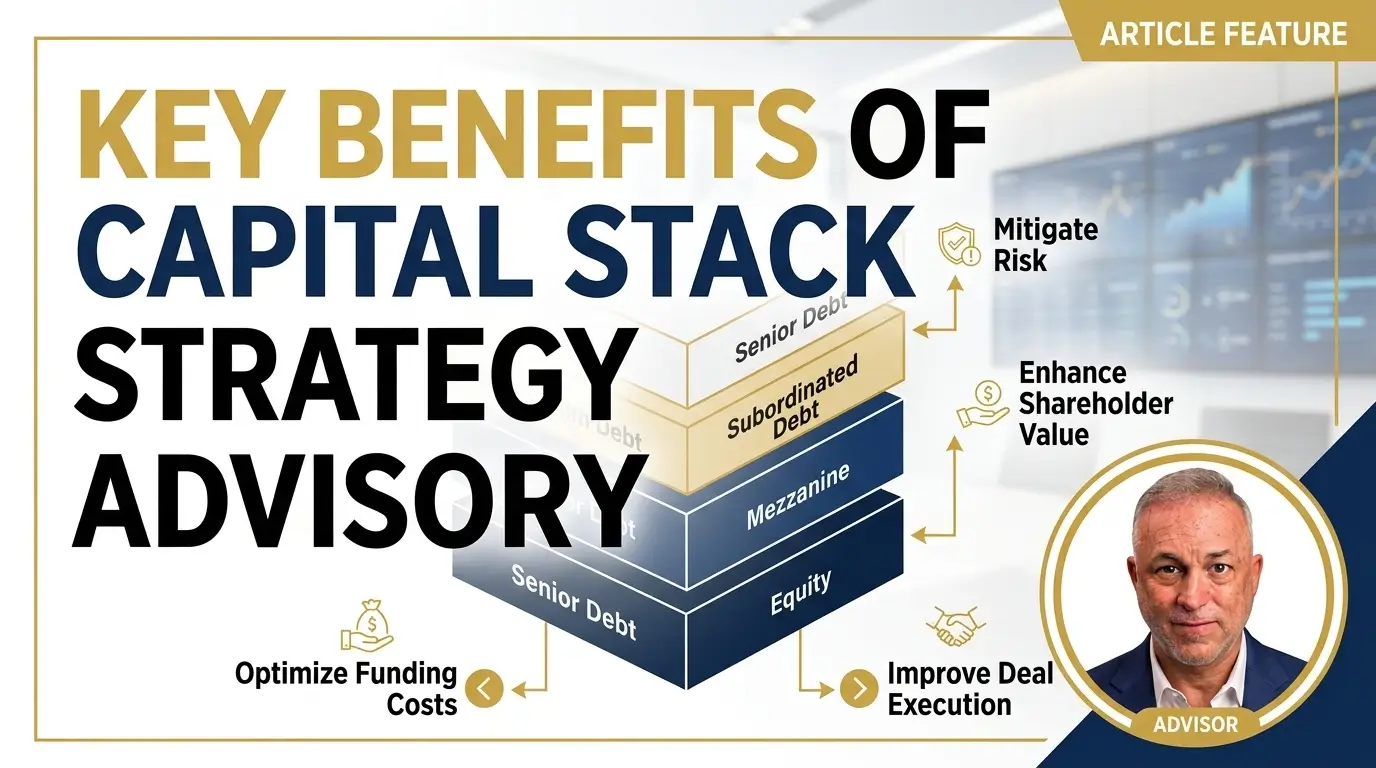
Key Benefits of Capital Stack Strategy Advisory

How Does Investor Relations Management for Growth Companies Work

Engagement Model for Real Estate Capital Raising
Disclosure
Nothing on this site constitutes an offer to sell, or a solicitation of an offer to purchase, any security under the Securities Act of 1933, as amended, or any applicable state securities laws. Any offering of securities is made only by means of a formal private placement memorandum or other authorized offering documents delivered to qualified investors.
IRC Partners is a capital advisory firm. IRC Partners is not a registered investment adviser under the Investment Advisers Act of 1940 and does not provide investment advice as defined thereunder.
Certain statements in this article may constitute forward-looking statements, including statements regarding market conditions, capital availability, investor demand, and transaction outcomes. Such statements reflect current assumptions and expectations only. Actual results may differ materially due to market conditions, regulatory developments, company-specific factors, and other variables. IRC Partners makes no representation that any outcome, return, or result described herein will be achieved.
References to prior mandates, transaction volume, network credentials, or capital raised are provided for illustrative purposes only and do not constitute a guarantee or prediction of future results. Past performance is not indicative of future outcomes. Individual results will vary. Network credentials and transaction statistics referenced on this site reflect the aggregate experience of IRC Partners' principals and affiliated advisors and are not a representation of assets managed or transactions closed solely by IRC Partners.
Certain data, statistics, and information presented in this article have been obtained from third-party sources. IRC Partners has not independently verified such information and expressly disclaims responsibility for its accuracy, completeness, or timeliness. Readers should independently verify any third-party data before relying on it.
Readers are strongly encouraged to consult qualified legal, financial, and tax professionals before making any investment, capital raising, or business decision.
Schedule A Meeting
You get one shot to raise the right way. If this raise is worth doing, it’s worth doing with precision, leverage, and control.
This isn’t a practice run. Serious capital. Serious strategy. Let’s raise it right.
We onboard a maximum of seven
new strategic partners each quarter, by application only, to maximize your chances of securing the capital you need.
