.svg "CTA Arrow")


.png "Investor Ready Capital decorative background element")

How Long Does Investor Pitch Deck Preparation Take for Institutional LP Outreach?

TL;DR: How long institutional pitch deck preparation actually takes - and why setting an outreach date before preparation is complete is the most common mistake.
- What Actually Drives the Preparation Timeline: Sponsors often assume the timeline is set by how fast their advisor can produce slides.
- A Realistic Phase-by-Phase Schedule Before Outreach: A credible preparation engagement does not start with a blank slide template.
- Why Rushing the Process Usually Backfires: The cost of rushing preparation is rarely visible in the deck itself.
Most sponsors ask how long investor pitch deck preparation takes after they have already committed to an outreach date - and that sequencing mistake is expensive. For institutional LP outreach, a credible preparation process typically runs 4 to 8 weeks from kickoff to first serious introduction, with raises involving complex capital stacks, fragmented track record documentation, or layered economics running longer. The timeline is not set by how fast an advisor can produce slides. It is set by how long it takes to reconcile the materials institutional LPs will use to evaluate the deal - and the deck is not the deliverable. Institutional readiness is.
For institutional LP outreach, a credible preparation process typically runs 4 to 8 weeks from kickoff to first serious introduction. Raises with complex capital stacks, fragmented track record documentation, or layered economics often take longer. Straightforward single-asset raises with clean materials and a clear LP target profile can move faster, but rarely in under three weeks without cutting corners that show up later.
The reason timelines vary so much comes down to three factors:
- Capital stack clarity. How resolved the raise structure, economics, and use of proceeds are when preparation begins.
- Documentation depth. Whether the track record, legal materials, and financial model are reconciled and ready for institutional review.
- Data room readiness. Whether diligence materials are staged, permissioned, and organized before outreach starts, not after first LP interest.
Understanding what investor pitch deck preparation services actually involve is the starting point for setting a realistic timeline. The deck is not the deliverable. Institutional readiness is.
What Actually Drives the Preparation Timeline
Sponsors often assume the timeline is set by how fast their advisor can produce slides. It is not. The timeline is set by how long it takes to reconcile the materials institutional LPs will use to evaluate the deal.
The ILPA DDQ 2.0 covers fund structure, track record, governance, reporting, and legal documentation as standard diligence inputs. The PREA Investor Toolkit extends that framework to real estate-specific LP underwriting, including transparency, disclosure, and manager assessment. Both frameworks make clear that preparation is a documentation and sequencing problem, not a design problem.
The table below shows the factors that most commonly compress or extend the preparation timeline:
| Factor | Compresses Timeline | Extends Timeline |
|---|---|---|
| Capital stack structure | Fully resolved before kickoff | Still being negotiated during prep |
| Track record documentation | Audited, organized, consistent | Fragmented, inconsistent, or incomplete |
| Financial model | Reconciled with deck and summary | Separate from narrative, numbers differ |
| Data room | Staged and permissioned before outreach | Being built in response to LP requests |
| LP target profile | Defined and segmented | Broad or undefined at kickoff |
| Deal complexity | Single-asset, clean structure | Layered economics, multiple tranches |
The biggest delays are almost never about design. They come from inconsistencies between the deck, the model, the executive summary, and the supporting diligence materials. When those documents tell slightly different stories, institutional LPs notice immediately, and the preparation process has to restart.
A Realistic Phase-by-Phase Schedule Before Outreach
A credible preparation engagement does not start with a blank slide template. It starts with a structured review of what the sponsor already has and what is missing before institutional outreach can begin responsibly.
Here is how a disciplined process typically sequences across four phases:
- Phase 1: Discovery and capital stack audit (Weeks 1-2). The advisor reviews the raise structure, use of proceeds, waterfall and promote mechanics, track record evidence, and intended LP profile. The goal is to confirm what is resolved and flag what is not before any narrative work begins. If the capital stack is still being negotiated, this phase extends until it is not.
- Phase 2: Narrative and materials development (Weeks 2-4). The deck, executive summary, and financial model are developed or refined in parallel so every number and claim is consistent across all three documents. This is the phase most sponsors think of as deck preparation. It is actually the shortest phase when the inputs from Phase 1 are clean.
- Phase 3: Data room alignment and LP targeting (Weeks 3-5). Diligence materials are organized, permissioned, and staged before outreach begins. The first-wave LP target list is segmented by allocator type, check size, and asset class preference. A raise targeting institutional allocators across a an established network of allocators requires this segmentation to be done before introductions go live, not after.
- Phase 4: Final review and outreach readiness (Weeks 5-8). The full package is pressure-tested against likely LP questions before any introduction is made. This includes Q&A preparation, data room access protocols, and confirmation that the narrative holds under scrutiny.
Why Rushing the Process Usually Backfires
The cost of rushing preparation is rarely visible in the deck itself. It appears later, in the form of diligence friction, inconsistent answers to LP questions, and stalled committee reviews.
The real risk of early outreach is not rejection. It is a damaged first impression with an allocator who cannot be re-approached for 12 to 24 months.
Here is what typically separates a disciplined preparation process from a rushed one:
| Disciplined Preparation | Rushed Outreach |
|---|---|
| Numbers reconciled across all documents before first introduction | LP finds inconsistencies during diligence and loses confidence |
| Data room staged before interest is confirmed | Sponsor scrambles to build data room after LP requests access |
| Track record documented and auditable | Gaps in track record surface during manager underwriting |
| LP targeting sequenced by allocator type and check size | Introductions go to the wrong allocators, wasting relationship capital |
| Q&A preparation completed before outreach | Sponsor gives inconsistent answers across LP conversations |
Institutional LPs, particularly family offices and pension-aligned allocators, run formal manager underwriting processes. The PREA Investor Toolkit describes the diligence standards these allocators apply to real estate managers, including governance review, track record verification, and transparency benchmarks. A sponsor who enters that process with unreconciled materials does not get a second chance to fix them quietly.
Knowing when a company needs investor pitch deck preparation services is directly tied to this risk. The right time to begin preparation is before the outreach date is set, not after it is announced internally.
What a Disciplined Timeline Looks Like in Practice
A disciplined preparation process is structured around institutional diligence standards, not around a deadline the sponsor set before preparation began.
IRC Partners operates on an equity-aligned advisory model, taking 3 to 5% advisory equity rather than a flat fee. That structure changes the incentive. The advisor's return depends on whether the raise closes, not whether the deck gets delivered on a fixed date. That alignment is what makes a phase-driven preparation process sustainable rather than cosmetic.
Preparation complexity scales with the raise. Larger and more layered structures require more sequencing discipline, not more design work.
Benchmark process markers for institutional-grade preparation:
- Capital stack fully resolved before narrative work begins
- Track record documented to a standard that survives formal manager underwriting
- Financial model reconciled with the deck and executive summary before any LP sees either
- Data room staged, permissioned, and tested before first introduction
- LP target list segmented by allocator type, geography, check size, and asset class
Reviews of preparation advisors and shortlists of investor pitch deck preparation advisors consistently show that the advisors who move fastest are not always the ones who deliver the most credible institutional packages. Speed without sequencing discipline is a liability at the institutional level.
{{main-cta}}
A Quick Readiness Check Before You Set an Outreach Date
Before committing to a first LP introduction date, run through these five questions. If any answer is no, the outreach date is probably too aggressive.
- Are your numbers reconciled? Does the deck, model, and executive summary tell the same story with the same figures?
- Is your track record documented? Can you provide auditable evidence of completed projects, realized exits, and LP distributions at institutional review standards?
- Is your data room staged? Are diligence materials organized, permissioned, and ready to share before LP interest is confirmed?
- Is your capital stack resolved? Are raise size, use of proceeds, waterfall mechanics, and LP economics fully decided?
- Is your LP targeting sequenced? Do you have a defined first-wave list segmented by allocator type and check size, not a broad outreach list?
If two or more items are still in motion, preparation has not started in earnest. Setting an outreach date before those items are resolved does not accelerate the raise. It compresses the preparation into the outreach window, where any inconsistency becomes visible to the LPs you most need to impress.
Reviewing top firms for investor pitch deck preparation can help calibrate what a credible advisory process looks like before you commit to an engagement or a timeline.
To assess whether your current materials and timeline are realistic for institutional outreach, book a strategy call with IRC Partners. The review covers capital stack readiness, track record documentation, and outreach sequencing before any introduction is made.
Frequently Asked Questions
How long does institutional pitch deck preparation typically take from kickoff to first LP outreach?
Most institutional-grade preparation engagements run 4 to 8 weeks from kickoff to first serious LP introduction. Raises with clean materials, a fully resolved capital stack, and a defined LP target profile can reach outreach readiness in 3 to 4 weeks. Raises with layered economics, incomplete track record documentation, or unresolved capital structure questions regularly take 8 to 12 weeks before the package is ready for institutional review.
What phase of the preparation process takes the longest, and why?
Discovery and capital stack audit typically takes the most time relative to expectations. Sponsors often arrive at kickoff assuming their materials are further along than they are. Reconciling inconsistencies between the financial model, executive summary, and track record documentation before narrative work begins is the step that most commonly extends the overall timeline. Narrative development is usually faster once those inputs are clean.
Can a developer compress the preparation timeline without compromising institutional readiness?
Compression is possible if the capital stack is fully resolved, the track record is documented to institutional review standards, and the data room is already staged before the engagement begins. Advisors working with sponsors who have completed multiple institutional raises and maintained organized diligence files can sometimes reach outreach readiness in 3 weeks. For most sponsors beginning their first institutional raise, that compression creates more risk than it saves time.
How does deal complexity affect the preparation timeline?
Complexity adds time at every phase. A single-asset raise with a clean preferred equity structure and a defined LP profile is straightforward to prepare. A layered capital stack with mezzanine debt, preferred equity, and GP co-invest components requires more reconciliation time, more data room depth, and more LP targeting precision. On larger raises, each layer of complexity adds preparation time that cannot be bypassed without creating diligence risk.
What happens when a sponsor approaches institutional LPs before preparation is complete?
Premature outreach creates a credibility problem that is difficult to reverse. Institutional LPs who receive an introduction before the data room is staged, the track record is reconciled, or the capital stack is resolved will often pass without explanation. The more damaging outcome is that a family office or institutional allocator who passes on a premature approach is typically unavailable for re-engagement for 12 to 24 months, regardless of how strong the deal becomes after preparation is completed.
How can a developer tell whether an advisor is moving at the right pace or cutting corners?
A credible advisor will not advance to narrative development until the capital stack audit is complete and inconsistencies across the deck, model, and executive summary are resolved. If an advisor delivers a finished deck within the first week without completing a discovery process, the materials are likely built on unverified assumptions. Reviews of investor pitch deck preparation advisors often surface this pattern as the most common quality gap in the market.
Does the preparation timeline change for a repeat institutional raise versus a first raise?
Yes, meaningfully. A sponsor completing a second or third institutional raise with organized diligence files, a verified track record, and an existing LP base can compress preparation significantly. The discovery phase is shorter because the capital stack framework is already tested. The data room is already structured. The LP targeting is informed by prior raise experience. First-time institutional raises require more time at every phase because none of those inputs exist in institutional-ready form.
Continue reading this series:
- How does investor pitch deck preparation services work
- Fees for investor pitch deck preparation
- Engagement model for investor pitch deck preparation
IRC Partners advises operators raising $5M to $250M of institutional capital on structure, positioning, and round architecture. We take seven strategic partners per quarter. No placement agent model. No success-only theater. Institutional capital follows a deal built to institutional standard. If you want your current raise reviewed before it reaches the market and silently fails, apply here.
Sponsors weighing this decision should first complete a capital raise readiness assessment for sponsors to confirm the raise is investor-ready.
Need guidance on your capital raise?


Family Office Investment: What Institutional Allocators Actually Look for Before They Commit Capital to a Sponsor
How Should a Startup Handle Bridge Financing When a Founder or Executive Wants to Invest Personally in The Round?
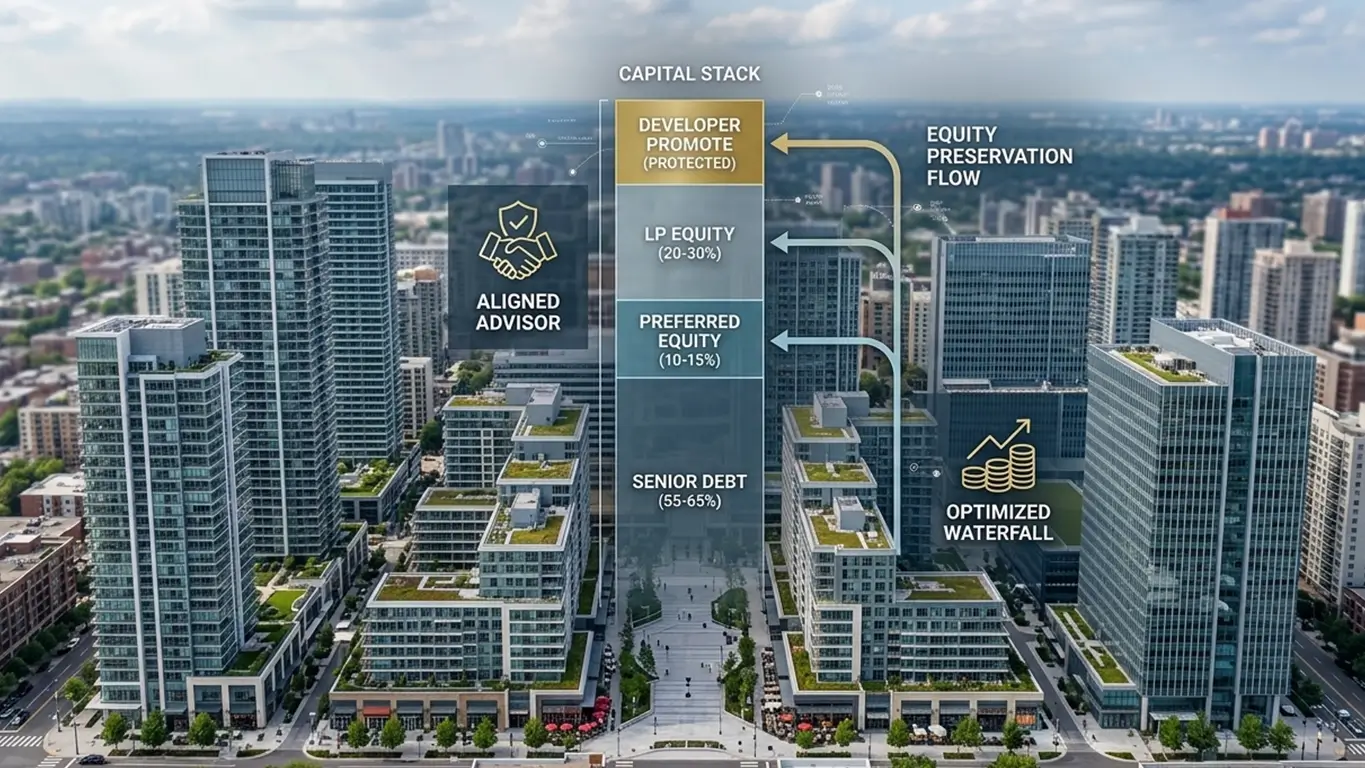
Top Firms for Real Estate Capital Raising Without Losing Equity
Disclosure
Nothing on this site constitutes an offer to sell, or a solicitation of an offer to purchase, any security under the Securities Act of 1933, as amended, or any applicable state securities laws. Any offering of securities is made only by means of a formal private placement memorandum or other authorized offering documents delivered to qualified investors.
IRC Partners is a capital advisory firm. IRC Partners is not a registered investment adviser under the Investment Advisers Act of 1940 and does not provide investment advice as defined thereunder.
Certain statements in this article may constitute forward-looking statements, including statements regarding market conditions, capital availability, investor demand, and transaction outcomes. Such statements reflect current assumptions and expectations only. Actual results may differ materially due to market conditions, regulatory developments, company-specific factors, and other variables. IRC Partners makes no representation that any outcome, return, or result described herein will be achieved.
References to prior mandates, transaction volume, network credentials, or capital raised are provided for illustrative purposes only and do not constitute a guarantee or prediction of future results. Past performance is not indicative of future outcomes. Individual results will vary. Network credentials and transaction statistics referenced on this site reflect the aggregate experience of IRC Partners' principals and affiliated advisors and are not a representation of assets managed or transactions closed solely by IRC Partners.
Certain data, statistics, and information presented in this article have been obtained from third-party sources. IRC Partners has not independently verified such information and expressly disclaims responsibility for its accuracy, completeness, or timeliness. Readers should independently verify any third-party data before relying on it.
Readers are strongly encouraged to consult qualified legal, financial, and tax professionals before making any investment, capital raising, or business decision.
Schedule A Meeting
You get one shot to raise the right way. If this raise is worth doing, it’s worth doing with precision, leverage, and control.
This isn’t a practice run. Serious capital. Serious strategy. Let’s raise it right.
We onboard a maximum of seven
new strategic partners each quarter, by application only, to maximize your chances of securing the capital you need.
