.svg "CTA Arrow")


.png "Investor Ready Capital decorative background element")

Founder Vesting Cliffs and Acceleration Provisions: The Cap Table Footnotes That Scare Series B Investors Away

Founder Vesting Cliffs and Acceleration Provisions: The Cap Table Footnotes That Scare Series B Investors Away
Founder vesting cliffs and acceleration provisions represent critical equity governance terms that signal to a Series B lead investor whether the founding team is properly locked in post-close, whether a future acquisition could trigger misaligned incentive payouts, and whether the board historically managed corporate governance with adequate care. While founders frequently overlook these clauses as forgotten administrative paperwork from early seed rounds, institutional investors evaluate them rigorously during due diligence. Any departure from the market-standard four-year vesting schedule—or the inclusion of aggressive single-trigger acceleration clauses activated by the financing event itself—is treated as a severe commitment red flag rather than a minor compensation quirk. Because discovering that a founder is already fully vested or legally entitled to immediate acceleration removes vital retention leverage, these footnotes can quietly destroy investor confidence and derail a round. Rather than allowing investor counsel to unearth these liabilities mid-diligence and impose restrictive closing conditions, founders must systematically audit all underlying offer letters, employment agreements, and board consents to execute a proactive cleanup strategy before launching their raise.
A vesting cliff is the date before which no equity vests. An acceleration provision is a clause that moves that date forward when a specific event occurs. When either term is unusual, incomplete, or tied to the financing event itself, a Series B lead sees a commitment problem, not a compensation detail. That is the core issue covered in depth across the broader Series B cap table risk framework.
Key takeaways:
- Unusual or financing-triggered acceleration provisions are treated as governance red flags, not compensation quirks
- A founder whose vesting cliff has already passed may have little remaining equity incentive to stay post-close
- Single-trigger acceleration tied to a financing event can vest a founder at the exact moment investors need long-term commitment
- Acceleration terms often live in offer letters or board consents, not core financing documents, making them easy to miss until diligence
- Cleanup before outreach is faster and less painful than a closing condition imposed by the lead
What Founder Vesting Cliffs and Acceleration Provisions Actually Are
The market standard for founder equity in 2026 is a four-year vesting schedule with a one-year cliff. Twenty-five percent of the founder's shares vest after twelve months of service, and the remaining seventy-five percent vest monthly over the following thirty-six months. That structure is what institutional investors expect to see. Anything that departs from it requires an explanation.
Acceleration provisions are clauses that allow shares to vest faster than the original schedule when a defined event occurs. They are common for founders and senior executives, though uncommon for rank-and-file employees, as Cooley's startup equity guidance notes. The table below maps the main provision types to their trigger events and the investor concern they create.
Partial acceleration is not inherently a problem. Vague partial acceleration is. If the clause does not specify the exact percentage, the exact trigger, and which document controls, the investor cannot model the outcome and will treat it as unresolved.
Why Vesting Structures Create Series B Commitment Problems
A Series B investor is buying into a governance structure that depends on founder continuity. Vesting is the mechanism that keeps founders economically tied to the company after the round closes. When that mechanism is broken, expired, or triggered by the financing itself, the investor's primary retention tool disappears at the worst possible time.
Three specific problems show up in diligence:
- The cliff has already passed. If a founder's four-year schedule started at seed and the company is raising Series B three or four years later, most or all of the founder's equity may already be fully vested. The investor is writing a large check with no unvested equity left to anchor the founder's post-close commitment. This does not automatically kill a deal, but it changes the conversation around compensation resets and new equity grants.
- Acceleration is tied to the financing event itself. This is the most dangerous scenario. A clause that accelerates vesting upon a financing event means the founder could become fully vested at the moment the Series B closes. The investor has just handed the founder liquidity and freedom at the exact moment they need long-term commitment. Understanding the full capital structure makes clear why institutional investors expect clean governance before they deploy.
- Acceleration is tied to a change of control. This creates M&A modeling complexity. The investor must price in the possibility that a future acquisition triggers full or partial vesting, which affects the economics of any exit and the acquirer's willingness to pay.
Why Acceleration Provisions Create Governance and M&A Problems Investors Flag Separately
Retention risk and governance risk are related but distinct. Retention risk is about whether the founder stays. Governance risk is about whether the cap table structure itself creates problems for future transactions or for the board's ability to manage leadership continuity. Acceleration provisions can create both at once.
- Single-trigger acceleration on a financing or sale event is treated as structural misalignment. The founder receives vesting without any continued service requirement. Orrick's 2026 guidance on acceleration provisions notes that single-trigger is a fairly blunt instrument that can spook potential buyers and investors precisely because it removes the acquirer's ability to use unvested equity as a retention tool.
- Double-trigger acceleration is the market middle ground. It requires both a change of control and a qualifying involuntary termination, typically within a 9-18 month post-closing window. This structure preserves the incentive alignment that investors and acquirers need while still protecting the founder from being terminated immediately after a sale.
- Partial acceleration provisions that are vague or undocumented create modeling uncertainty. If the percentage is ambiguous or the controlling document is unclear, the investor cannot determine whether the provision is a problem until they read every founder agreement, board consent, and offer letter in the data room.
- Double-trigger provisions that depend on equity being assumed by the acquirer may fail in practice if the acquirer cancels existing plans. Investors who understand this detail will ask for documentation that addresses what happens if the equity award is not assumed.
Investor takeaway: A Series B lead is not just reviewing founder equity for retention. They are modeling whether any acceleration clause could shift the economics of a future acquisition in ways that conflict with their preferred stock rights or make the company harder to sell at the right price.
The hidden document risk is real. Acceleration terms routinely appear in offer letters, employment agreements, and board resolutions rather than in the core financing documents that founders remember. This is why equity structure choices made early carry long-term governance consequences that surface at the worst time.
{{main-cta}}
What Must Be Resolved Before Approaching a Series B Lead
Resolving vesting and acceleration issues before outreach begins is almost always faster and less expensive than negotiating a closing condition mid-round. The four steps below are the minimum required to enter Series B diligence with a clean founder equity posture.
- Audit every founder vesting schedule. Pull the governing document for each founder's equity, whether that is a stock purchase agreement, restricted stock award, or option grant. Confirm the start date, cliff date, vesting pace, total shares granted, shares vested to date, and shares remaining unvested. If any of those numbers cannot be confirmed from a signed document, that is a documentation gap that must be closed before outreach.
- Identify every acceleration provision across every document. Do not limit the search to the equity plan or the financing documents. Check offer letters, employment agreements, severance arrangements, and board consents. Under IRS Section 83, unvested restricted stock remains subject to a substantial risk of forfeiture, which means the exact terms of forfeiture and acceleration are legally material and must be documented precisely.
- Map each clause to its trigger and test the financing event. For each acceleration provision found, identify whether it is single-trigger, double-trigger, or partial. Then ask a specific question: would this clause be triggered by the Series B financing event itself? If the answer is yes or unclear, that clause requires immediate attention before investor outreach begins.
- Prepare a founder equity summary memo for the data room. The memo should cover each founder's current vesting status, any acceleration provisions and their triggers, any proposed cleanup actions, and the governing document for each term. Investors who find this memo in the data room before asking for it read it as a signal of governance competence. Investors who have to ask for it read the absence as a warning.
Founders approaching Series B should also review how consent rights and other governance provisions interact with their vesting structures, as covered in the investor consent rights and Series B governance analysis.
When Modification, Removal, or Disclosure Is the Right Answer
Not every acceleration provision needs to be eliminated. The right remediation depends on the clause type, the trigger, and whether it creates a post-close incentive problem for the investor.
Modification is usually the cleanest path when the provision is single-trigger and tied to a financing event. Investors will require its removal as a closing condition anyway. Addressing it proactively, before the term sheet is signed, avoids the leverage shift that comes with a closing condition negotiated under time pressure.
Removal is often the right answer when the clause was negotiated as early-stage founder protection at seed or Series A and was never designed to survive into institutional rounds. When the relationship between founders and early investors is cooperative, removing a stale clause is usually straightforward with a board consent and an amendment to the governing document.
Disclosure with modeling is sufficient when the provision is clearly double-trigger, well-documented, and not activated by the financing event itself. In that case, the investor needs to understand it and model its effects, but does not need it removed. The key is that the documentation must be complete. A double-trigger provision buried in an offer letter with no board consent referencing it is not a disclosed provision. It is an undocumented one.
The test is not whether the clause once felt fair. The test is whether it preserves post-close alignment and keeps the investor from repricing the deal.
The same document-control discipline applies to equity grants made to advisors and contractors, which create their own set of hidden cap table risks before Series B.
Pre-Series B Founder Vesting Cleanup Checklist
Before approaching a Series B lead, complete each item below and confirm it in writing.
- Pull the governing document for every founder's equity grant and confirm it is fully executed and board-approved
- Confirm each founder's cliff date, vesting start date, shares vested to date, and shares remaining unvested
- Identify every acceleration provision across all founder agreements, offer letters, employment agreements, severance arrangements, and board consents
- Classify each acceleration clause as single-trigger, double-trigger, or partial, and record the exact trigger event and controlling document
- Test whether any acceleration clause would be triggered by the Series B financing event itself
- Model post-close founder ownership under each acceleration scenario, including a full-acceleration case
- Decide for each problematic clause whether to modify, remove, or disclose with modeling, and execute the necessary board consent or amendment before outreach begins
- Prepare a founder equity summary memo covering vesting status, acceleration terms, and any cleanup actions taken
- Load all governing documents and the summary memo into the data room before the first investor meeting
Frequently Asked Questions
What does single-trigger acceleration mean and why does it concern Series B investors?
Single-trigger acceleration means a founder's unvested shares vest automatically when one specified event occurs, such as a change of control, a financing event, or an involuntary termination. Series B investors are concerned because single-trigger acceleration removes the retention mechanism they are relying on. If a founder vests fully at closing, the investor has no unvested equity left to keep the founder committed to the business after the check clears.
Is a founder who is already fully vested a diligence problem at Series B?
It can be. Full vesting is not automatically disqualifying, but it changes the investor's calculus. When a founder has no remaining unvested equity, the investor loses the most direct form of retention leverage. The conversation typically shifts to whether a new equity grant or vesting reset is appropriate as part of the financing, which adds complexity and negotiating friction that founders often do not anticipate.
How do institutional investors view double-trigger acceleration?
Double-trigger acceleration is generally acceptable to institutional investors because it preserves post-close incentive alignment. The structure requires both a change of control and a qualifying termination, typically without cause or for good reason, within a defined window of 9 to 18 months after closing. It protects the founder from being pushed out after an acquisition without compensation while still requiring continued service to vest. Investors treat clearly documented double-trigger provisions as a market-standard term, not a red flag.
What happens to unvested founder shares when a Series B closes?
Nothing changes automatically. Unvested founder shares remain subject to the company's repurchase right under the original vesting schedule unless an acceleration provision is triggered. The Series B financing itself does not vest or forfeit unvested shares unless a clause in the founder's agreement specifically defines a financing event as a trigger. That is exactly why financing-event acceleration clauses are so dangerous: most founders forget they exist until diligence surfaces them.
Can acceleration provisions be modified or removed before a Series B round?
Yes, and doing so before outreach begins is almost always the better path. Modifying or removing an acceleration provision typically requires an amendment to the governing document, a board consent, and the founder's agreement. When the original provision was negotiated cooperatively at seed or Series A, early investors are usually willing to support cleanup that makes the company more fundable at Series B. Waiting until the lead investor finds the clause during diligence means negotiating the fix under time pressure with less leverage.
How should founders disclose vesting structures in a Series B data room?
The most effective approach is a short founder equity summary memo that covers each founder's vesting start date, cliff date, shares vested to date, shares remaining unvested, any acceleration provisions and their triggers, the governing document for each term, and any cleanup actions already taken. Loading this memo alongside the underlying agreements signals that the company has audited its own documents and is not hiding anything. Investors who have to ask for this information read the absence as a governance gap.
What does a Series B lead actually look for when reviewing founder equity agreements?
A Series B lead is looking for four things: whether meaningful unvested equity remains to anchor founder commitment post-close, whether any acceleration clause could be triggered by the financing event itself, whether acceleration tied to a future sale would complicate the preferred stock economics or an acquirer's retention plan, and whether the documents are complete, consistent, and board-approved. Gaps or inconsistencies in any of those four areas are treated as signals of broader governance weakness, not isolated paperwork problems.
Continue reading this series:
- The Capital Stack Explained: Equity, Debt, SAFEs, and What Investors Actually Want
- How to Value a Startup: Complete Valuation Guide for Founders 2026
- How to Raise Capital in 2026 for Your Series A Round
The wrong structure doesn't just cost you this round. It costs you the next three. IRC Partners advises founders raising $5M to $250M of institutional capital. If you're about to go to market and want the structure reviewed before investors see it, book a call here
Sponsors weighing this decision should first complete a capital raise readiness assessment for sponsors to confirm the raise is investor-ready.
Need guidance on your capital raise?


The Investor Update Paper Trail: How What You Told Investors in Writing Becomes a Series B Diligence Liability
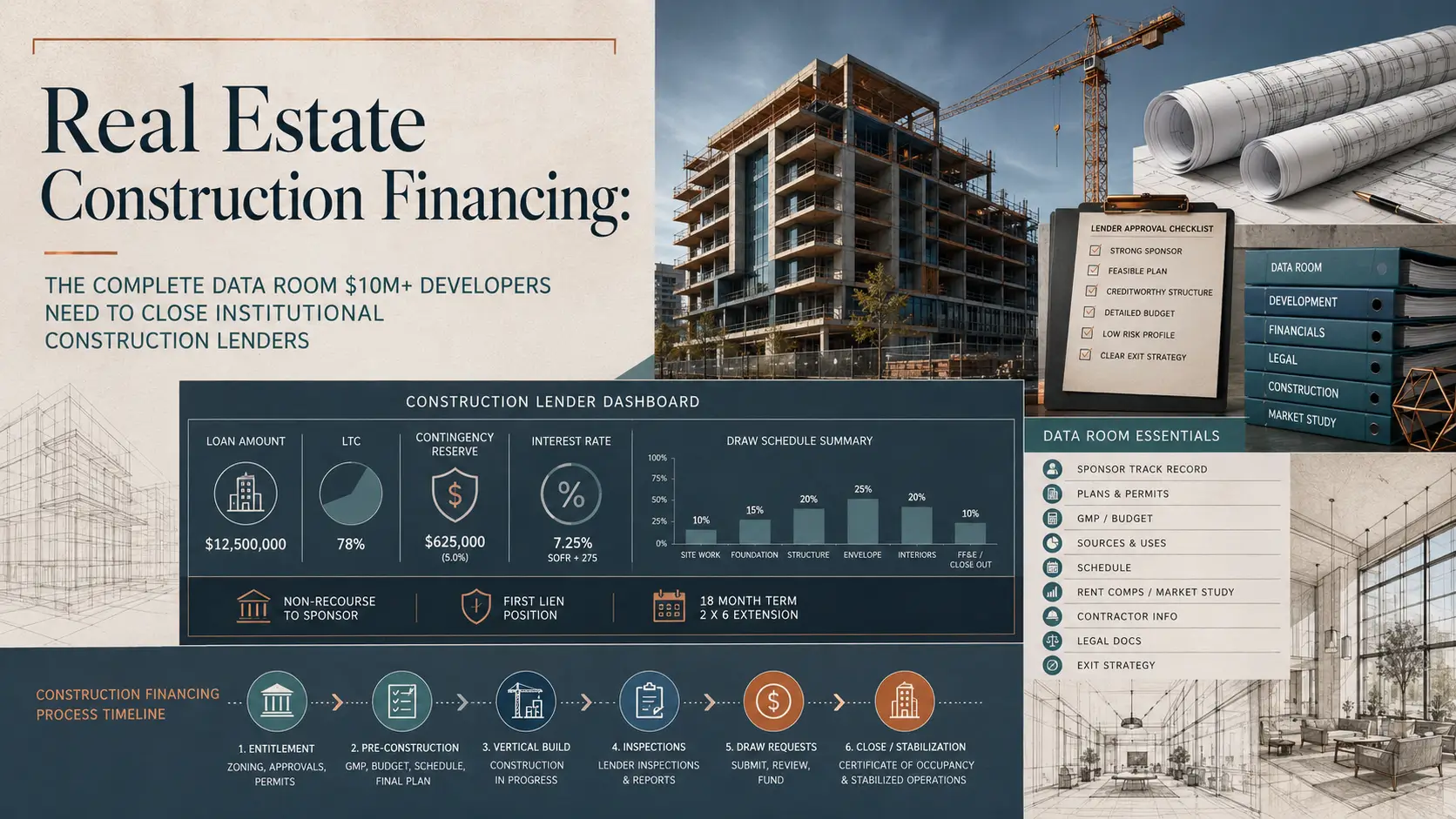
Real Estate Construction Financing: The Complete Data Room $10M+ Developers Need to Close Institutional Construction Lenders

What Makes a Programmatic Real Estate Joint Venture Attractive To a Family Office After an Initial Single-Asset Investment?
Disclosure
Nothing on this site constitutes an offer to sell, or a solicitation of an offer to purchase, any security under the Securities Act of 1933, as amended, or any applicable state securities laws. Any offering of securities is made only by means of a formal private placement memorandum or other authorized offering documents delivered to qualified investors.
IRC Partners is a capital advisory firm. IRC Partners is not a registered investment adviser under the Investment Advisers Act of 1940 and does not provide investment advice as defined thereunder.
Certain statements in this article may constitute forward-looking statements, including statements regarding market conditions, capital availability, investor demand, and transaction outcomes. Such statements reflect current assumptions and expectations only. Actual results may differ materially due to market conditions, regulatory developments, company-specific factors, and other variables. IRC Partners makes no representation that any outcome, return, or result described herein will be achieved.
References to prior mandates, transaction volume, network credentials, or capital raised are provided for illustrative purposes only and do not constitute a guarantee or prediction of future results. Past performance is not indicative of future outcomes. Individual results will vary. Network credentials and transaction statistics referenced on this site reflect the aggregate experience of IRC Partners' principals and affiliated advisors and are not a representation of assets managed or transactions closed solely by IRC Partners.
Certain data, statistics, and information presented in this article have been obtained from third-party sources. IRC Partners has not independently verified such information and expressly disclaims responsibility for its accuracy, completeness, or timeliness. Readers should independently verify any third-party data before relying on it.
Readers are strongly encouraged to consult qualified legal, financial, and tax professionals before making any investment, capital raising, or business decision.
Schedule A Meeting
You get one shot to raise the right way. If this raise is worth doing, it’s worth doing with precision, leverage, and control.
This isn’t a practice run. Serious capital. Serious strategy. Let’s raise it right.
We onboard a maximum of seven
new strategic partners each quarter, by application only, to maximize your chances of securing the capital you need.
